Dashati 16
Agni’s ritual pre-eminence and the enlivening power that sustains the sacrifice
Agni
Elevated and proclamatory with a consecratory (abhisecana-like) undercurrent
Individual ṛṣi attributions require concordance with the corresponding Ṛgvedic sources; this dashati appears to combine Agni praise with Aindra/Soma ritual imagery typical of mixed Uttarārcika selections.
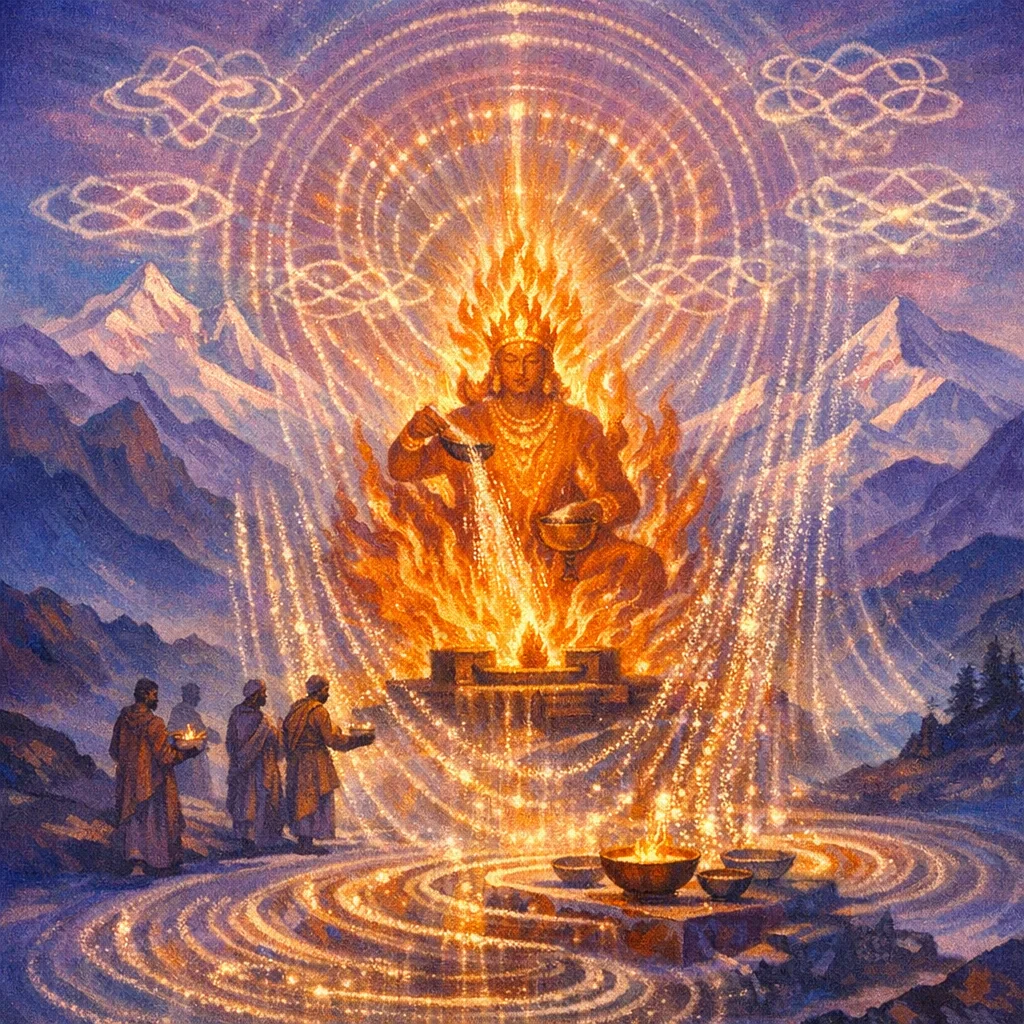
อัคนีผู้เป็นใหญ่เหนือพิธีกรรมและเป็นพลังที่ทำให้ยัญญะมีชีวิต ถูกอัญเชิญให้เป็นดุจ “เศียร” และเจ้าแห่งยอดสูงสุดของจักรวาล–พิธีกรรม ทรงเร้าให้สายน้ำอุดมและก่อกำเนิดพลัง ภาพการคั้นโสมและการพรมน้ำลงสู่บ่อ/รางประกอบพิธีปรากฏเพื่อให้เกิดความมั่งคั่งและความสำเร็จ โคทั้งหลาย—ในฐานะรัศมีและทรัพย์—เข้ามาอย่างเป็นมงคลเคียงข้างยัญญะ และพิธีดำเนินต่อไปโดยไม่เสื่อม ไม่บกพร่อง (อักษิตะ) โดยมีอินทร–โสมแฝงอยู่ในแรงบันดาลให้ได้กำลัง ของประทานอันรวดเร็ว และความสำเร็จสมบูรณ์ของยัญญะ
Mantras
Mantra 1
गाव उप वदावटे महि यज्ञस्य रप्सुदा उभा कर्णा हिरण्यया
ฝูงโคเข้ามาใกล้ผู้ขับสรรเสริญ เป็นผู้ประทานทานอันรวดเร็ว ประดับพิธีบูชายัญอันยิ่งใหญ่นี้; หูทั้งสองของมันเป็นทองคำ
Mantra 2
अभ्यारमिदद्रयो निषिक्तं पुष्करे मधु अवटस्य विसर्जने
ข้าพเจ้าเข้าไปใกล้เหล่าผู้ประกอบพิธีอันมั่นคง ณ ที่ซึ่งโสมะ (Soma) อันหวานถูกเทลงสู่ภาชนะ (puṣkara) ในคราวปล่อยไหลออกจากราง (avaṭa)
Mantra 3
उदग्ने शुचयस्तव शुक्रा भ्राजन्त ईरते तव ज्योतींष्यर्चयः
โอ อัคนิ (Agni) เปลวเพลิงอันบริสุทธิ์และสุกใสของท่านลุกขึ้นสูง ส่องประกายแล้วเคลื่อนไหวไป; แสงทั้งหลายของท่านคือรัศมีแห่งบทสรรเสริญ
Frequently Asked Questions
It presents Agni as the foremost power of the sacrifice—cosmic in stature and ritually central—who energizes the waters and ensures the rite proceeds effectively and without loss.
Samavedic selections often pair praise with ritual action imagery. Terms like sprinkling the trough/well and references to implements point to Soma-pressing procedures understood as sacred, power-bearing acts.
Stobhas mainly serve musical and liturgical purposes—marking structure, cadence, and expansion for melody. They usually do not change the core meaning of the ṛc-text, but they shape how it is sung in ritual.