
Shloka 49
Vishwarupa Darshana Yoga — Vishwarupa Darshana Yoga
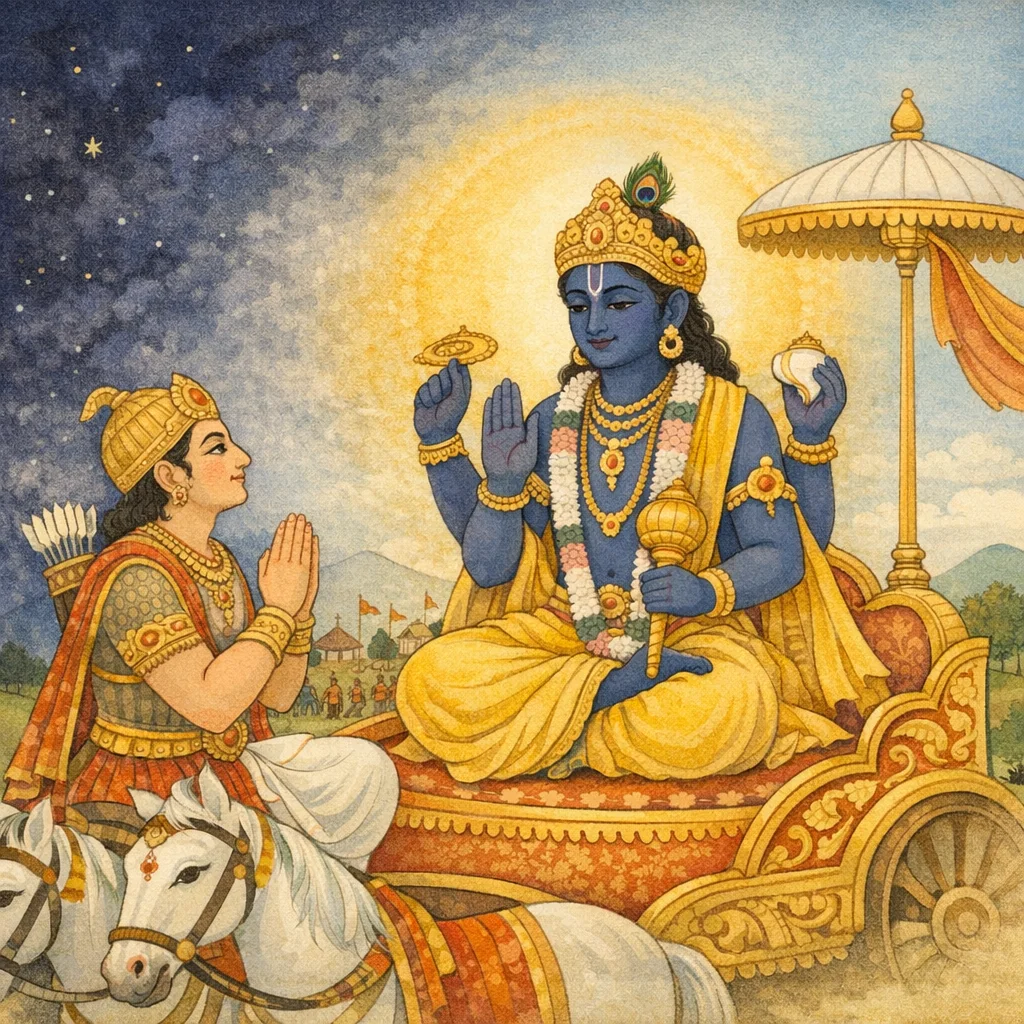
मा ते व्यथा मा च विमूढभावो दृष्ट्वा रूपं घोरमीदृङ्ममेदम् । व्यपेतभीः प्रीतमनाः पुनस्त्वं तदेव मे रूपमिदं प्रपश्य ॥ ११.४९ ॥
mā te vyathā mā ca vimūḍhabhāvo dṛṣṭvā rūpaṁ ghoram īdṛṅ mamेदम् | vyapetabhīḥ prītamanāḥ punas tvaṁ tad eva me rūpam idaṁ prapaśya || 11.49 ||

อย่าได้หวาดหวั่น และอย่าได้หลงงง เมื่อเห็นรูปอันน่าเกรงขามนี้ของเรา จงละความกลัวเสีย แล้วทำจิตให้ปีติยินดี และจงดูรูปเดิมของเรานั้นอีกครั้งหนึ่ง
Do not fear, nor be bewildered on seeing this awe-inspiring form of Mine. With fear gone and mind delighted, behold again that very form of Mine (as before).
Let there be no distress for you, nor confusion, having seen this formidable form of mine. Becoming free of fear, with a pleased mind, behold again this very form of mine.
Renderings differ mainly in how ‘ghora’ is handled: ‘terrible’ in older translations versus ‘awe-inspiring/formidable’ in more neutral academic diction, aligning with a non-graphic, numinous sense.
FAQs
The verse describes a classic arc of overwhelming awe leading to disorientation, followed by reassurance and emotional regulation—an integration phase after an intense experience.
It implies that the divine can be disclosed in multiple modes: an all-encompassing cosmic manifestation and a more relational, approachable form.
It transitions from the cosmic vision toward Krishna’s resumption of a familiar form, allowing Arjuna to continue the dialogue without destabilization.
It can be used to frame healthy responses to intense emotions: acknowledge overwhelm, seek grounding, and return to stable practices and relationships.