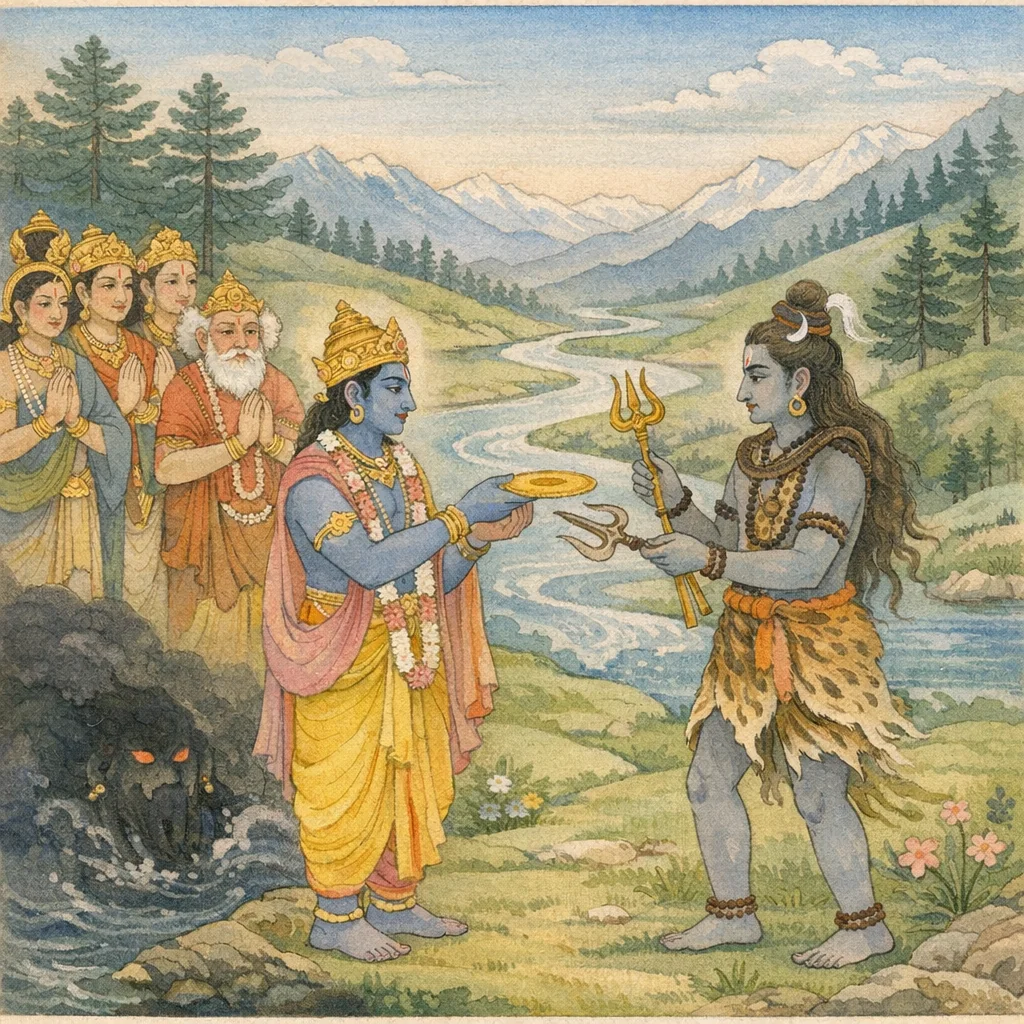
Adhyaya 54: Prahlada’s Pilgrimage and the Origin of the Sudarshana–Trishula Exchange (Jalodbhava Episode)
प्रह्लाद-तीर्थयात्रा तथा जलोद्भव-वधकथा (Prahlāda-Tīrthayātrā tathā Jalodbhava-Vadhakathā)
Sudarshana-Trishula Exchange
పులస్త్య–నారద సంభాషణలో ఈ అధ్యాయము ముందుగా ప్రహ్లాదుని ఆదర్శ తీర్థయాత్రను వివరిస్తుంది—ఉపవాసం (ఉపోష), విధివిధాన స్నానం, జనార్దన, నృసింహ, శంకర పూజలు మరియు పితృ తర్పణం; కేవలం స్తుతితో కాక ఆచరణతోనే తీర్థమహాత్మ్యం స్థాపితమవుతుంది. తరువాత నారదుని ప్రశ్నకు పురాతన కథ చెబుతుంది—శంభుడు సుదర్శనాన్ని ఎందుకు ధరించాడో, వాసుదేవుడు త్రిశూలాన్ని ఎందుకు ధరించాడో. బ్రహ్మ వరంతో బలవంతుడైన జలోద్భవుడు యజ్ఞధర్మాన్ని ధ్వంసం చేయగా దేవతలు హరిని శరణు కోరుతూ, హిమాలయాలలో హరుని (శివుని) సంప్రదిస్తారు. హరిహర ఏకత్వంలో ఆయుధాల మార్పిడి చేసి శత్రునాశనం జరుగుతుంది; విటస్తా నది సహా హిమాలయ తీర్థస్థానాలు దివ్యకర్మవల్ల పవిత్రమవుతాయి.
Divine Beings
Sacred Geography
Mortal & Asura Figures
Key Content Points
- Prahlada’s sequential tīrtha itinerary: ritual bathing, upoṣa, pūjā to Janārdana, Nṛsiṃha, Śaṅkara, and pitṛ-tarpaṇa, establishing tīrtha-mahātmya through practice rather than mere praise.
- Nārada’s question and Pulastya’s purātana-kathā: why Śambhu holds Sudarśana and why Vāsudeva holds the triśūla—an explicit Harihara-syncretic motif.
- Jalodbhava’s boon from Brahmā, his disruption of dharmic rites, the joint strategy of Viṣṇu and Śiva, the weapon-exchange, and the etiological sanctification of Vitastā and associated Himalayan sites.
Shlokas in Adhyaya 54
Verse 5
प्रौष्ठपद्याद्वयं पार्श्वे कुक्षिभ्यां रेवती स्थिता उरःसंस्था त्वनुराधा श्रविष्ठा पृष्ठसंस्थिता
ప్రౌష్ఠపద ద్వయం ఆయన రెండు పార్శ్వములలో స్థితమై ఉంది; రేవతీ ఆయన ఉదరమున ప్రతిష్ఠితమై ఉంది. అనురాధ వక్షస్థలమున, శ్రవిష్ఠా పృష్ఠభాగమున స్థితమై ఉంది.
Verse 7
ग्रीवास्थैता तथा ज्येष्ठा श्रवणं कर्णयोः स्थितम् मुखसंस्थस्तथा पुष्यः स्वातिर्दन्ताः प्रकीर्तिताः
జ్యేష్ఠా గ్రీవలో స్థితమై ఉందని చెప్పబడింది; శ్రవణం రెండు కర్ణములలో స్థితమై ఉంది. పుష్యము ముఖమున ప్రతిష్ఠితము; స్వాతి దంతములుగా ప్రఖ్యాతము.
Verse 8
हनू द्वे वारुणश्चोक्तो नासा पैत्र उदाहृतः मृगशीर्षं नयनयो रूपधारिणि तिष्ठति
రెండు హనువులు ‘వారుణ’ అని చెప్పబడినవి; నాసిక ‘పైత్ర’ అని ప్రకటించబడింది. రూపధారియైన ఆయన నయనములలో ‘మృగశీర్ష’ స్థితమై ఉంటుంది.
Verse 9
चित्रा चैव ललाटे तु भरणी तु तथा शिरः शिरोरुहस्था चैवार्द्रा नक्षत्राङ्गमिदं हरेः
చిత్రా నక్షత్రం లలాటంపై స్థితమై ఉంది; భరణీ శిరస్సుపై, ఆర్ద్రా శిరోరుహాలలో (కేశాలలో) నివసిస్తుంది. ఈ విధంగా నక్షత్రాలచే హరి దేహంలోని ఈ భాగం ఏర్పడింది.
Verse 10
विधानं संप्रवक्ष्यामि यथायोगेन नारद संपूजितो हरिः कामान् विदधाति यथेप्सितान्
he fell from the mountain
Verse 12
जानुनी चाश्विनीयोगे पूजयेदथ भक्तितः दोहदे च हविष्यान्नं पूर्ववद् द्विजभोजनम्
అశ్వినీ యోగం ఉన్నప్పుడు భక్తితో రెండు మోకాళ్లను పూజించాలి. దోహద సమయంలో హవిష్యాన్నం సమర్పించి, మునుపటిలాగే ద్విజులకు భోజనం పెట్టాలి.
Verse 13
आषाढाभ्यां तथा द्वाभ्यां द्वावूरू पूजयेद् बुधः सलिलं शिशिरं तत्र दोहदे च प्रकीर्तितम्
రెండు ఆషాఢా నక్షత్రాల యోగంలో జ్ఞాని రెండు తొడలను పూజించాలి. అక్కడ దోహద సమయంలో చల్లని నీటిని అర్పించడం విధిగా చెప్పబడింది.
Verse 14
फाल्गुनीद्वितये गुह्यं पूजनीयं विचक्षणैः दोदहे च पयो गव्यं देयं च द्विजभोजनम्
ఫాల్గునీ ద్వయ నక్షత్రాలలో వివేకులు గుహ్యదేశాన్ని పూజించాలి. దోహద సమయంలో గోవు పాలు దానం చేసి, బ్రాహ్మణులకు భోజనం పెట్టాలి.
Verse 16
पार्श्वे भाद्रपदायुग्मे पूजयित्वा विधानतः गुडं सलेहकं दद्याद् दोहदे देवकीर्तितम्
Kāñcanākṣī
Verse 25
चित्रायोगे ललाटं च दोहदे चारुभोजनम् भरणीषु शिरः पूज्यं चारु भक्तं च दोहदे
When the Citrā-yoga prevails, the forehead should be worshipped, and fine food should be given as the doḥada-offering. In the Bharaṇī (nakṣatra), the head should be worshipped, and excellent cooked food should be given as the doḥada-offering.
Verse Tirtha Mahima / Vrata and self-restraint
नक्षेत्रयोगेष्वेतेषु सम्पूज्य जगतः पतिम् पारिते दक्षिणान्दद्यात् स्त्रीपुंसोश्चारुवाससी
{"scene_description": "A restrained pilgrim, thin from fasting, bathes at Sutīrtha and offers flowers and tulasī to Hṛṣīkeśa; then he walks toward the cedar-and-badari-lined hermitage of Badarikāśrama beneath snowy peaks.", "primary_figures": ["Pilgrim", "Viṣṇu as Hṛṣīkeśa"], "setting": "Mountain tīrtha pool and a Viṣṇu shrine; forested Himalayan path to Badarikāśrama", "color_palette": ["deep blue", "white", "pine green", "saffron", "stone grey"], "tanjore_prompt": "Tanjore style, Hṛṣīkeśa (Viṣṇu) richly ornamented with gold-leaf, tulasī garland, devotee in simple cloth offering arghya after snāna, temple lamps, serene austerity", "pahari_prompt": "Pahari miniature, soft pastel Himalayas, small shrine by Sutīrtha, pilgrim with water-pot and prayer beads, winding path to Badarikāśrama with badari trees, gentle contemplative mood", "kerala_mural_prompt": "Kerala mural, bold outlines, Viṣṇu as Hṛṣīkeśa in temple niche, stylized mountains and river, pilgrim shown as jitendriya with minimal adornment, emphasis on vrata", "pattachitra_prompt": "Pattachitra panel, narrative: snāna at Sutīrtha → upavāsa/jitendriya posture → arcana to Hṛṣīkeśa → departure to Badarikāśrama, decorative borders with conch and lotus"}
Verse 31
अङ्गोपाङ्गानि देवर्षे पूजयित्वा जगद्गुरोः सुरूपाम्यभिजायन्ते प्रत्यङ्गङ्गानि चैव हि
ఓ దేవర్షీ! జగద్గురువు యొక్క అంగ-ఉపాంగాలను పూజించినచో, తన అంగ-ప్రత్యంగాలు కూడా నిశ్చయంగా సురూపముగా, శోభాయుతముగా అవుతాయి।
Verse 32
सप्तजन्मकृतं पापं कुलसंगागतं च यत् पितृमातृसमुत्थं च तत्सर्वं हन्ति केशवः
కేశవుడు ఆ సమస్తాన్ని నశింపజేస్తాడు—ఏడు జన్మలలో చేసిన పాపం, కులసంబంధంగా వచ్చిన పాపం, అలాగే తండ్రి-తల్లి నుండి ఉద్భవించిన పాపం।
Verse 33
सर्वाणि भद्राण्याप्नोति शरीरारोग्यमुत्तमम् अनन्तां मनसः प्रीतिं रूपं चातीव शोभनम्
అతడు సమస్త మంగళాలను పొందుతాడు—శరీరానికి ఉత్తమ ఆరోగ్యం, మనస్సుకు అనంతమైన ప్రీతి, మరియు అత్యంత శోభనమైన రూపం।
Verse 34
वाङ्माधुर्यं तथा कान्ति यच्चान्यदभिवाञ्छितम् ददाति नक्षत्रपुमान् पूजितस्तु जनार्दनः
వాక్మాధుర్యం, కాంతి మరియు ఇతర ఏది కోరుకున్నదైనా—నక్షత్రపురుషరూపంలో పూజింపబడిన జనార్దనుడు అవన్నీ ప్రసాదిస్తాడు.
Verse 38
एवं विधानतो ब्रह्मन्नक्षत्राङ्गो जनार्दनः पूजितो रूपधारी यैस्तैः प्राप्ता तु सुकामिता
ఓ బ్రాహ్మణా, ఈ విధంగా విధిపూర్వకంగా ‘నక్షత్రాంగ’ జనార్దనుని పూజిస్తే, ఇష్టరూపాన్ని ధరించే (లేదా కోరే) భక్తులు తమ మనోరథాలను పొందుతారు.
Verse 39
एतत् तवोक्तं परमं पवित्रं धन्यं यशस्यं शुभरूपदायि नक्षत्रपुंसः परमं विधानं शृणुष्व पुण्यामिह तीर्थयात्राम
“This supreme teaching you have spoken is most purifying—auspicious, fortune-bringing, fame-bestowing, and a giver of auspicious form. Now hear the highest ordinance concerning the Nakṣatra-Puruṣa, and (hear also) here the meritorious pilgrimage to the tīrthas.”
Frequently Asked Questions
Through Nārada’s inquiry and Pulastya’s response, the chapter presents a syncretic theology in which Viṣṇu and Śiva act as coordinated protectors of cosmic order: they consult together, exchange emblematic weapons (Sudarśana and triśūla) for arisūdana, and thereby demonstrate mutual legitimacy in iconography and ritual devotion.
It functions as a pilgrimage-map anchored in ritual acts—snāna, upoṣa, pūjā, and pitṛ-tarpaṇa—moving through Kurukṣetra and multiple named tīrthas and rivers (Irāvatī, Devikā, Payoṣṇī, Madhumat, Vitastā), plus lakes (Devahrada) and Himalayan locales (Himavatpāda, Bhṛgutunga). Several places are etiologically sanctified by divine action, especially the Vitastā’s purificatory status linked to Hara’s movement in the Himalayan narrative.
The frame makes the text explicitly didactic: Nārada’s question about anomalous iconography prompts Pulastya to authorize a ‘purātana-kathā’ that ties theology (Harihara cooperation), ethics (restoring sacrificial order against Jalodbhava), and topography (rivers and tīrthas) into a single explanatory chain, turning geography into a readable index of dharma.