Adhyaya 137
Adhyāya 137 — महामारीविद्या (Mahāmārī-vidyā)
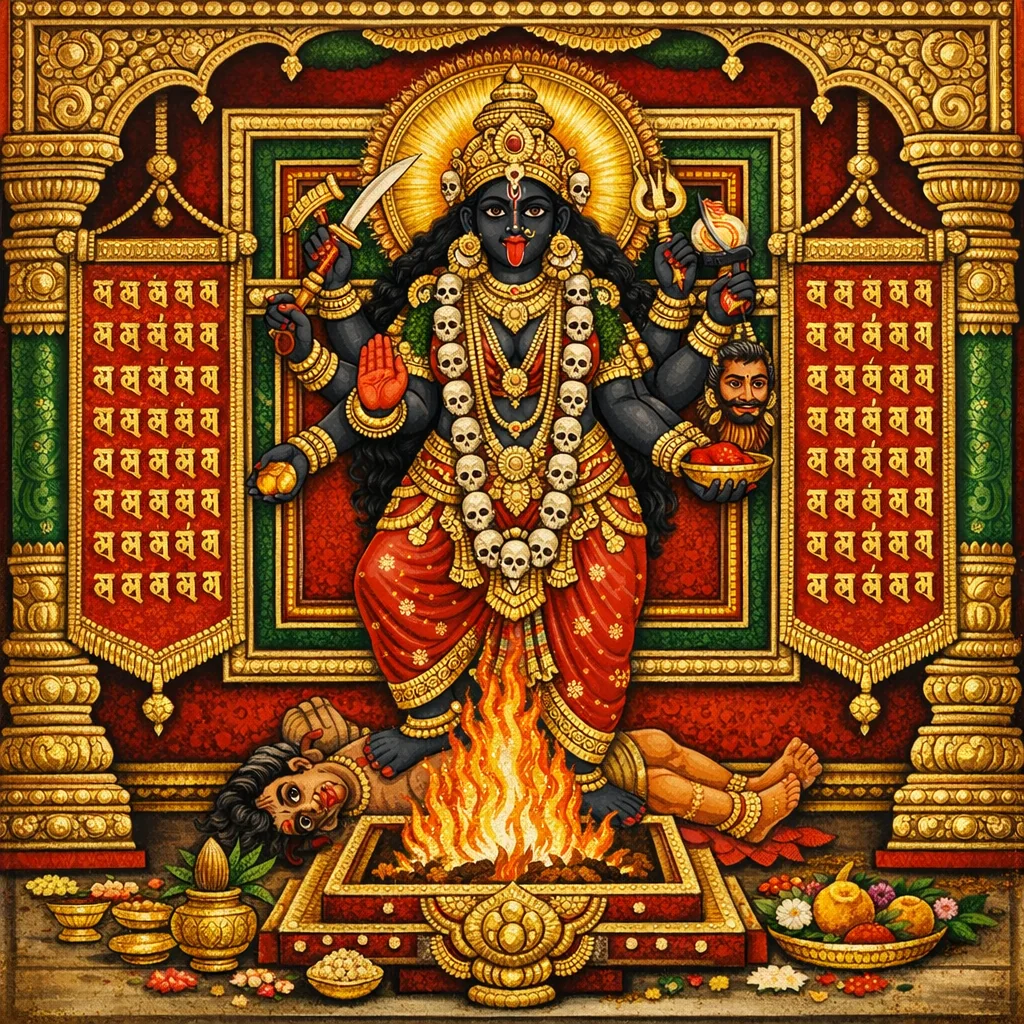
ఈ అధ్యాయం నక్షత్రచక్ర వివరణ ముగిసిన వెంటనే విపత్తు-నివారణార్థమైన ‘మహామారీ-విద్య’ను ప్రవేశపెడుతుంది—రోగాలు, ఆపదలు, శత్రుబలాన్ని నిరోధించే మంత్రక్రియ. ఈశ్వరుడు హృదయ, శిర, శిఖ, కవచ, అస్త్రమంత్రాల నియాసక్రమాన్ని బోధించి మహామారీ, కాలరాత్రి, మహాకాళీ ఉగ్రరూపాలను ఆహ్వానించి సాధకుణ్ణి మంత్రశస్త్రాలతో సన్నద్ధం చేస్తాడు. తరువాత మృతాశౌచసంబంధ వస్త్రంపై చతురస్ర యంత్రాన్ని గీయించి, తూర్పుముఖంగా నల్లవర్ణ త్రిముఖ చతుర్భుజ రూపాన్ని ధ్యానించమని చెబుతుంది—ధనుస్సు, త్రిశూలం, ఛేదనాస్త్రం, ఖట్వాంగం ధరించినది; దక్షిణదిశలో రక్తజిహ్వా భయంకరరూపం, పడమరముఖంగా శ్వేత శుభరూపాన్ని సుగంధ ద్రవ్యాలతో పూజించే విధానమూ వర్ణిస్తుంది. ఆపై రోగనాశన-వశీకరణార్థం మంత్రస్మరణ, నిర్దిష్ట సమిధలు-ద్రవ్యాలతో హోమం చేసి శత్రుపీడ, మరణ, ఉచ్చాటన, ఉత్సాదన వంటి యుద్ధకర్మలను సూచిస్తుంది. చివరగా యుద్ధభూమిలో ధ్వజ/పట ప్రదర్శన, కన్యల సహచర్యం, శత్రు స్థంభన భావనతో ‘త్రైలోక్యవిజయా మాయా’గా స్థంభనవిద్యను దుర్గా/భైరవీగా గోప్యంగా ప్రసాదించి, కుబ్జికా, భైరవ, రుద్ర, నరసింహసంబంధ నామోచ్చారణలతో ముగిస్తుంది।
Shlokas
No shlokas available for this adhyaya yet.
Frequently Asked Questions
A highly technical ritual sequence is given: (1) nyāsa with specific deity-mantras mapped to heart/head/topknot/armor/weapon, (2) a square (caturasra) diagram of three-hand measure on a death-associated cloth, (3) iconographic constraints (color, faces, arms, weapons, and directional orientation), and (4) homa protocols with specified fuels/additives and timed battlefield procedures culminating in stambhana.
It frames protective and coercive ritual technologies as disciplined vidyā requiring authorization and restraint (“not to be given to anyone”), embedding power within dharma and mantra-sādhana. The practitioner’s efficacy is tied to consecration, visualization, and controlled ritual action—presented as a regulated extension of sacred order rather than mere aggression.