Adhyaya 131
Ghāta-cakra and Related Diagrams (घातचक्रादिः)
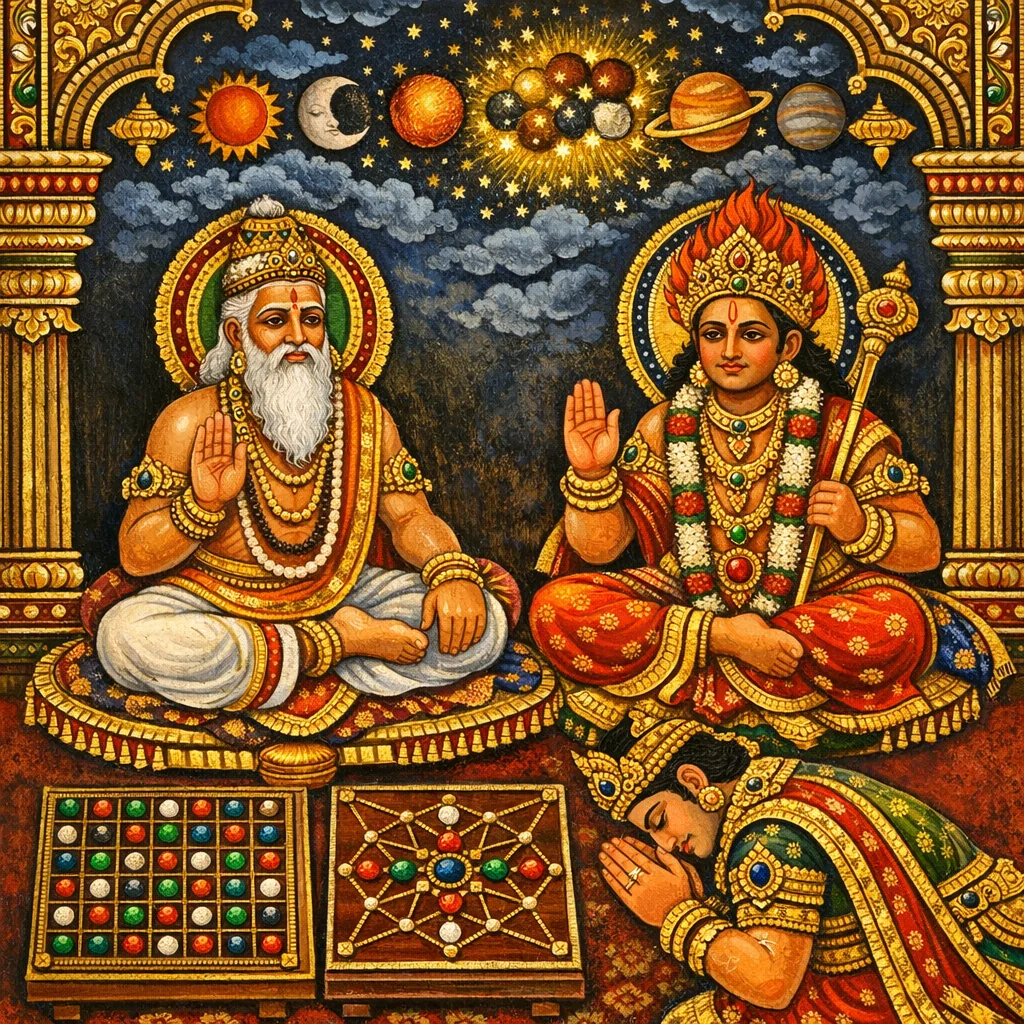
ఈ అధ్యాయంలో (ఘాతచక్రాదిః) ఈశ్వరరూపుడైన అగ్ని, యుద్ధజయార్ణవంలో యుద్ధ నిర్ణయానికి జ్యోతిష్యాధారిత క్రమబద్ధ విధానాన్ని బోధిస్తాడు. స్వరచక్రంలో స్వరాలను దిశలలో దక్షిణావర్తంగా అమర్చి, చైత్రాది మాసచక్రాన్ని తిప్పి, ప్రతిపద నుండి పూర్ణిమ వరకు తిథులను గుర్తిస్తారు. చైత్ర-చక్రంలోని నిర్దిష్ట ‘సంపర్కాల’ ద్వారా శుభాశుభ నిర్ణయం—విషమ అమరిక శుభం, సమ అమరిక అశుభం. నామాక్షరము మరియు హ్రస్వ/దీర్ఘ స్వర తర్కంతో ఉచ్చారణ ఆరంభం/అంత్యంలో స్వరారోహణాన్ని మరణం లేదా విజయ శకునంగా చదువుతారు. నరచక్రంలో నక్షత్రసమూహాన్ని దేహాకారంపై న్యాసంగా (శిరస్సు, ముఖం, నేత్రాలు, చేతులు, చెవులు, హృదయం, పాదాలు, గుప్తప్రదేశం) స్థాపిస్తారు; సూర్యుడు శని, కుజుడు, రాహుతో ఒకే నక్షత్రంలో ఉంటే ఘాతకయోగమని చెబుతారు. చివరగా జయచక్రంలో అక్షరలేఖనం, రేఖాజాలంతో దిక్కులు, గ్రహాలు, ఋషులు, తిథులు, నక్షత్రాలు మొదలైనవి కేటాయించి, పేరునుండి వచ్చిన సమష్టిని ఎనిమిది (వసువులు)తో భాగించి, జంతు-ప్రతీకాలతో బలక్రమం నిర్ణయించి యుద్ధశకున విశ్లేషణను సంక్షిప్తంగా అందిస్తారు।
Shlokas
No shlokas available for this adhyaya yet.
Frequently Asked Questions
The chapter emphasizes constructing and reading multiple cakras (Ghāta-, Nara-, and Jaya-cakra) using directional vowel placement, month–tithi rotation, nakṣatra nyāsa on a body-map, and name-akṣara based numerical computation (including division by eight, the Vasus).
By treating strategic discernment (yuddha-nirṇaya) as a dharmic discipline grounded in cosmic order (tithi–nakṣatra–graha), it frames worldly action as accountable to sacred law—training the practitioner to align intent, speech (nāma/svara), and action with ṛta, thereby supporting both righteous success (bhukti) and inner steadiness conducive to mokṣa.