Adhyaya 123
युद्धजयार्णवीयनानायोगाः (Various Yogas from the Yuddha-jayārṇava)
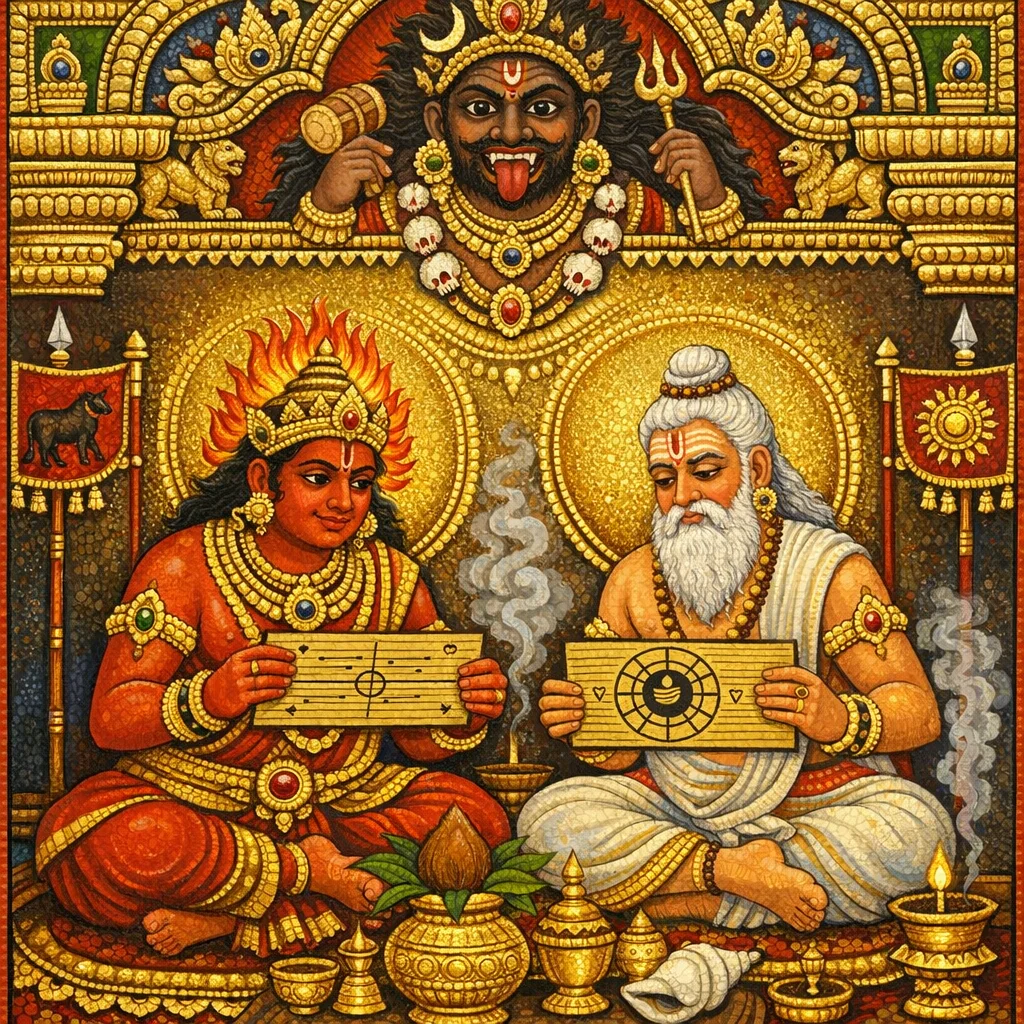
మునుపటి భాగంలో కాల-గణన (సమయ గణన) అంశం ముగిసిన తరువాత, భగవాన్ అగ్ని ‘యుద్ధజయార్ణవ’ నుండి సంగ్రహించిన యుద్ధ-విజయ విద్యా సారాన్ని ప్రారంభిస్తాడు. ఇందులో వర్ణాలు, తిథులను నందా మొదలైన వర్గాలుగా విభజించి కార్యోపయోగ నిర్ణయాలు చేస్తారు; అక్షర సమూహాలను గ్రహాధిపతులతో అనుసంధానించి భాషా-నక్షత్ర సంకేతజాలంగా శకున/దివ్యజ్ఞానాన్ని స్థాపిస్తారు. నాడీ-స్పందన, ఉచ్ఛ్వాసం, పల వంటి కాలమానాలతో దేహ-కాల సూచనల ద్వారా ఫల నిర్ధారణ చెప్పబడింది. తరువాత స్వరోదయ-చక్రం, శని-చక్రం, కూర్మ-చక్రం, రాహు-చక్రం లలో విభాగాలు, దిశా-స్థాపనలు, మృత్యు-ప్రద భాగాలు వివరించి, నక్షత్ర-ముహూర్త నామాల ప్రకారం ఏ సమయంలో ఏ కార్యం యుక్తమో నిర్ణయిస్తారు. చివరగా భైరవ మంత్ర ప్రయోగాలు—శిఖా-బంధం, తిలకం, అంజనం, ధూప-లేపనం—మరియు ధరించదగిన ఔషధులు, వశీకరణ యోగాలు, తిలక-లేపాలు, నూనెలు మొదలైనవి రక్షణ-విజయార్థం చెప్పబడతాయి; ఇలా జ్యోతిషం, కర్మకాండ సాంకేతికత, ఔషధ ప్రయోగం కలిసి ధర్మానుగత విజయసాధనగా అగ్నేయ విద్య ప్రతిఫలిస్తుంది।
Shlokas
No shlokas available for this adhyaya yet.
Frequently Asked Questions
A war-oriented Jyotiṣa toolkit: tithi and letter-to-graha mappings, multiple prognostic cakras (Svarodaya, Śani, Kūrma, Rāhu), and muhūrta-based prescriptions for what actions to perform or avoid.
They act as diagrammatic decision systems: divisions, directional placements, and specific ‘death-giving’ portions (notably linked with Śani) guide timing and risk assessment for actions related to conflict and protection.
The chapter treats victory as a synthesis of right timing (Jyotiṣa), protective rite (mantra and ritual acts like tilaka/añjana), and supportive materia medica—typical of the Agni Purana’s encyclopedic Agneya-vidyā approach.
Action-appropriateness: Raudra is prescribed for fierce acts, while Śveta is aligned with purification activities like bathing—demonstrating karmic regulation through time-quality.
Yes. Shloka 25 explicitly notes differences between manuscripts (e.g., a line absent in the Gha manuscript and alternate readings in the Kha manuscript), which is valuable for critical study.