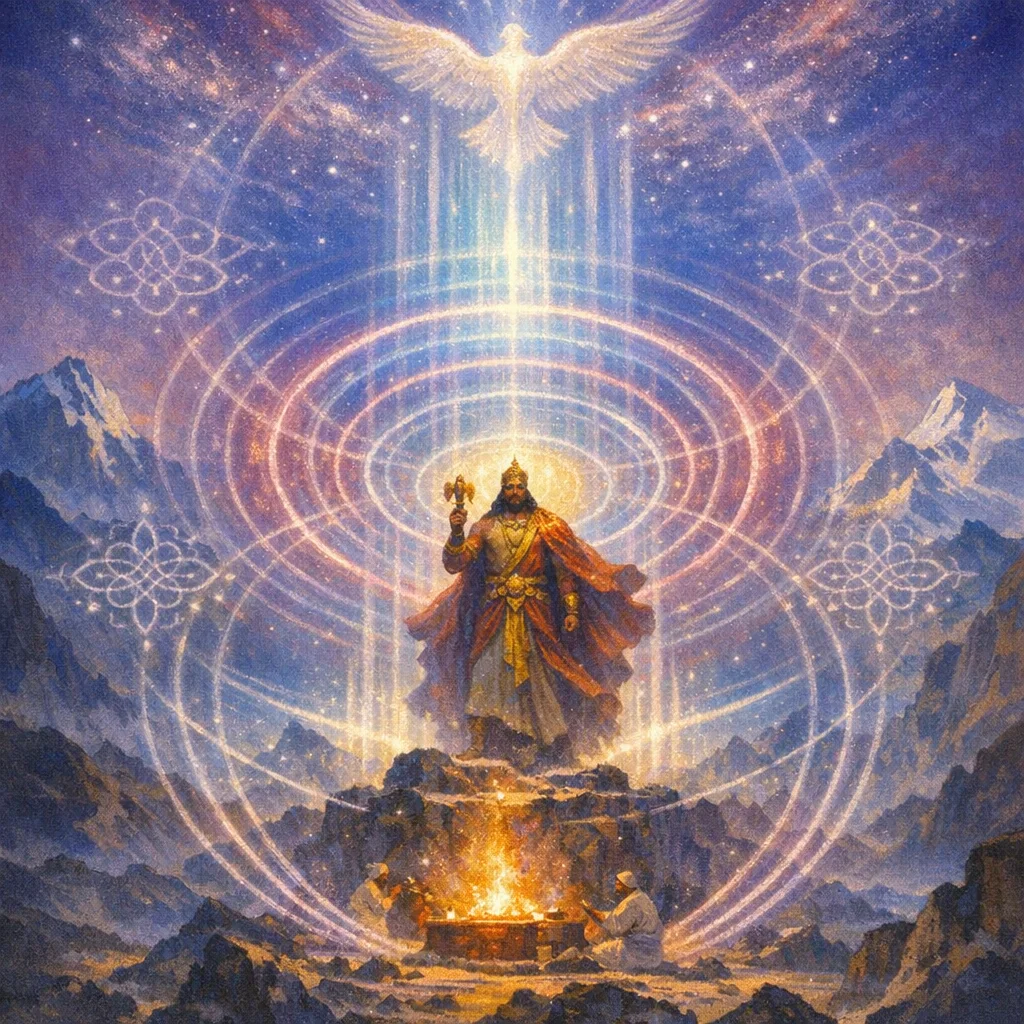
Dashati 13
Aindra stotra as a plea to Indra to hear the Soma-pressing call and unite with perfected praise, framed by cosmic messenger imagery (suparṇa/drapsa) that upholds ṛta.
Indra
Urgent summoning and luminous—an audible ‘call’ that intensifies into visionary/cosmic description.
Rṣi not specified in the provided data; the diction is Rigvedic in style and the dashati appears as a Samaveda gāna selection rather than a clearly marked single-family hymn set in this input.
இந்த ஐந்திர ஸ்தோத்ரம், சோமப் பிழிதல் (அத்ரி/கிராவன்) எழுப்பும் அழைப்பை இந்திரன் கேட்டு, செம்மையடைந்த புகழ்வுரை (மனீஷா) மற்றும் வழிபாட்டு செயல்கள் (துவாஂஸி) உடன் வந்து சோமயாகத்தில் இணைவதற்கான அவசர வேண்டுதலாகும். பின்னர் இது யாகத்தை விரிந்த ‘ருத/விதர்ம’ (ஒழுங்கு) சூழலில் நிறுவுகிறது: பொன்னிறச் சிறகுடைய சுபர்ணன் மற்றும் ஒளிமிகு த்ரப்ஸ (சூரிய/சோம ஒளி) தூதராக இருந்து, வருணனின் ஒழுங்கை உலகங்களுக்கிடையே—யமனின் ஆளுமை வரை—கொண்டு செல்கின்றன; அந்தச் சுழற்சி‑பயணத்தில் ‘ப்ரியாணி’ (விரும்பிய அருள்கள்) மற்றும் சரியான ஒழுங்கு நிலைபெறுகிறது. இவ்வாறு, ருதத்துடன் ஒத்திசையும் ஒலிக்கப்படும் ஸ்துதி பயனளிப்பதாகவும், அது இந்திரனை ஈர்த்து யஜமானனை தெய்வீக வலிமை, வரங்கள், மற்றும் பிரபஞ்ச ஒழுங்குடன் இணைப்பதாகவும் கூறுகிறது.
Mantras
Mantra 1
श्रुधी हवं विपिपानस्याद्रेर्बोधा विप्रस्यार्चतो मनीषाम् कृष्वा दुवांस्यन्तमा सचेमा
ஹே (தேவா), சோமபானம் விரும்புவனின்—அத்ரி (சோம அரைக்கும் கல்) இலிருந்து எழும்—இந்த ஹவம் (அழைப்பு) கேளும்; புகழ்பாடும் விப்ரனின் மனீஷா (உள்ளுணர்வு) யை உணர்வாயாக. எங்கள் துவாஂஸி (வணக்கங்கள்) மிகச் சிறந்ததாகச் செய்து, நாங்கள் உம்மோடு இணைவோமாக.
Mantra 2
ऊर्ध्वो गन्धर्वो अधि नाके अस्थात्प्रत्यञ्चित्रा बिभ्रदस्यायुधानि वसानो अत्कं सुरभिं दृशे कं स्व3र्ण नाम जनत प्रियाणि
வானத்தின் உச்சியில் கந்தர்வன் உயர்ந்து நின்றான்; தன் ஒளிமிகு சக்திகளை ஆயுதங்களெனத் தாங்கினான். நறுமணமுள்ள அட்ட்கம் (ஆடை) அணிந்து, காணத் தகுந்த அழகுடன், ‘ஸ்வர்ண’ (பொன்) எனப் பெயருடையவன் இனிய/விரும்பத்தக்கவற்றை உருவாக்கி/வெளிப்படுத்துகிறான்.
Mantra 3
द्रप्सः समुद्रमभि यज्जिगाति पश्यन्गृध्रस्य चक्षसा विधर्मन् भानुः शुक्रेण शोचिषा चकानस्तृतीये चक्रे रजसि प्रियाणि
ஒளிவிடும் துளி (த்ரப்ஸ) கடலை நோக்கி விரைந்து செல்கிறது; கழுகின் கூர்மையான பார்வையால் நோக்கி, தர்ம ஒழுங்குகளைத் தாங்குகிறது. தூய ஒளிச்சுடரால் பிரகாசிக்கும் பானு, மகிழ்ந்து, மூன்றாம் வட்ட/சுற்றில், ரஜஸ்-பிரதேசத்தில், இனியவற்றை நிலைநிறுத்துகிறது.
Frequently Asked Questions
It urges Indra to hear the sound and intention of the Soma-pressing and the priest’s praise, so that worship becomes ‘most excellent’ and the sacrificer is united with Indra’s power, all within a vision of cosmic order.
They supply a cosmic frame: the golden-winged messenger (suparṇa) moves within Varuṇa’s ordinance and near Yama’s realm, showing that the ritual invocation participates in a wider, law-governed universe, not only a single deity’s domain.
Traditional interpretation can take it either way: as the pressed Soma-drop rushing toward its ‘ocean’ (goal) or as solar/fiery radiance moving through cosmic circuits; both readings reinforce that ritual offering and cosmic light follow ṛta (right order).