
Bhagavad Gita — Moksha Sannyasa Yoga, Shloka 11
Moksha Sannyasa Yoga
न हि देहभृता शक्यं त्यक्तुं कर्माण्यशेषतः । यस्तु कर्मफलत्यागी स त्यागीत्यभिधीयते ॥ १८.११ ॥
na hi deha-bhṛtā śakyaṃ tyaktuṃ karmāṇy aśeṣataḥ | yas tu karma-phala-tyāgī sa tyāgīty abhidhīyate || 18.11 ||

உடல் கொண்டவரால் எல்லாச் செயல்களையும் முற்றிலும் கைவிட இயலாது; ஆனால் செயல்-பலனைத் துறப்பவனே ‘தியாகி’ என்று அழைக்கப்படுகிறான்.
देहधारी मनुष्य के लिए समस्त कर्मों का पूर्णतः त्याग करना संभव नहीं है; जो कर्मफल का त्याग करता है, वही त्यागी कहा जाता है।
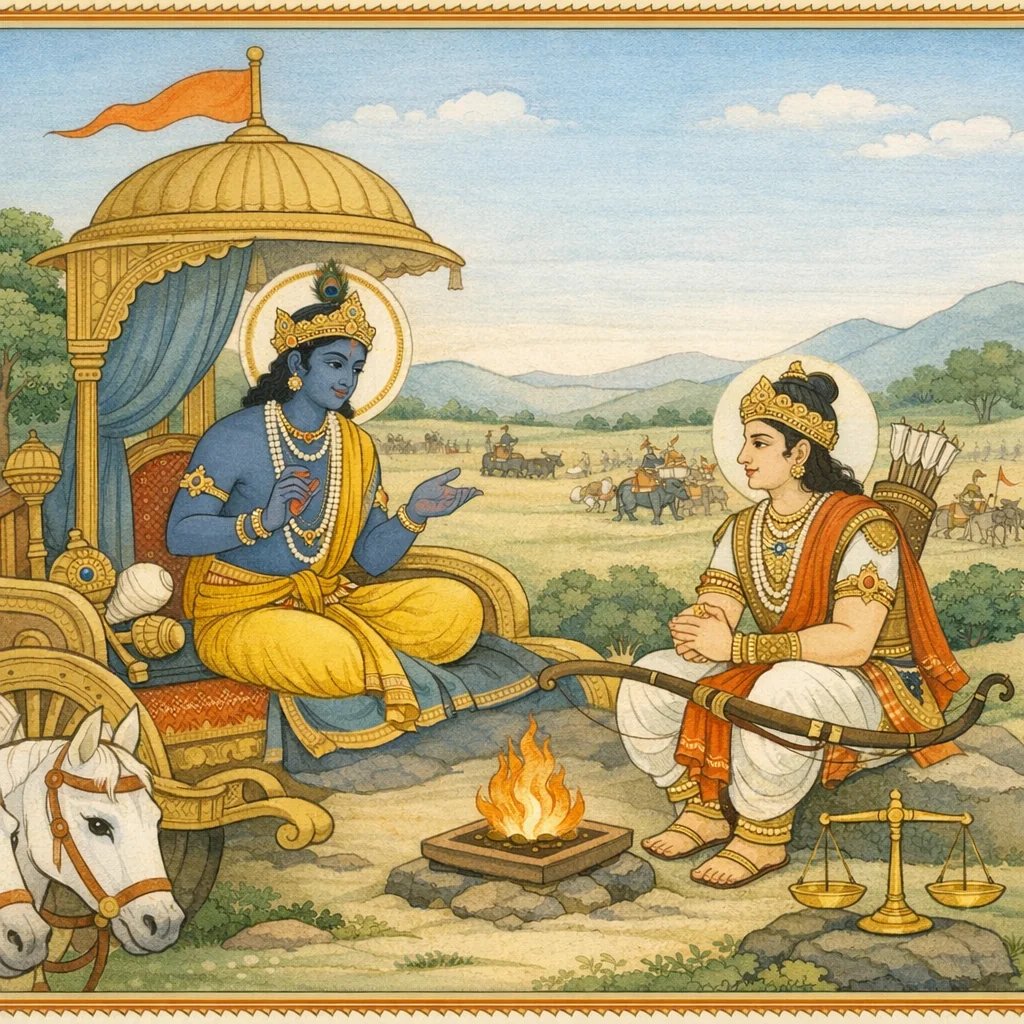
For one who bears a body, it is not possible to abandon actions entirely; rather, the one who relinquishes the fruits of action is called a renouncer.
Traditional expositions often use this to reconcile household life with spiritual practice: ‘renunciation’ is redefined as inner relinquishment. Academic renderings emphasize practical anthropology: embodied life entails activity.
FAQs
It reframes spiritual discipline away from suppression of activity toward changing one’s relationship to outcomes—reducing compulsive reward-seeking.
Action belongs to embodied existence and the guṇas; liberation-oriented practice targets attachment to results, which is a key mechanism of karmic continuity.
This verse supports the chapter’s broader argument that renunciation is primarily internal (tyāga of fruit/attachment), not mere external withdrawal.
In ordinary life, one cannot avoid acting; the practical discipline is to work responsibly while loosening fixation on promotion, applause, or control.
Read Bhagavad Gita in the Vedapath app
Scan the QR code to open this directly in the app, with audio, word-by-word meanings, and more.