Adhyaya 348
Vyākaraṇa—Pratyāhāra System, Upadeśa Conventions, and Manuscript-Critical Notice (Agni Purana, Chapter 348)
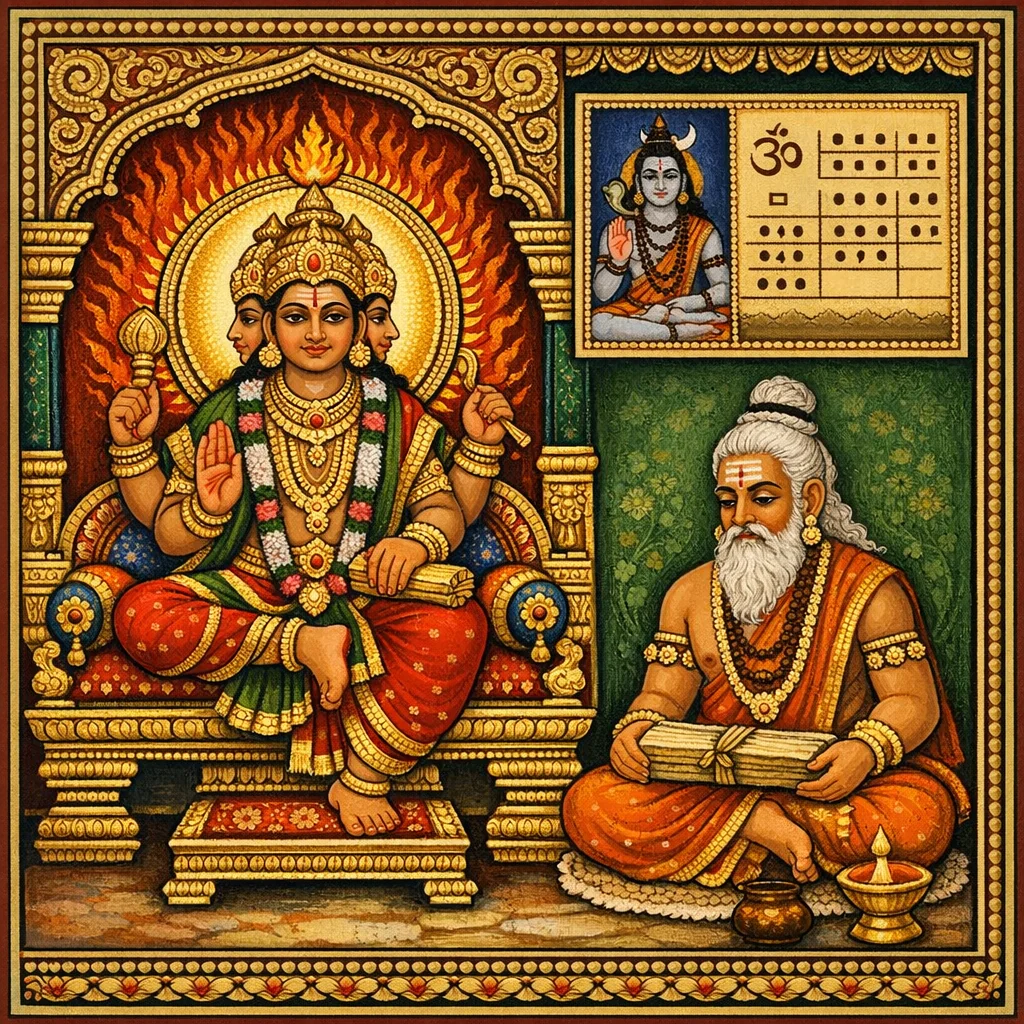
இந்த அத்தியாயம் முதலில் கைஎழுத்துப் பிரதிகளின் விமர்சனத்தைத் தெளிவாகக் கூறுகிறது—முன்னைய குழப்பமான பகுதி பிரதியெடுப்பு-பிழை என நிராகரிக்கப்படுகிறது; சாஸ்திரத்திற்கு துல்லியமான பரம்பரை அவசியம் என நிறுவப்படுகிறது. பின்னர் ஸ்கந்தர் வியாகரணத்தைச் சுருக்கமாக விளக்குகிறார்—‘சொற்களின் நிலைபெற்ற இயல்பு’—காத்யாயன மரபை ஒட்டி, தொடக்க மாணவர்களுக்கு உபதேசமாகவும். வியாகரணச் செயல்களில் பயன்படும் தொழில்நுட்பச் சஞ்ஞைகளை முன்வைத்து, சிவசூத்திர வரிசை (‘அ இ உ ண் …’ முதல் ‘ஹ ல்’ வரை) வழி பிரத்யாஹார முறையை முக்கியமாக எடுத்துரைக்கிறது. உபதேச மரபுகள் கூறப்படுகின்றன—ஒலிகள் இட்-குறியீடுகளுடன் எடுத்துக்காட்டப்படுதல், விதி-பயன்பாட்டில் அனுநாசிகத்தன்மை நீக்கப்படுதல். இறுதியில் பிரத்யாஹாரத் தேர்வு நியாயம்—ஆரம்ப ஒலி மற்றும் இறுதி சுட்டி (இட்) இணைந்து இடைப்பட்ட ஒலிகளின் தொகுதியை குறிக்கும்; ஒவ்வொன்றும் தன் வரம்பில் கொள்ளப்பட வேண்டும். அக்னி புராணத்தின் களஞ்சியக் கண்ணோட்டத்தில் வியாகரணம் வேத உச்சரிப்பு துல்லியம், யாக-விதி சரித்திரம், பொருள் விளக்க நம்பகத்தன்மை ஆகியவற்றுக்கான புனித கருவி; அது தர்மமும் மோக்ஷ இலக்கும் இணைகிறது।
Shlokas
No shlokas available for this adhyaya yet.
Frequently Asked Questions
The chapter emphasizes the pratyāhāra mechanism based on the Śiva-sūtras, including the role of the final indicator (it-marker) and the upadeśa convention that sounds are treated as having it-markers and as non-nasalized for grammatical operations.
It identifies an exemplar/manuscript defect (ādarśa-doṣa) and rejects the corrupted passage, underscoring that śāstric knowledge depends on accurate textual transmission and disciplined philological scrutiny.
By treating linguistic precision as dharmic discipline: correct phonology and rule-application safeguard mantra and scripture, supporting accurate ritual performance and reliable interpretation—practical rigor that ultimately serves both social order (bhukti) and spiritual clarity (mukti).