Adhyaya 200
Dīpadāna-vrata (The Vow of Offering Lamps)
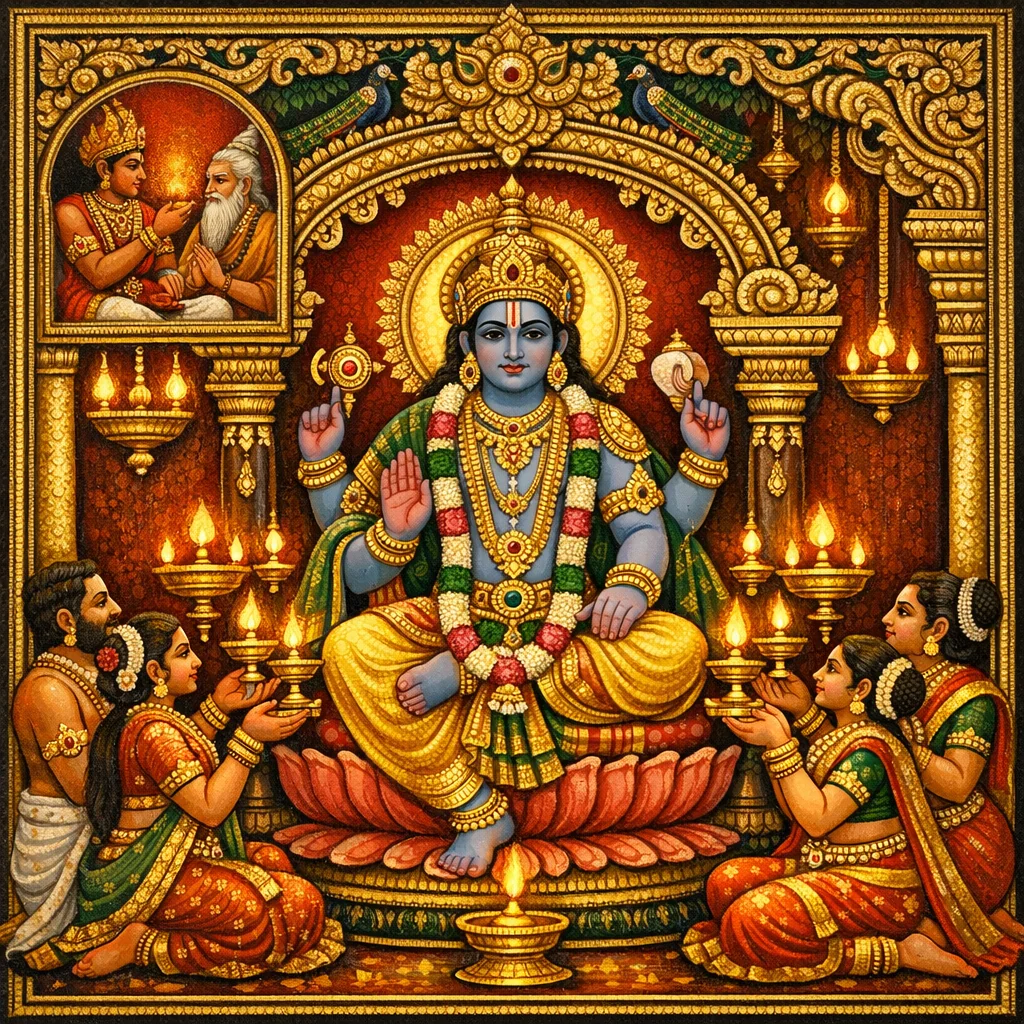
பகவான் அக்னி தீபதான விரதத்தைப் போகமும் மோட்சமும் தரும் விரதமாக உபதேசிக்கிறார். தெய்வாலயத்தில் அல்லது பிராமணரின் இல்லத்தில் ஒரு வருடம் விளக்கு ஏற்றி அர்ப்பணித்தால் முழுமையான செழிப்பு கிடைக்கும்; குறிப்பாக சாத்துர்மாஸ்யமும் கார்த்திகமும் காலத்தில் இதன் புண்ணியம் ஒப்பற்றது, விஷ்ணுலோகப் பிராப்தியும் ஸ்வர்க போகங்களும் தரும். பின்னர் லலிதையின் கதையில் விஷ்ணு ஆலய விளக்குடன் தொடர்பான ஒரு தற்செயலான செயலும் பெரும் பலன் தந்து, அவள் அரசகுலத்தில் மறுபிறவி எடுத்து தாம்பத்யச் செழிப்பையும் பெற்றாள். விளக்கு திருடுதல் கடுமையாக கண்டிக்கப்படுகிறது—மூகம்/மந்த புத்தி பிறவி மற்றும் இருள்-நரக வீழ்ச்சி. இంద్రிய இன்ப ஆசை, தீய காமம், பரஸ்த்ரீகமனம் ஆகியவற்றை விட்டு ஹரிநாம ஜபமும் எளிய அர்ப்பணிப்பாக விளக்கு தானமும் செய்யுமாறு அறிவுறுத்துகிறது. இறுதியில் தீபதானம் எல்லா விரதங்களின் பலனையும் பெருக்கும்; இதை கேட்டு ஏற்று நடைமுறைப்படுத்தினால் உயர்கதி கிடைக்கும் என உறுதிப்படுத்துகிறது.
Shlokas
No shlokas available for this adhyaya yet.
Frequently Asked Questions
Offer a lamp—ideally sustained as a yearly practice—in a deity’s shrine (especially Viṣṇu’s) or a brāhmaṇa’s home; the act is taught as a high-merit vrata granting prosperity, longevity, clarity of sight, and higher worlds, ultimately supporting liberation.
Kārttika is presented as a peak season of ritual potency: lamp-giving then is said to yield exceptional heavenly results, surpassing ordinary times and amplifying vrata-fruit.
It demonstrates that even an unpremeditated or indirect contribution to a lamp-offering in a Viṣṇu temple can generate powerful puṇya, underscoring the vow’s efficacy and the sacredness of temple-based offerings.
The chapter condemns dīpa-theft with severe karmic outcomes and uses hell imagery to caution against negligence, sense-addiction, and sexual misconduct (adultery), redirecting the practitioner toward dharmic restraint and Hari-nāma.