Adhyaya 123
युद्धजयार्णवीयनानायोगाः (Various Yogas from the Yuddha-jayārṇava)
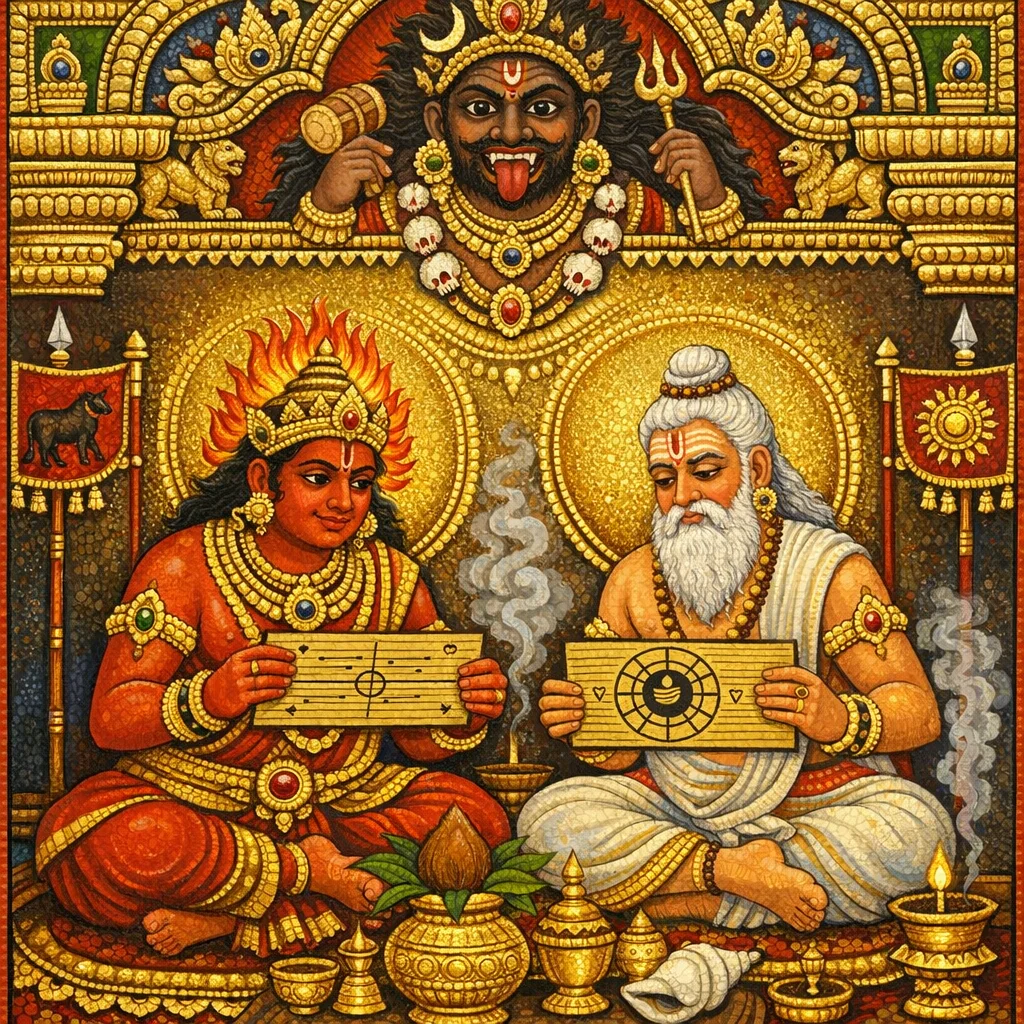
முன்னைய பகுதியில் கால-கணனை (நேரக் கணக்கு) முடித்த பின், பகவான் அக்னி ‘யுத்தஜயார்ணவ’த்திலிருந்து எடுத்துக் கொண்ட போர்-வெற்றி சாரத்தைத் தொடங்குகிறார். இதில் எழுத்தொலிகள் மற்றும் திதிகள் நந்தா முதலிய வகைகளாகப் பிரிக்கப்பட்டு செயல்-தீர்மானம் செய்யப்படுகிறது; எழுத்துக் குழுக்கள் கிரகாதிபதிகளுடன் இணைக்கப்பட்டு மொழி-வானியல் குறியீட்டு வலையாய் சகுன/திவினேஷன் அமைக்கப்படுகிறது. நாடி-ஸ்பந்தனம், உச்ச்வாசம், பலம் போன்ற காலஅளவுகள் மூலம் உடல்-காலக் குறிகளால் பலன் கணிக்கப்படுகிறது. பின்னர் ஸ்வரோதய-சக்கரம், சனி-சக்கரம், கூர்ம-சக்கரம், ராகு-சக்கரம் ஆகியவற்றின் பிரிவுகள், திசைநியமங்கள், மரணமளிக்கும் பகுதிகள் கூறப்பட்டு, நக்ஷத்திர-முஹூர்த்தப் பெயர்களால் எந்த நேரத்தில் எந்தச் செயல் உகந்தது என நிர்ணயிக்கப்படுகிறது. இறுதியில் பைரவ மந்திரப் பயன்பாடுகள்—சிகா-பந்தம், திலகம், அஞ்சனம், தூப-லேபனம்—மேலும் அணியத்தக்க மூலிகைகள், வசீகரண யோகங்கள், திலக-லேபங்கள், எண்ணெய்கள் முதலியவை பாதுகாப்பும் வெற்றியும் பெறக் கூறப்படுகின்றன; இவ்வாறு ஜோதிடம், சடங்கு-தொழில்நுட்பம், மருந்தியல் பயன்பாடு ஆகியவை தர்மநெறி வெற்றிக்காக ஒருங்கிணைக்கப்படுகின்றன।
Shlokas
No shlokas available for this adhyaya yet.
Frequently Asked Questions
A war-oriented Jyotiṣa toolkit: tithi and letter-to-graha mappings, multiple prognostic cakras (Svarodaya, Śani, Kūrma, Rāhu), and muhūrta-based prescriptions for what actions to perform or avoid.
They act as diagrammatic decision systems: divisions, directional placements, and specific ‘death-giving’ portions (notably linked with Śani) guide timing and risk assessment for actions related to conflict and protection.
The chapter treats victory as a synthesis of right timing (Jyotiṣa), protective rite (mantra and ritual acts like tilaka/añjana), and supportive materia medica—typical of the Agni Purana’s encyclopedic Agneya-vidyā approach.
Action-appropriateness: Raudra is prescribed for fierce acts, while Śveta is aligned with purification activities like bathing—demonstrating karmic regulation through time-quality.
Yes. Shloka 25 explicitly notes differences between manuscripts (e.g., a line absent in the Gha manuscript and alternate readings in the Kha manuscript), which is valuable for critical study.