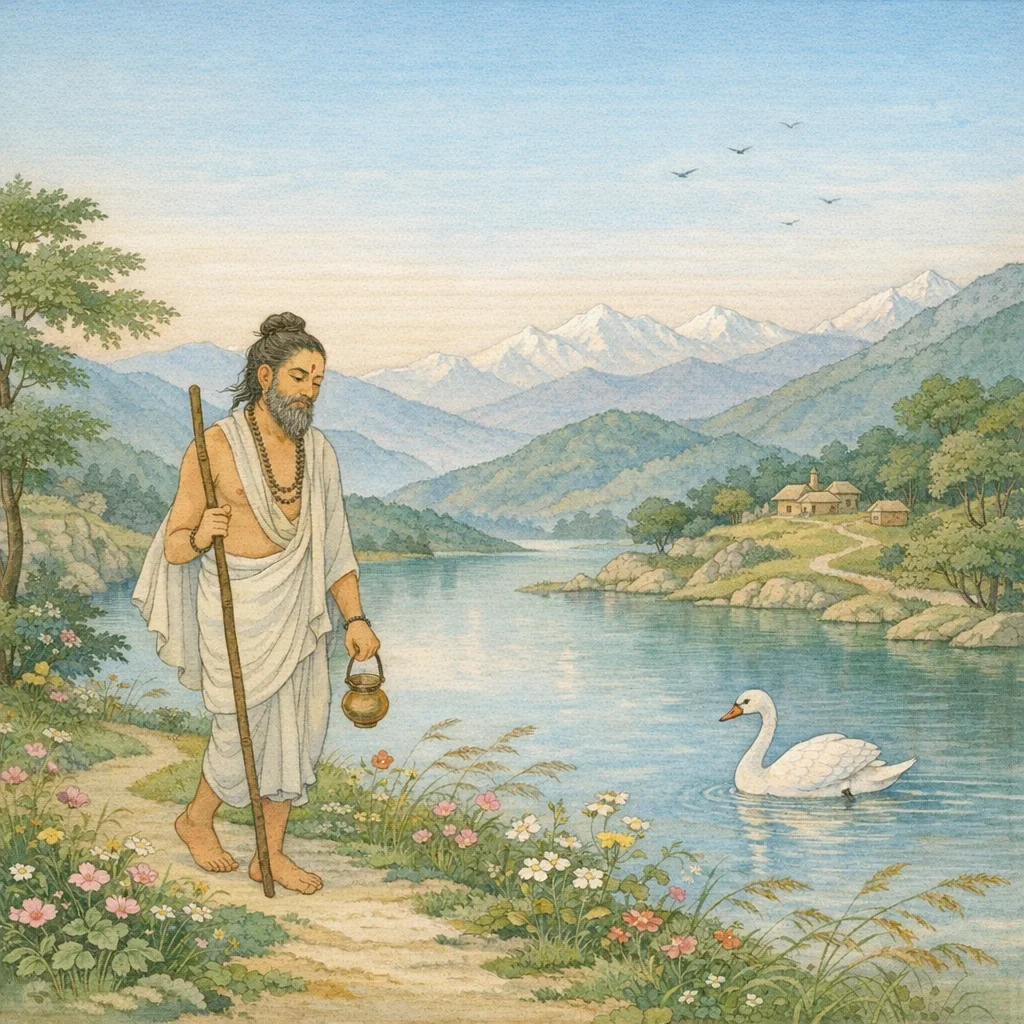
Paramahansaparivrajaka
परमहंसपरिव्राजकोपनिषत् अथर्ववेदसम्बद्धा संन्यासोपनिषत्सु लघ्वी, परं तु तात्त्विकगौरवेण महती। अस्यां परमहंसपरिव्राजकस्य—परमवैराग्ययुक्तस्य, अपरिग्रहिणः, समदर्शिनः—स्वरूपं निरूप्यते। कर्मकाण्डस्य बाह्यलक्षणानि अत्र गौणीकृत्य आत्मविद्यैव मुख्यं साधनं मोक्षस्य इति प्रतिपाद्यते। एष परमहंसः लोकं चरन् अपि न लिप्यते; मानापमानयोः, सुखदुःखयोः, शीतोष्णयोः समः। तस्य यज्ञः आत्मन्येव, अग्निः ज्ञानमेव, तीर्थं स्वात्मनिष्ठैव। एवं उपनिषत् अद्वैतदृष्ट्या संन्यासस्य परमार्थं—अहंकारममतादित्यागं ब्रह्मात्मैक्यनिष्ठां च—संक्षेपेण प्रकाशयति।
Key Teachings
- Paramahaṃsa-parivrājaka as the highest ideal of saṃnyāsa: wandering
non-possessive
inwardly free
- Jñāna (Self-knowledge) as the true “Vedic rite”: inner realization supersedes external ritualism
- Advaitic orientation: ātman-brahman identity as the ground of fearlessness and freedom
- Vairāgya and tyāga: abandonment of mamatā (mine-ness)
ahaṅkāra (ego)
and all acquisitions
- Samatā (equanimity): beyond pairs of opposites—honor/dishonor
pleasure/pain
heat/cold
- Aparigraha and alpa-āhāra: minimal dependence on the world; simplicity in food and shelter
- Non-injury and compassion as natural expressions of non-dual vision
- Outer marks are secondary; the decisive “sign” is steady abidance in the Self
Verses of the Paramahansaparivrajaka
Explore the verses of this Upanishad.
No verses available for this Upanishad yet.