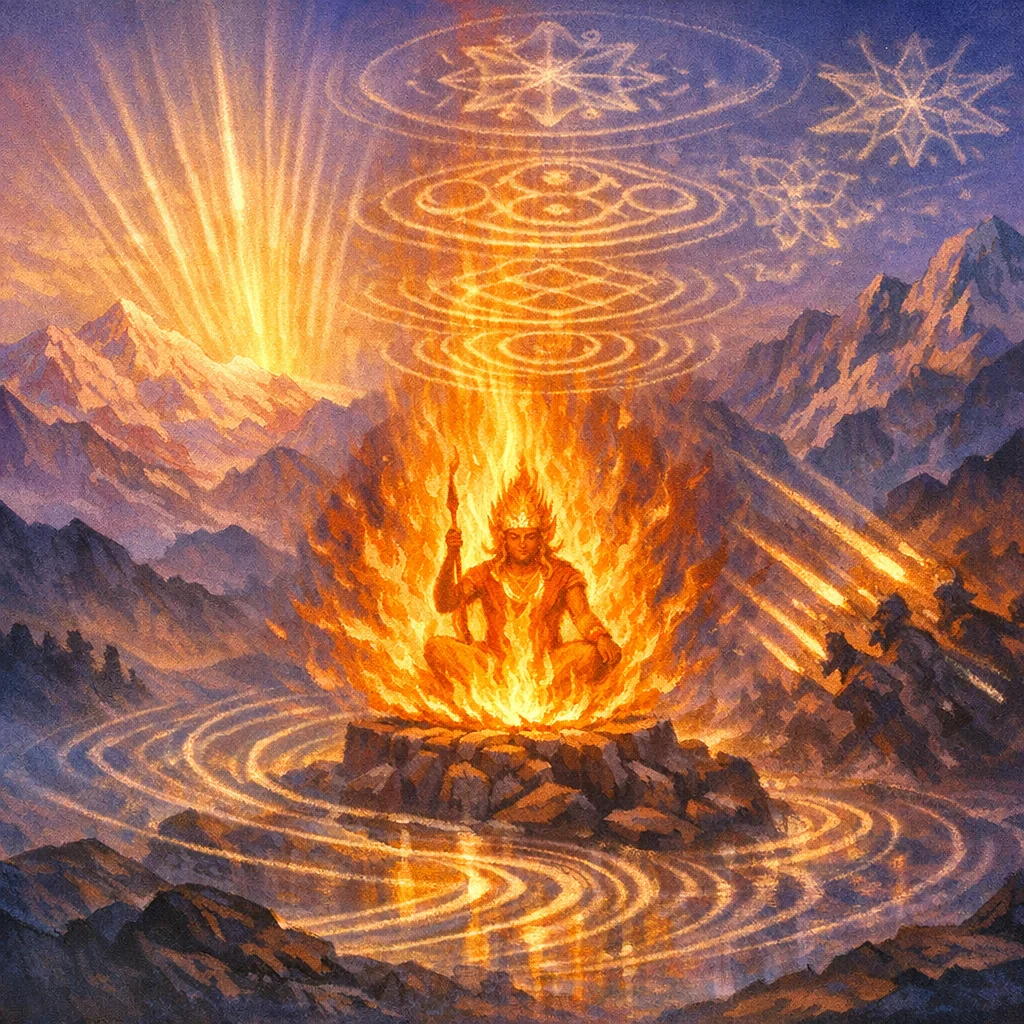
Dashati 6
Agni as dawn-invoker and protector, turning ritual fire into safe passage through danger
Agni
Brisk dawn-bright invocation moving into protective and apotropaic intensity
R̥ṣi attributions are uncertain/unspecified for the cited mantras; dashati-level r̥ṣi-family mapping requires concordance with the underlying Ṛgvedic sources.
प्रातरुषर्बुधेऽग्निं हव्यवाहनं देवयानं समाह्वयामः—स देवान् आनयतु, यज्ञं नयतु, च नः पन्थानं सुरक्षितं करोतु। इन्द्रं शत्रून् निरस्तुं दुरितं चापहर्तुं प्रार्थयामः; ब्रह्मणस्पतिमदितिं च नित्यं शर्माभयाविच्छिन्नरक्षणाय। ऋतेन समिद्धोऽग्निः भयम् अपाकरोति, हिंसां कल्याणे परिवर्तयति, अदित्या अखण्डं स्वस्ति ददाति।
Mantras
Mantra 1
अग्निर्जागार तमृचः कामयन्तेग्निर्जागार तमु सामानि यन्ति अग्निर्जागार तमयं सोम आह तवाहमस्मि सख्ये न्योकाः
अग्निर्जागार; तमृचः कामयन्ते। अग्निर्जागार; तमु सामानि यन्ति। अग्निर्जागार; तमयं सोम आह—तव अहम् अस्मि, सख्ये न्योकाः।
Mantra 2
जुष्टो हि दूतो असि हव्यवाहनो ऽग्ने रथीरध्वराणाम् सजूरश्विभ्यामुषसा सुवीर्यमस्मे धेहि श्रवो बृहत्
हेऽग्ने, त्वं हि जुष्टो दूतः, हव्यवाहनः, अध्वराणां रथी। सजूरश्विभ्यामुषसा च अस्मे सुवीर्यं देहि, बृहत् श्रवो धेहि।
Mantra 3
यत्र बाणाः सम्पतन्ति कुमारा विशिखा इव तत्रा नो ब्रह्मणस्पतिरदितिः शर्म यच्छतु विश्वाहा शर्म यच्छतु .
यत्र बाणाः सम्पतन्ति कुमाराः विशिखा इव, तत्र नो ब्रह्मणस्पतिरदितिः शर्म यच्छतु; विश्वाहाः शर्म यच्छतु।
Frequently Asked Questions
It links dawn-time worship with safety: Agni is asked to bring the gods at sunrise, while other powers remove harm and grant protective shelter (śarma).
The dashati combines invocation with apotropaic (harm-averting) prayer. Indra represents decisive protection, and the carrion-bird imagery signifies total defeat of hostile forces and the carrying away of evil (aghahāra).
Brahmaṇaspati (lord of sacred speech) safeguards through mantra-power, and Aditi symbolizes wholeness and unbrokenness; together they are asked to grant protection every day (viśvāhā śarma yacchatu).