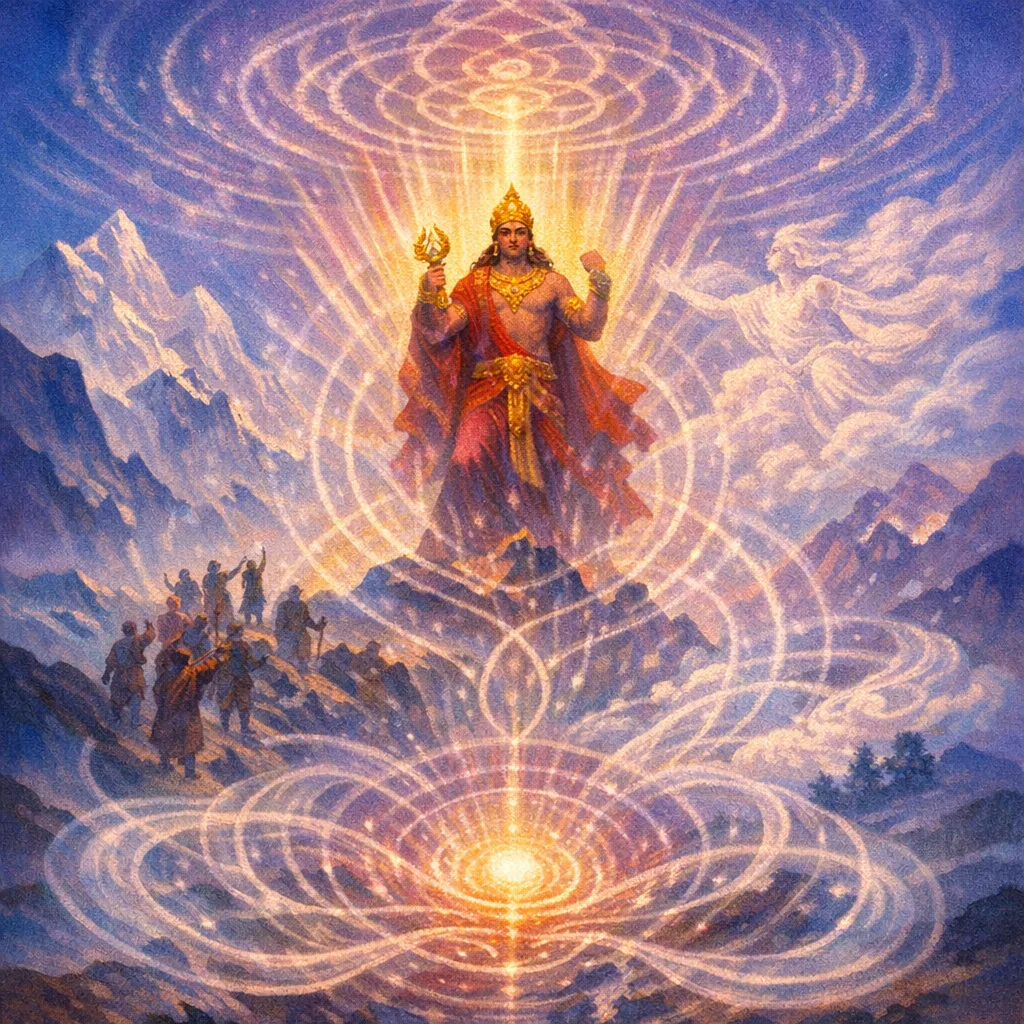
Dashati 11
Aindra praise seeking Indra’s favor and communal advance, with allied Vāta petitions for healing and life-breath
Indra
Uplifting and expansive—heroic Aindra praise tempered by a soothing restorative breath-motif in the Vāta verses
R̥ṣi attributions are not specified in the input; identification requires Ṛgveda concordance and the arcikā cross-index for this prapāṭhaka/daśati unit.
अस्य दशकस्य विषयः—ऐन्द्रं स्तुत्यात्मकं याचनं च। यज्ञोक्त्या हविर्भिः स्तुतिभिश्चेन्द्रः महावर्धकः पालयिता च आहूयते, सः नः सुमतिं जनबलं च ददातु, विशां कल्याणं च वर्धयतु। अनन्तरं वातः प्राणधारकः भेषजस्वरूपश्च आहूयते—सः प्राणं पालयतु, रोगान् शमयतु, आयुः प्रवर्धयतु, तथा जीवनधारणाय गुह्यं ‘अमृतम्’ इव पोषकसारं नः प्रयच्छतु; एवं बाह्यप्रवर्तनात् अन्तःप्राणप्रतिष्ठां प्रति गानक्रमः समाप्यते।
Mantras
Mantra 1
वात आ वातु बेषजं शम्भु मयोभु नो हृदे प्र न अयूंषि तारिषत्
वात आ वातु भेषजं शम्भु मयोभू नः हृदि; प्र न आयूंषि तारिषत्।
Mantra 2
उत वात पितासि न उत भ्रातोत नः सखा स नो जीवातवे कृधि
उत वात पितासि न उत भ्राता उत नः सखा; स नो जीवातवे कृधि।
Mantra 3
यददो वात ते गृहे3 ऽमृतं निहितं गुहा तस्यो नो देहि जीवसे
यददो वात ते गृहेऽमृतं निहितं गुहा; तस्यो नो देहि जीवसे।
Frequently Asked Questions
It links ritual praise and offering with divine help: Indra is asked to grant favorable support and strength for the communities, while Vāta is asked to heal, protect the life-breath, and prolong life.
Even in Indra-centered groupings, allied petitions occur for practical welfare. Vāta represents prāṇa and healing; invoking him complements Indra’s protective power by securing health and longevity for the sacrificer.
It points to a concealed life-sustaining essence—often understood as sacrificial potency/ojas (and by extension Soma-like vitality). The singer asks Vāta to bestow that sustaining power ‘for living’ (jīvase).