Dashati 9
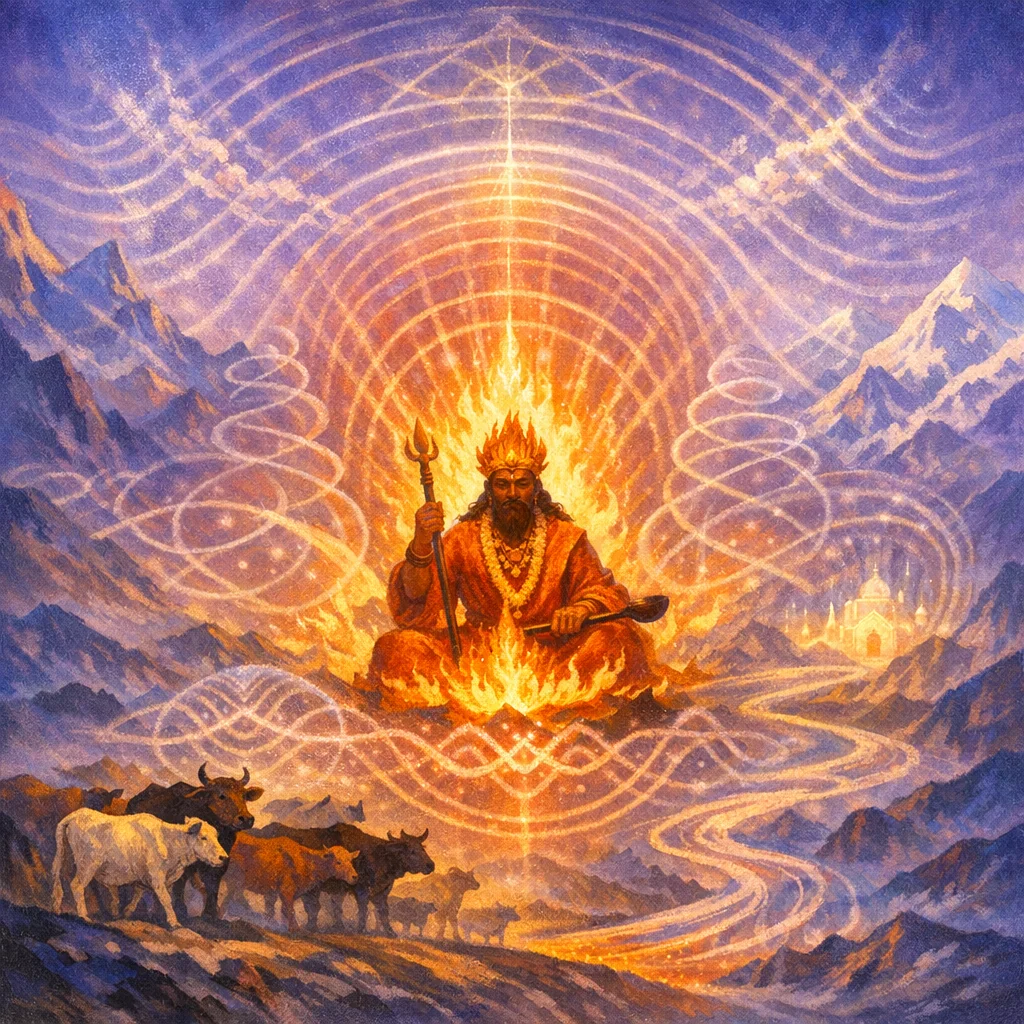
Agni as the ritual guide who secures prosperity (cattle-wealth) and leads the sacrificer to a protected divine ‘abode’ through correct performance
Agni
Bright forward-driving and auspicious—suited to invocation and ritual propulsion
Seer attribution is not supplied here; the verses reflect a standard Ṛgvedic Agni-hymn idiom with one piece attributed to Viśvakarman tradition in the sample.
अत्राग्निः पावकशोचिषा यज्ञस्य नेताऽऽहूयते—स हविर्वहन् कर्म सम्यक् साधयति, गोसमृद्धिं ददाति, यजमानं च सुरक्षितं दिव्यं क्षयं नयति। अघ्न्याः गावः पाशवश्च धर्म्यं धनं रक्ष्यन्ते; यज्ञस्य क्रमशः प्रयांसि कृत्वा क्षयप्राप्तिः प्रतिपाद्यते। क्वचिद् विश्वकर्मा सर्वकर्त्ता यज्ञस्य परिपूरकः स्थिरीकर्त्ता च प्रार्थ्यते—यज्ञः सफलो भवतु, यजमानस्य जयः दानं च स्थिरं स्यात्।
Mantras
Mantra 1
विश्वकर्मन्हविषा वावृधानः स्वयं यजस्व तन्वा3ं स्वा हि ते मुह्यन्त्वन्ये अभितो जनास इहास्माकं मघवा सूरिरस्तु
हे विश्वकर्मन्, हविषा वावृधानः, स्वयम् यजस्व तन्वां स्वा; अन्ये जनासः अभितः मुह्यन्तु; इह अस्माकं मघवा सूरीरस्तु।
Mantra 2
अभि प्रयांसि वाहसा दाश्वां अश्नोति मर्त्यः क्षयं पावकशोचिषः
अभि प्रयांसि वाहसा दाश्वान् अश्नोति मर्त्यः । क्षयं पावकशोचिषः ॥
Mantra 3
साह्वान्विश्वा अभियुजः क्रतुर्देवानाममृक्तः अग्निस्तुविश्रवस्तमः
साह्वान् विश्वा अभियुजः । क्रतुर् देवानाम् अमृक्तः—अग्निस्तुविश्रवस्तमः ॥
Frequently Asked Questions
In Vedic ritual language, cows (go/dhenū) symbolize lawful wealth and sacrificial prosperity. Calling them aghnyāḥ (“not to be harmed”) stresses protected, rightful gain that comes through correct yajña.
It means attaining a secure state of divine favor—protection, stability, and a ‘dwelling’ in Agni’s grace—through the successive steps of the rite (prayāṃsi) that Agni carries and purifies.
Viśvakarman functions as a ‘completer’ and organizer of the sacrifice. His inclusion reinforces the idea that the rite succeeds as a whole—bringing patronal generosity and overcoming ritual rivalry.