
Bhagavad Gita — Karma Sannyasa Yoga, Shloka 28
Karma Sannyasa Yoga
यतेन्द्रियमनोबुद्धिर्मुनिर्मोक्षपरायणः । विगतेच्छाभयक्रोधो यः सदा मुक्त एव सः ॥ ५.२८ ॥
yatendriya-mano-buddhir munir mokṣa-parāyaṇaḥ | vigatecchā-bhaya-krodho yaḥ sadā mukta eva saḥ || 5.28 ||

यतेन्द्रियमनोबुद्धिर्मुनिर्मोक्षपरायणः । विगतेच्छाभयक्रोधो यः सदा मुक्त एव सः ॥
जिस मुनि के इन्द्रिय, मन और बुद्धि संयमित हैं, जो मोक्ष को ही परम लक्ष्य मानता है, और जिसकी इच्छा, भय तथा क्रोध नष्ट हो चुके हैं—वह सदा मुक्त ही है।
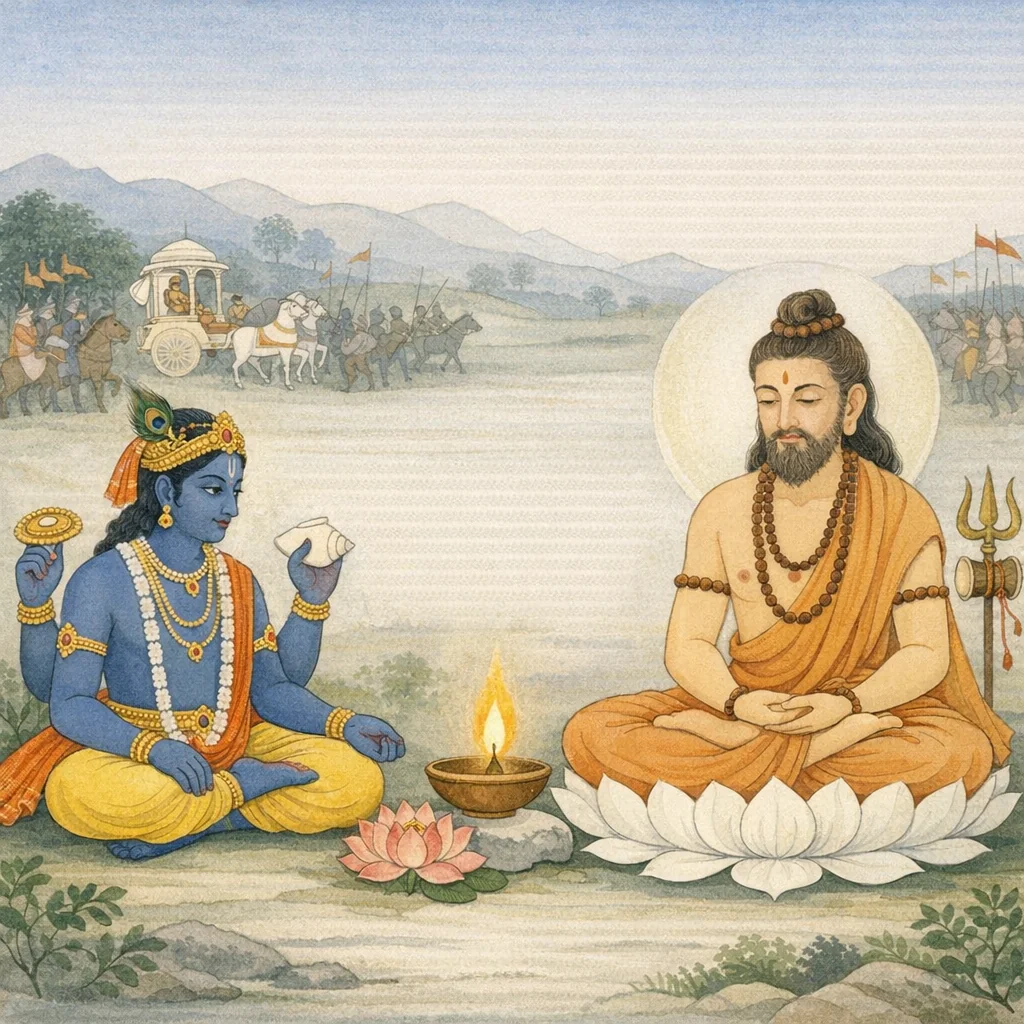
The sage whose senses, mind, and intellect are restrained, who is devoted to liberation as the supreme end, and in whom desire, fear, and anger have departed—he is indeed always free.
No major textual uncertainty; the main interpretive issue is whether “always free” indicates jīvanmukti (liberation while living) or a strong ethical-psychological characterization of one established in liberating insight.
FAQs
It identifies a stable mental profile: reduced compulsive wanting, lowered threat-reactivity (fear), and diminished hostility (anger), supported by disciplined cognition and attention.
Freedom is linked to a reorientation of consciousness toward mokṣa; the verse suggests that liberation is not only post-mortem but can be reflected in present mental equanimity and insight.
This verse concludes the meditative instructions in Chapter 5 by describing the liberated sage’s traits, reinforcing that renunciation is primarily internal.
Useful as an ethical-psychological ideal: cultivating self-regulation, reducing fear-based decisions, and transforming anger into clarity supports well-being and social harmony.