Adhyaya 185
Chapter 185 — नवमीव्रतानि (The Observances for Navamī)
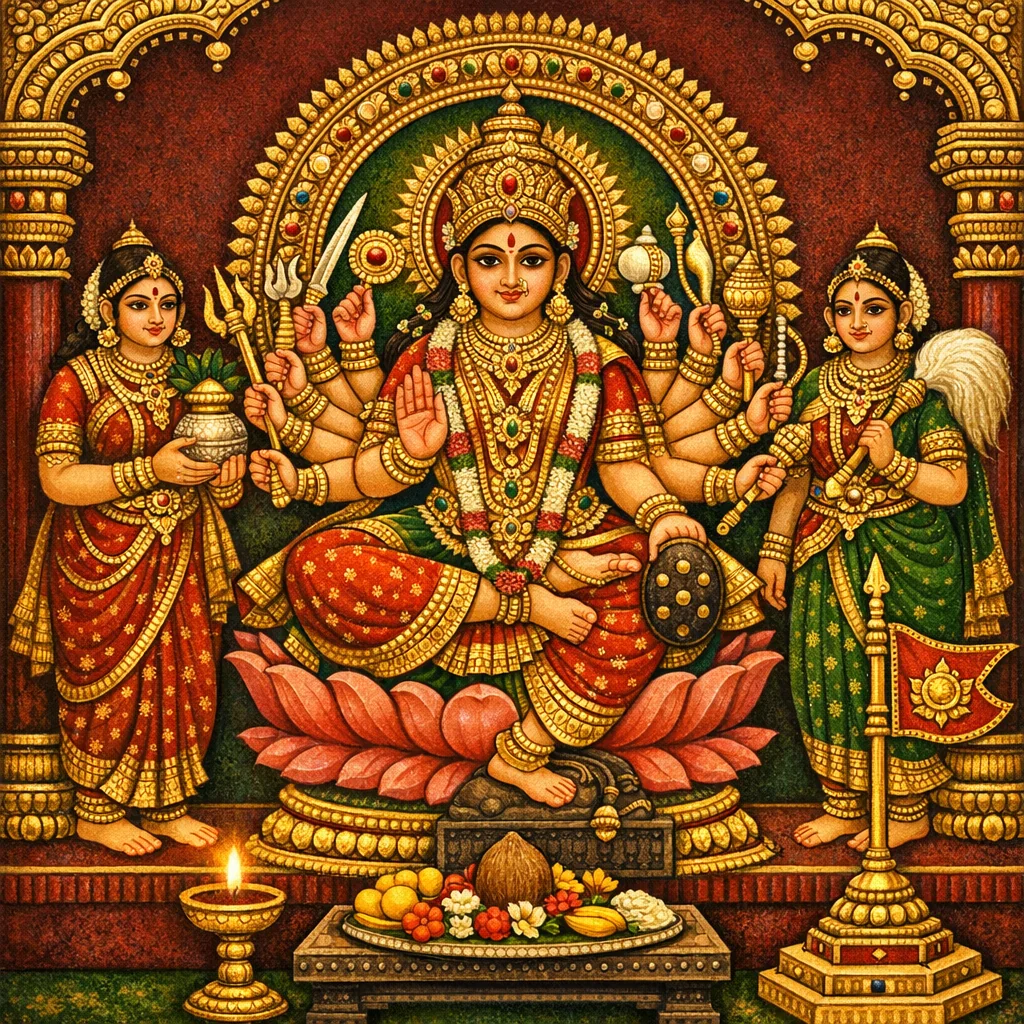
अग्निर्वसिष्ठं गौर्याः/दुर्गायाः नवमीव्रतं शिक्षयति, भुक्तिमुक्त्योरुभयोरपि सिद्धिं प्रतिजानन्। नवमी ‘पिष्टका’ इति निर्दिश्यते; आश्विनशुक्लनवम्याः कालो नक्षत्रयोगश्च सूक्ष्मतया निरूप्यते, देवपूजापश्चात् पिष्टभोजनविधानं च। ततः महिषमर्दिनीदुर्गायाः राजरक्षणात्मकं विधानं—नवस्थानेषु वा एकस्मिन् देवालये स्थितां ध्यायेत्; बहुभुजमूर्तेः आयुधोपकरणविशेषैः ध्यानम्। दशाक्षरदुर्गारक्षामन्त्रः, अन्यमन्त्राश्च, अङ्गुष्ठादिकन्यासः, रहस्यत्वं अविघ्नता च प्रतिपाद्यते। आयुधपूजा, उग्रदेवीनामानि, दिग्बलयः (केषुचित् पाठेषु रक्तमांसादि) च; पिष्टनिर्मितशत्रुप्रतिमानाशनं, रात्रौ मातृकापूजा-उग्ररूपाराधनं, पञ्चामृतस्नानं, बलिः, ध्वज-रथयात्रादि उत्सवचिह्नानि—भक्तिं, प्रतिमालक्षणं, राजधर्मरक्षणं च एकत्र संयोजयति।
Shlokas
No shlokas available for this adhyaya yet.
Frequently Asked Questions
It is presented as siddhi-giving—supporting worldly accomplishment and protection (bhukti) while also generating merit conducive to liberation (mukti) through disciplined Durgā worship.
The chapter gives a ten-syllabled protective mantra: “Oṃ, O Durgā, O Durgā, protect (me)! Svāhā,” used as a rakṣā (protection) formula within the Navamī observance.
It includes a royal-protective procedure: in front of the invoked fire, the king bathes and ritually removes/neutralizes an enemy represented by a dough effigy, aligning goddess worship with victory and protection of the realm.
Durgā is visualized in multi-armed forms (notably eighteen-armed and sixteen-handed variants) and associated with a defined set of implements and weapons, which are themselves to be worshipped as part of the observance.