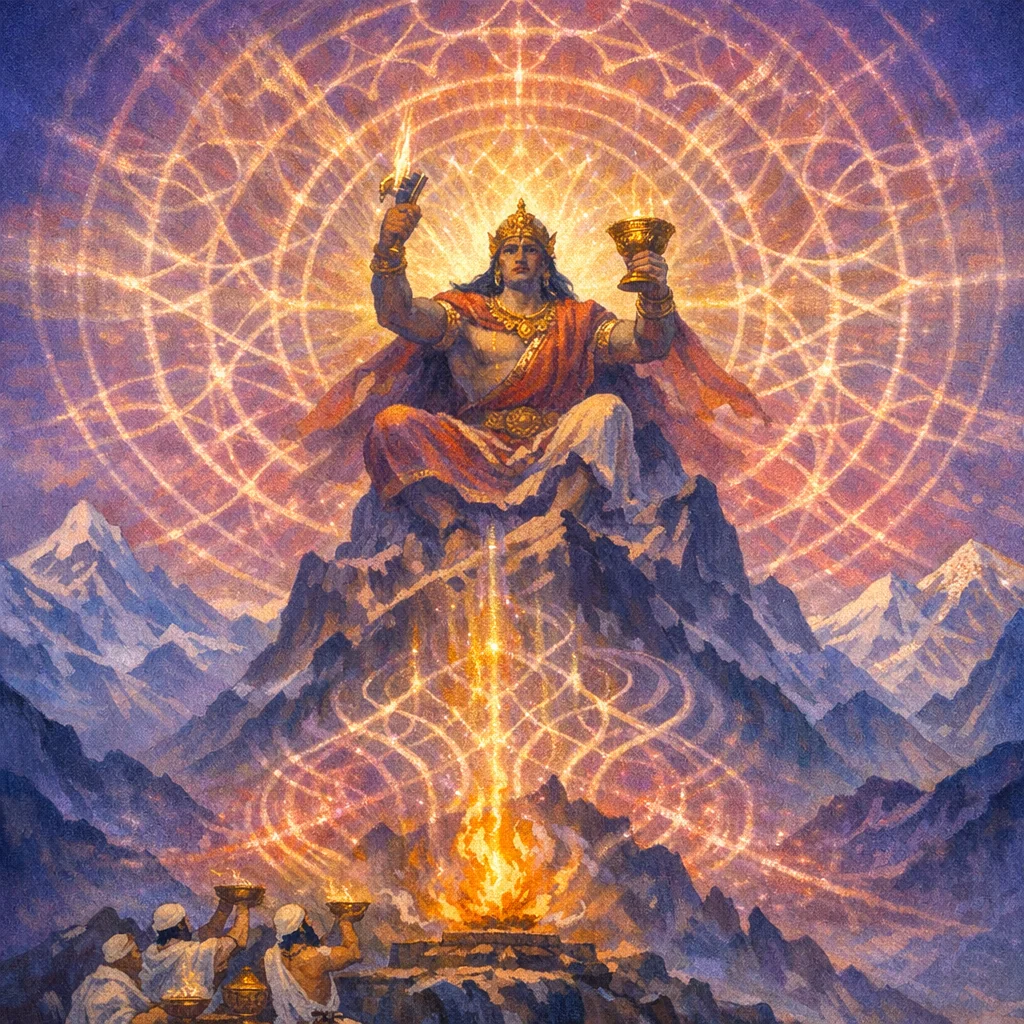
Dashati 3
Aindra stuti at Soma-pressing: praising Indra’s might and inviting him to drink the expressed Soma for protection and welfare
Indra
Rousing heroic and propitiatory—an energetic call to Indra at the pressing
Ṛṣi attribution is not provided in the input; this dashati is treated as Aindra by thematic and ritual placement rather than explicit family colophon here.
Stuti aindra no prensar do soma: louvor ao poder de Indra e convite para que venha ao soma espremido e o beba, em vista de proteção e bem-estar. Temas: convite ao soma (pibā) e presença/companhia no prensar (sute sacā); Indra como puruhūta («muito invocado») e śākī («o capaz, poderoso»); imagens de força e virilidade (balāt, sahasaḥ, ojasaḥ; vṛṣan); dádivas de riqueza em gado e prosperidade (śam); destemor e repulsão de inimigos matadores de homens (anābhayi; nra-rimā). Foco teológico: pela louvação e pelo convite ao soma, harmonizar-se com o poder vitorioso de Indra para obter resguardo, abundância e coragem.
Mantras
Mantra 1
तद्वो गाय सुते सचा पुरुहूताय सत्वने शं यद्गवे न शाकिने
Cantai isto na prensagem do Soma, em acompanhamento, a Indra, o muito-invocado, o poderoso; cantai-lhe o bem-estar, como dádiva para o gado, ao Forte.
Mantra 2
यस्ते नूनं शतक्रतविन्द्र द्युम्नितमो मदः तेन नूनं मदे मदेः
Essa embriaguez de ímpeto que agora é tua, ó Indra, de cem feitos (śatakratu), a mais resplandecente — com ela embriaga-te agora, em cada embriaguez.
Mantra 3
गाव उप वदावटे महि यज्ञस्य रप्सुदा उभा कर्णा हिरण्यया
As vacas aproximam-se do Vadāvaṭa, concedendo esplendor ao grande sacrifício; ambas (as suas) orelhas são de ouro.
Mantra 4
अरमश्वाय गायत श्रुतकक्षारं गवे अरमिन्द्रस्य धाम्ने
Cantai como convém para o cavalo; (cantai) o afamado Kakṣāra para a vaca; cantai como convém para a morada de Indra.
Mantra 5
तमिन्द्रं वाजयामसि महे वृत्राय हन्तवे स वृषा वृषभो भुवत्
A ele, Indra, nós o revigoramos, para que abata o poderoso Vṛtra; que ele seja o touro, o touro mais potente.
Mantra 6
त्वमिन्द्र बलादधि सहसो जात ओजसः त्वं सन्वृषन्वृषेदसि
Tu, Indra, sobressais em força; nascido do poder, do vigor; tu, touro para sempre, és em verdade o mais potente.
Mantra 7
यज्ञ इन्द्रमवर्धयद्यद्भूमिं व्यवर्तयत् चक्राण ओपशं दिवि
O sacrifício (yajña) engrandeceu Indra, quando ele estendeu a terra, firmando um apoio no céu.
Mantra 8
यदिन्द्राहं तथा त्वमीशीय वस्व एक इत् स्तोता मे गोसखा स्यात्
Se eu, ó Indra, pudesse reinar como tu—sozinho sobre as riquezas—, então meu cantor seria para mim companheiro no gado.
Mantra 9
पन्यंपन्यमित्सोतार आ धावत मद्याय सोमं वीराय शूराय
Apressai-vos, ó prensadores (do Soma): trazei o precioso, o precioso Soma — para a exaltação, para o herói, para o valente (Indra).
Mantra 10
इदं वसो सुतमन्धः पिबा सुपूर्णमुदरम् अनाभयिन्ररिमा ते
Bebe, ó Vasu, este Soma espremido; enche o teu ventre bem cheio; sê destemido — e que o inimigo destruidor de homens esteja longe de ti.
Frequently Asked Questions
It invites Indra to the Soma-pressing, praises his overwhelming power, and asks for prosperity (especially cattle-wealth), protection, and fearlessness.
These are ritual time-and-action markers: the hymns are meant to be sung when Soma is freshly pressed, calling Indra to drink the offered draught and empower the rite’s benefits.
Puruhūta presents Indra as the deity repeatedly invoked in stotras, while vṛṣan highlights virile, rain-and-victory potency—supporting the prayer for strength, protection, and the defeat of foes.