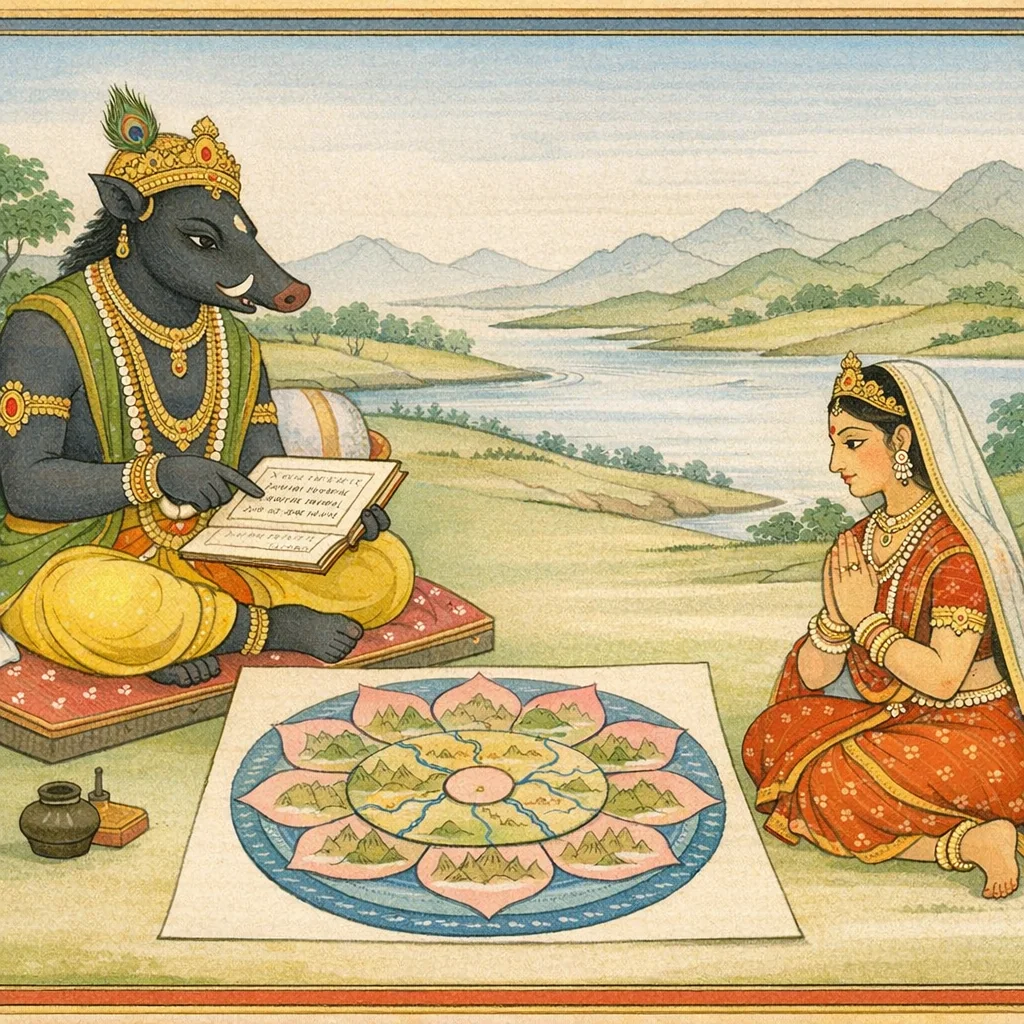
Adhyaya 85: The Ninefold Division of Bhārata and the Enumeration of Its Mountains and River Systems
Bhāratavarṣa-nava-bheda-vyavasthā tathā nadī-parvata-nirdeśaḥ
Ancient-Geography
ਵਰਾਹ–ਪ੍ਰਿਥਵੀ ਦੇ ਉਪਦੇਸ਼-ਸੰਵਾਦ ਵਿੱਚ ਰੁਦ੍ਰ ਦੀ ਪ੍ਰਮਾਣਿਕ ਵਾਣੀ ਰਾਹੀਂ ਕਿਹਾ ਜਾਂਦਾ ਹੈ ਕਿ ਭੂਪਦਮ-ਵਿਵਸਥਾ ਪਹਿਲਾਂ ਸਮਝਾਈ ਗਈ। ਫਿਰ ਭਾਰਤਵਰਸ਼ ਨੂੰ ਨੌਂ ਭਾਗਾਂ ਵਿੱਚ ਵੰਡ ਕੇ ਉਨ੍ਹਾਂ ਦੇ ਨਾਂ ਖੇਤਰੀ ਰੂਪ ਵਿੱਚ ਗਿਣਾਏ ਜਾਂਦੇ ਹਨ। ਹਰ ਭਾਗ ਨੂੰ ਸਮੁੰਦਰ-ਘਿਰਿਆ ਹੋਇਆ ਅਤੇ ਯੋਜਨ ਮਾਪ ਅਨੁਸਾਰ ਦਰਸਾਇਆ ਗਿਆ ਹੈ। ਧਰਤੀ ਦੀ ਸਥਿਰਤਾ ਲਈ ਸੱਤ ਕੁਲ-ਪਰਵਤ (ਧਾਰਕ ਪਹਾੜੀ ਸ਼੍ਰੇਣੀਆਂ) ਅਤੇ ਫਿਰ ਹੋਰ ਛੋਟੇ ਪਰਵਤਾਂ ਦੀ ਸੂਚੀ ਦਿੱਤੀ ਜਾਂਦੀ ਹੈ। ਅੰਤ ਵਿੱਚ ਆਰਯ ਅਤੇ ਮਲੇੱਛ ਜਨਪਦਾਂ ਦੇ ਨਿਵਾਸ ਨੂੰ ਜਲ-ਪ੍ਰਣਾਲੀ ਨਾਲ ਜੋੜਦਿਆਂ ਮੁੱਖ ਨਦੀਆਂ ਦਾ ਵਰਣਨ ਕਰਕੇ ਉਨ੍ਹਾਂ ਨੂੰ ਹਿਮਵਤ, ਪਾਰਿਆਤ੍ਰ, ਕਸ਼, ਵਿਂਧ੍ਯ ਅਤੇ ਸਹ੍ਯ ਪਰਵਤਾਂ ਤੋਂ ਨਿਕਲਣ ਵਾਲੇ ਸਰੋਤਾਂ ਅਨੁਸਾਰ ਸਮੂਹਬੱਧ ਕੀਤਾ ਜਾਂਦਾ ਹੈ, ਜਿਸ ਨਾਲ ਭੂਗੋਲ ਨੂੰ ਜਲਾਗਮ-ਜਾਲ ਵਜੋਂ ਦਰਸਾਇਆ ਗਿਆ ਹੈ।
Primary Speakers
Key Concepts
Shlokas in Adhyaya 85
Verse 1
ਰੁਦ੍ਰ ਨੇ ਕਿਹਾ: ਇਹ ਭੂ-ਪਦਮ ਦੀ ਵਿਵਸਥਾ ਕਹੀ ਗਈ। ਹੁਣ ਭਾਰਤ ਦੇ ਨੌਂ ਭੇਦ ਸੁਣੋ—ਇੰਦਰ, ਕਸੇਰੁ, ਤਾਮ੍ਰਵਰਣ, ਗਭਸਤੀ, ਨਾਗਦ੍ਵੀਪ, ਸੌਮ੍ਯ, ਗੰਧਰਵ, ਵਾਰੁਣ ਅਤੇ ਭਾਤਰ। ਇਹਨਾਂ ਵਿੱਚੋਂ ਹਰ ਇੱਕ ਸਮੁੰਦਰ ਨਾਲ ਘਿਰਿਆ ਹੈ ਅਤੇ ਇੱਕ-ਇੱਕ ਦਾ ਪਰਿਮਾਣ ਹਜ਼ਾਰ ਯੋਜਨ ਹੈ। ਉੱਥੇ ਸੱਤ ਕੁਲ-ਪਰਵਤ ਹਨ: ਮਹੇਂਦ੍ਰ, ਮਲਯ, ਸਹ੍ਯ, ਸ਼ੁਕਤਿਮਾਨ, ਰਿਕਸ਼-ਪਰਵਤ, ਵਿਂਧ੍ਯ ਅਤੇ ਪਾਰਿਯਾਤ੍ਰ—ਇਹ ਕੁਲ-ਪਰਵਤ ਹਨ। ਹੋਰ ਮੰਦਰ, ਸ਼ਾਰਦ, ਅਰਦੁਰ, ਕੋਲਾਹਲ, ਸੁਰ, ਮੈਨਾਕ, ਵੈਦ੍ਯੁਤ, ਵਾਰੰਧਮ, ਅਪਾਂਡੁਰ, ਤੁੰਗਪ੍ਰਸਥ, ਕ੍ਰਿਸ਼੍ਣਗਿਰਿ, ਜਯੰਤ, ਰੈਵਤ, ਰਿਸ਼੍ਯਮੂਕ, ਗੋਮੰਤ, ਚਿਤ੍ਰਕੂਟ, ਸ਼੍ਰੀਚਕੋਰ, ਕੂਟਸ਼ੈਲ, ਕ੍ਰਿਤਸਥਲ ਆਦਿ ਛੋਟੇ ਪਰਵਤ ਹਨ; ਬਾਕੀ ਹੋਰ ਵੀ ਛੋਟੇ ਹਨ। ਉਨ੍ਹਾਂ ਵਿੱਚ ਆਰ੍ਯ ਅਤੇ ਮਲੇਛ ਜਨਪਦ ਵੱਸਦੇ ਹਨ। ਉਹ ਇਨ੍ਹਾਂ ਨਦੀਆਂ ਦਾ ਪਾਣੀ ਪੀਂਦੇ ਹਨ—ਗੰਗਾ, ਸਿੰਧੁ, ਸਰਸਵਤੀ, ਸ਼ਤਦ੍ਰੁ, ਵਿਤਸਤਾ, ਵਿਪਾਸ਼ਾ, ਚੰਦਰਭਾਗਾ, ਸਰਯੂ, ਯਮੁਨਾ, ਇਰਾਵਤੀ, ਦੇਵਿਕਾ, ਕੁਹੂ, ਗੋਮਤੀ, ਧੂਤਪਾਪਾ, ਬਾਹੁਦਾ, ਦ੍ਰਿਸ਼ਦਵਤੀ, ਕੌਸ਼ਿਕੀ, ਨਿਸ੍ਵਰਾ, ਗੰਡਕੀ, ਚਕ੍ਸ਼ੁਸ਼ਮਤੀ, ਲੋਹਿਤਾ—ਇਹ ਹਿਮਵਤ ਦੇ ਪੈਰਾਂ ਤੋਂ ਨਿਕਲਦੀਆਂ ਹਨ। ਅਤੇ ਵੇਦਸ੍ਮ੍ਰਿਤਿ, ਵੇਦਵਤੀ, ਸਿੰਧੁਪਰਣਾ, ਸਚੰਦਨਾ, ਸਦਾਚਾਰਾ, ਰੋਹਿਪਾਰਾ, ਚਰਮਣਵਤੀ, ਵਿਦਿਸ਼ਾ, ਵੇਦਤ੍ਰਯੀ—ਇਹ ਪਾਰਿਯਾਤ੍ਰ ਤੋਂ ਉਤਪੰਨ ਹਨ।
Verse 2
ਸ਼ੋਣਾ, ਜ੍ਯੋਤੀਰਥਾ, ਨਰਮਦਾ, ਸੁਰਸਾ, ਮੰਦਾ, ਮੰਦਾਕਿਨੀ, ਦਸ਼ਾਰਣਾ, ਚਿਤ੍ਰਕੂਟਾ, ਤਮਸਾ, ਪਿੱਪਲਾ, ਕਰਤੋਯਾ, ਪਿਸ਼ਾਚਿਕਾ, ਚਿਤ੍ਰੋਤਪਲਾ, ਵਿਸ਼ਾਲਾ, ਵੰਜੁਲਾ, ਬਾਲੁਕਾ, ਵਾਹਿਨੀ, ਸ਼ੁਕਤਿਮਤੀ, ਵਿਰਜਾ, ਪੰਕਿਨੀ, ਰਿਰਿ, ਕੁਹੂ—ਇਹ ਰਿਕਸ਼ ਪਹਾੜ ਤੋਂ ਉਤਪੰਨ ਹਨ। ਮਣਿਜਾਲਾ, ਸ਼ੁਭਾ, ਤਾਪੀ, ਪਯੋਸ਼੍ਣੀ, ਸ਼ੀਘ੍ਰੋਦਾ, ਵੇਸ਼ਣਾ, ਪਾਸ਼ਾ, ਵੈਤਰਨੀ, ਵੇਦੀ, ਪਾਲੀ, ਕੁਮੁਦਵਤੀ, ਤੋਯਾ, ਦੁਰਗਾ, ਅੰਤ੍ਯਾ, ਗਿਰਾ—ਇਹ ਵਿਂਧ੍ਯ ਦੇ ਪੈਰਾਂ ਤੋਂ ਨਿਕਲਦੀਆਂ ਹਨ। ਗੋਦਾਵਰੀ, ਭੀਮਰਥੀ, ਕ੍ਰਿਸ਼੍ਣਾ, ਵੇਣਾ, ਵੰਜੁਲਾ, ਤੁੰਗਭਦ੍ਰਾ, ਸੁਪ੍ਰਯੋਗਾ, ਵਾਹ੍ਯਾ, ਕਾਵੇਰੀ—ਇਹ ਸਹ੍ਯ ਪਹਾੜ ਦੇ ਪੈਰਾਂ ਤੋਂ ਉਤਪੰਨ ਹਨ।
Frequently Asked Questions
Rather than prescribing a ritual ethic, the passage frames terrestrial order through interlinked divisions of land, sustaining mountain ranges, and river networks. The implicit instruction is that human habitation (janapadas) depends upon stable watersheds and geomorphological supports (kula-parvatas), presenting Earth as an organized system whose balance is maintained by mountains and rivers.
No explicit chronological markers (tithi, nakṣatra, māsa, or seasonal timings) appear in the provided ślokas. The content is primarily classificatory (regions, mountains, rivers) rather than calendrical or ritual-scheduling.
Environmental balance is articulated through a watershed model: rivers are enumerated and explicitly traced to mountain sources (Himavat, Pāriyātra, Ṛkṣa, Vindhya, Sahya). By connecting settlement patterns to potable river waters, the text implies an ecology where Earth’s habitability depends on the integrity of mountain-fed river systems.
Rudra is the explicit authoritative speaker within the quoted segment. The passage also references social categories of habitation (Ārya and mleccha janapadas) but does not name specific royal dynasties, sages, or administrative lineages in the provided excerpt.