Adhyaya 120
मयूरवद्राजधर्मः (Mayūra-vat Rāja-dharma) — The Peacock-Model of Protective Kingship
Upa-parva: Rājadharmānuśāsana (Instruction on Royal Duties) — Mayūra-nīti (Peacock Model of Kingship)
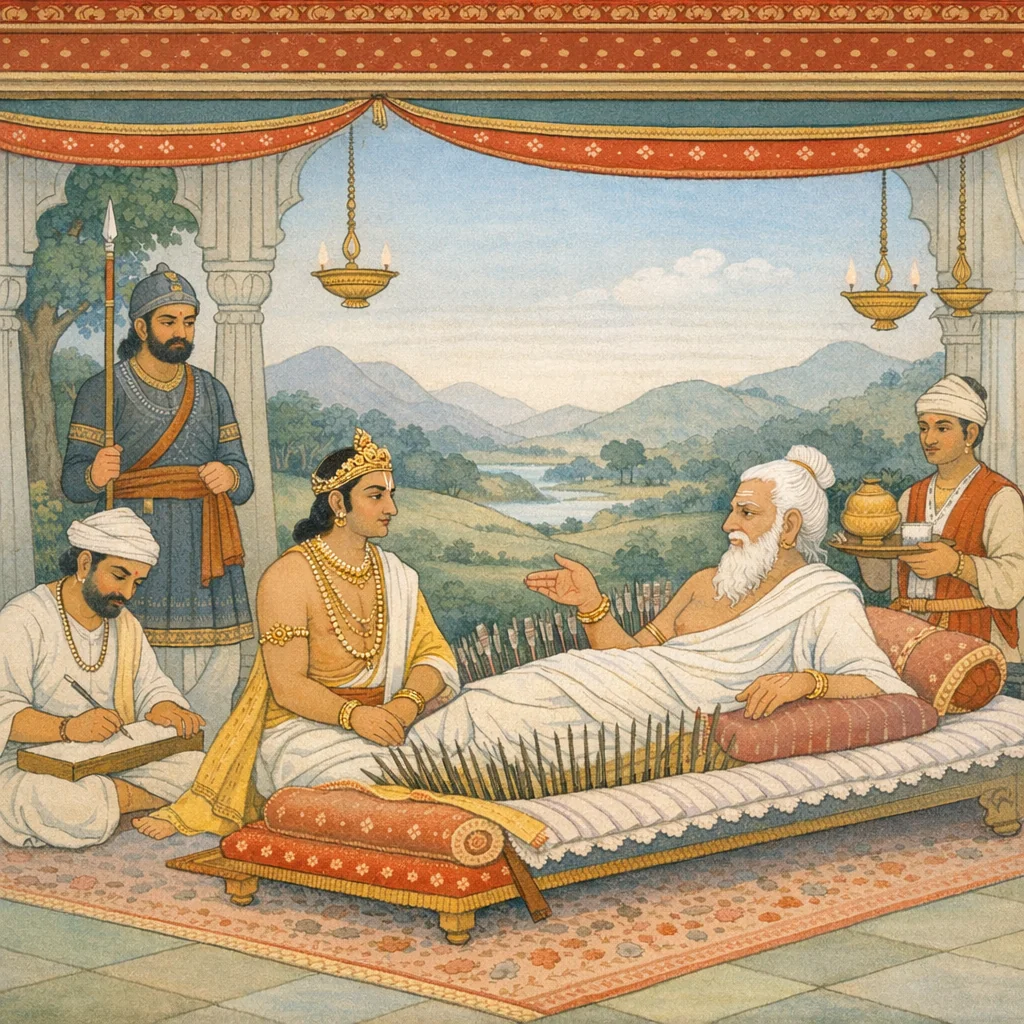
Yudhiṣṭhira asks Bhīṣma to restate, in expanded form, the established formulation of rājadharma articulated by earlier authorities. Bhīṣma defines the kṣatriya’s highest principle as the protection of all beings (rakṣaṇaṃ sarvabhūtānām) and describes a ruler who can assume multiple ‘forms’ according to circumstance—sharpness, indirectness, restraint, truthfulness, and straightforwardness—while remaining balanced. The king should guard counsel (mantra), cultivate refined speech and śāstra-competence, and remain vigilant at the thresholds of danger. He should seek support from learned and accomplished advisers, maintain readiness of daṇḍa while avoiding negligence, and move with strategic discretion, including careful conduct in sensitive terrains and avoidance of traps. The chapter outlines intelligence and risk management, selective association, and the disciplined handling of adversaries. Fiscal guidance emphasizes timely acquisition, daily incremental gains (bee-and-honey metaphor), protected reserves, and measured expenditure. Bhīṣma lists enabling virtues for wealth and stability—fortitude, skill, self-control, superior judgment, courage, valor, sense of place/time, and non-negligence—warning that even small threats or resources should not be underestimated. The discourse culminates in criteria for appointing ethical, trained, non-greedy officials and affirms that durable public welfare and legitimate happiness arise from policy aligned with dharma rather than from disorderly advantage.
Chapter Arc: भीष्म युधिष्ठिर को राजधर्म का व्यावहारिक मर्म बताते हैं—राज्य का ‘यथार्थ फल’ तभी मिलता है जब राजा गुणवान सेवकों को उनकी योग्यता के अनुरूप स्थान और कार्य देता है। → उपदेश कठोर प्रशासनिक सूक्ष्मताओं में उतरता है: अमात्यों/सेवकों को ‘नास्थाने’ न रखना, वर्ण-स्वभाव-गुण के अनुसार कर्म बाँटना, और ऐसे सहायकों का चयन करना जो कुलीन, शूर, ज्ञानवान, शुचि, दक्ष और अदोषदर्शी हों—क्योंकि गलत नियुक्ति से राज्य-कार्य बिखरता है। → भीष्म निर्णायक रूप से कहते हैं कि स्वामी-कार्य में बाण की तरह छूटकर दौड़ने वाले, राजहित में तत्पर भृत्यों को राजा को सान्त्व/प्रोत्साहन देना चाहिए; साथ ही कोष की निरन्तर रक्षा अनिवार्य है—क्योंकि राजा का मूल कोष है और वही वृद्धि का कारण है। → युधिष्ठिर के लिए नीति-सूत्र समेटे जाते हैं: ज्ञाति-बन्धु, मित्र-सम्बन्धी, और पौर-कार्य/लोकहित की सतत चिंता रखते हुए स्थिर बुद्धि से प्रजापालन करो—यही ‘नैष्ठिकी बुद्धि’ है। → भीष्म संकेत देते हैं कि यदि युधिष्ठिर और अधिक सुनना चाहें तो वे आगे उदाहरण/दृष्टान्त (शुनो निदर्शनं) सहित विस्तार करेंगे।
Shlokas
Verse 1
(दाक्षिणात्य अधिक पाठके ७ श्लोक मिलाकर कुल ३५ श्लोक हैं।) ऑपन-माजल बछ। अकाल एकोनविशर्त्याधिकशततमो< ध्याय: सेवकोंको उनके योग्य स्थानपर नियुक्त हक: 38 और सत्पुरुषोंका संग्रह करने
ਭੀਸ਼ਮ ਨੇ ਆਖਿਆ—ਜੋ ਨਰਾਧਿਪ ਗੁਣਵਾਨ ਸੇਵਕਾਂ ਨੂੰ ਉਨ੍ਹਾਂ ਦੇ-ਉਨ੍ਹਾਂ ਯੋਗ ਅਸਥਾਨਾਂ ‘ਤੇ ਨਿਯੁਕਤ ਕਰਕੇ, ਪਦ ਅਨੁਸਾਰ ਕਰਤੱਬਾਂ ਵਿੱਚ ਲਗਾਂਦਾ ਹੈ, ਉਹੀ ਰਾਜਧਰਮ ਦਾ ਯਥਾਰਥ ਫਲ ਪ੍ਰਾਪਤ ਕਰਦਾ ਹੈ।
Verse 2
भीष्मजी कहते हैं--युधिष्ठिर! इस प्रकार जो राजा गुणवान् भृत्योंको अपने-अपने स्थानपर रखते हुए कार्योमें लगाता है, वह राज्यके यथार्थ फलका भागी होता है ।।
ਭੀਸ਼ਮ ਨੇ ਆਖਿਆ—ਯੁਧਿਸ਼ਠਿਰ! ਜੋ ਰਾਜਾ ਆਪ ਗੁਣਵਾਨ ਹੋ ਕੇ ਗੁਣਵਾਨ ਭ੍ਰਿਤਿਆਂ ਨੂੰ ਉਨ੍ਹਾਂ ਦੇ-ਉਨ੍ਹਾਂ ਅਸਥਾਨਾਂ ‘ਤੇ ਰੱਖਦਾ ਅਤੇ ਉਨ੍ਹਾਂ ਨੂੰ ਯੋਗ ਕਰਤੱਬਾਂ ਵਿੱਚ ਲਗਾਂਦਾ ਹੈ, ਉਹੀ ਰਾਜ ਦੇ ਯਥਾਰਥ ਫਲ ਦਾ ਭਾਗੀ ਹੁੰਦਾ ਹੈ। ਕਿਸੇ ਨੂੰ ਵੀ ਉਸ ਦੇ ਆਪਣੇ ਅਸਥਾਨ ਤੋਂ ਉੱਪਰ ਚੁੱਕ ਕੇ ਆਦਰਯੋਗ ਨਹੀਂ ਬਣਾਉਣਾ ਚਾਹੀਦਾ; ਕਿਉਂਕਿ ਜੋ ਆਪਣੀ ਹੱਦ ਲੰਘਦਾ ਹੈ, ਉਹ ਨਾ ਭਰੋਸੇਯੋਗ ਰਹਿੰਦਾ ਹੈ, ਨਾ ਹੀ ਸਤਕਾਰ ਦੇ ਯੋਗ। ਪੁਰਾਤਨ ਕਥਾ ਇਸ ਗੱਲ ਨੂੰ ਸਾਫ਼ ਕਰਦੀ ਹੈ—ਜੇ ਕੁੱਤੇ ਨੂੰ ਉਸ ਦੀ ਥਾਂ ਤੋਂ ਚੁੱਕ ਕੇ ਉੱਚਾ ਚੜ੍ਹਾ ਦਿੱਤਾ ਜਾਵੇ, ਤਾਂ ਉਹ ਬੇਪਰਵਾਹ ਅਤੇ ਅਭਰੋਸੇਯੋਗ ਹੋ ਜਾਂਦਾ ਹੈ; ਇਸ ਲਈ ਕੁੱਤੇ ਨੂੰ ਉਸ ਦੀ ਜਗ੍ਹਾ ਤੋਂ ਉਠਾ ਕੇ ਕਦੇ ਉੱਚੇ ਅਸਥਾਨ ‘ਤੇ ਨਾ ਬਿਠਾਓ। ਇਸੇ ਤਰ੍ਹਾਂ, ਨੀਵੀਂ ਹੈਸियत ਵਾਲਾ ਮਨੁੱਖ ਵੀ ਜੇ ਆਪਣੀ ਯੋਗਤਾ ਅਤੇ ਮਰਯਾਦਾ ਤੋਂ ਉੱਪਰ ਦਾ ਪਦ ਪਾ ਲਵੇ, ਤਾਂ ਅਹੰਕਾਰ ਕਰਕੇ ਅਕਸਰ ਉੱਛ੍ਰਿੰਖਲ ਹੋ ਜਾਂਦਾ ਹੈ।
Verse 3
स्वजातिगुणसम्पन्ना: स्वेषु कर्मसु संस्थिता: । प्रकर्तव्या ह्ामात्यास्तु नास्थाने प्रक्रिया क्षमा
ਜੋ ਆਪਣੇ ਜਾਤਿ-ਵਰਨ ਦੇ ਗੁਣਾਂ ਨਾਲ ਸੰਪੰਨ ਹੋਣ ਅਤੇ ਆਪਣੇ ਨਿਯਤ ਕਰਤਵਾਂ ਵਿੱਚ ਦ੍ਰਿੜ੍ਹ ਰਹਿੰਦੇ ਹੋਣ, ਉਨ੍ਹਾਂ ਨੂੰ ਹੀ ਮੰਤਰੀ ਬਣਾਉਣਾ ਚਾਹੀਦਾ ਹੈ; ਪਰ ਕਿਸੇ ਨੂੰ ਵੀ ਉਸ ਦੀ ਯੋਗਤਾ ਅਤੇ ਮਰਯਾਦਾ ਤੋਂ ਬਾਹਰ ਦੇ ਕੰਮ ਵਿੱਚ ਲਗਾਉਣਾ ਰਾਜ-ਪ੍ਰਬੰਧ ਵਿੱਚ ਕਬੂਲ ਨਹੀਂ।
Verse 4
अनुरूपाणि कर्माणि भृत्येभ्यो य: प्रयच्छति । स भृत्यगुणसम्पन्नो राजा फलमुपाश्रुते,जो राजा अपने सेवकोंको उनकी योग्यताके अनुरूप कार्य सौंपता है, वह भृत्यके गुणोंसे सम्पन्न हो उत्तम फलका भागी होता है
ਜੋ ਰਾਜਾ ਆਪਣੇ ਸੇਵਕਾਂ ਨੂੰ ਉਨ੍ਹਾਂ ਦੀ ਯੋਗਤਾ ਅਤੇ ਮਰਯਾਦਾ ਅਨੁਸਾਰ ਕੰਮ ਸੌਂਪਦਾ ਹੈ, ਉਹ ਭ੍ਰਿਤ੍ਯ-ਗੁਣਾਂ ਨਾਲ ਸੰਪੰਨ ਹੋ ਕੇ ਉੱਤਮ ਫਲ ਪ੍ਰਾਪਤ ਕਰਦਾ ਹੈ।
Verse 5
शरभ: शरभस्थाने सिंह: सिंह इवोर्जित: । व्याप्रो व्याप्र इव स्थाप्यो द्वीपी द्वीपी यथा तथा
ਸ਼ਰਭ ਨੂੰ ਸ਼ਰਭ ਦੇ ਥਾਂ, ਬਲਵਾਨ ਸਿੰਘ ਨੂੰ ਸਿੰਘ ਦੇ ਥਾਂ, ਬਾਘ ਨੂੰ ਬਾਘ ਦੇ ਥਾਂ ਅਤੇ ਚੀਤੇ ਨੂੰ ਚੀਤੇ ਦੇ ਥਾਂ ਹੀ ਟਿਕਾਉਣਾ ਚਾਹੀਦਾ ਹੈ; ਇਸੇ ਤਰ੍ਹਾਂ ਹਰ ਇੱਕ ਨੂੰ ਉਸ ਦੇ ਸੁਭਾਵ ਅਤੇ ਯੋਗ ਖੇਤਰ ਅਨੁਸਾਰ ਨਿਯੁਕਤ ਕਰਨਾ ਚਾਹੀਦਾ ਹੈ।
Verse 6
कर्मस्विहानुरूपेषु न््यस्या भृत्या यथाविधि । प्रतिलोम॑ न भृत्यास्ते स्थाप्या: कर्मफलैषिणा
ਇੱਥੇ ਸੇਵਕਾਂ ਨੂੰ ਵਿਧੀ ਅਨੁਸਾਰ ਉਹਨਾਂ ਕੰਮਾਂ ਵਿੱਚ ਹੀ ਲਗਾਉਣਾ ਚਾਹੀਦਾ ਹੈ ਜੋ ਉਨ੍ਹਾਂ ਨੂੰ ਫਬਦੇ ਹੋਣ। ਜੋ ਕਰਮ-ਫਲ ਚਾਹੁੰਦਾ ਹੈ, ਉਹ ਸੇਵਕਾਂ ਨੂੰ ਪ੍ਰਤਿਲੋਮ—ਅਰਥਾਤ ਅਣਉਚਿਤ—ਭੂਮਿਕਾਵਾਂ ਵਿੱਚ ਨਾ ਰੱਖੇ।
Verse 7
सब सेवकोंको उनके योग्य कार्यमें ही लगाना चाहिये। कर्मफलकी इच्छा करनेवाले राजाको चाहिये कि वह अपने सेवकोंको ऐसे कार्योंमें न नियुक्त करे, जो उनकी योग्यता और मर्यादाके प्रतिकूल पड़ते हों ।।
ਜੋ ਨਰਾਧਿਪਤੀ ਮਿਆਰ ਅਤੇ ਮਰਯਾਦਾ ਨੂੰ ਲੰਘ ਕੇ, ਬੇਸਮਝੀ ਨਾਲ, ਆਪਣੇ ਸੇਵਕਾਂ ਨੂੰ ਉਲਟੇ-ਅਣਉਚਿਤ ਕੰਮਾਂ ਵਿੱਚ ਲਗਾਂਦਾ ਹੈ, ਉਹ ਪ੍ਰਜਾ ਨੂੰ ਪ੍ਰਸੰਨ ਨਹੀਂ ਰੱਖ ਸਕਦਾ।
Verse 8
न बालिशा न च क्षुद्रा नाप्राज्ञा नाजितेन्द्रिया: । नाकुलीना नरा: सर्वे स्थाप्या गुणणणैषिणा
Verse 9
साधव: कुलजा: शूरा ज्ञानवन्तो5नसूयका: । अक्षद्रा: शुचयो दक्षा:स्युर्नरा: पारिपाश्वका:
Bhishma said: “Let the king appoint as his close attendants those men who are virtuous, well-born, and valiant; who possess discernment and are free from envy; who are not given to gambling, are pure in conduct, and are efficient in action. Such men, standing near the ruler, safeguard the realm by their character as much as by their competence.”
Verse 10
न्यग्भूतास्तत्परा: शान्ताश्वौक्षा: प्रकृतिजै: शुभा: । स्वस्थानानपक्ुष्टा ये ते स्यू राज्ञां बहिश्वचरा:
Bhīṣma said: Those who are humble, devoted to their duty, calm in temperament, discerning and capable, endowed with innate auspicious qualities, and free from blame in their own appointed posts—such persons alone are fit to serve kings as external attendants and agents. The ethical point is that royal service, especially in outward-facing roles, must rest on self-discipline, competence, and unimpeachable conduct rather than mere proximity to power.
Verse 11
सिंहस्य सतत पाश्वे सिंह एवानुगो भवेत् | असिंह: सिंहसहित: सिंहवललभते फलम्,सिंहके पास सदा सिंह ही सेवक रहे। यदि सिंहके साथ सिंहसे भिन्न प्राणी रहने लगता है तो वह सिंहके तुल्य ही फल भोगने लगता है
Bhishma said: “By a lion’s side, the attendant should be a lion alone. But if one who is not a lion remains in the company of a lion, he too comes to enjoy results as though he were a lion.” In ethical context, the verse underscores the power of association: proximity to the noble and capable can elevate one’s standing and outcomes, while roles and rewards often follow the stature of the company one keeps.
Verse 12
यस्तु सिंह: श्वभि: कीर्ण: सिंहकर्मफले रत: । नस सिंहफल भोक्तुं शक्त: श्वभिरुपासित:
Bhishma said: Even if a lion, surrounded by dogs, remains devoted to lion-like deeds and their proper rewards, he cannot truly enjoy the lion’s share—because, being attended and hemmed in by dogs, his rightful fruit is obstructed and diminished. The teaching is that noble effort and intention are not enough if one’s company and support-system are base or hostile; association can prevent the fitting fruition of one’s dharma.
Verse 13
एवमेतन्मजनुष्येन्द्र शूरैः प्राज्जैर्बहुशुतैः । कुलीनै: सह शक््येत कृत्स्ना जेतुं वसुन्धरा
ਭੀਸ਼ਮ ਨੇ ਆਖਿਆ—ਹੇ ਮਨੁੱਖਾਂ ਵਿਚੋਂ ਸ਼੍ਰੇਸ਼ਠ, ਇਹੀ ਸੱਚ ਹੈ। ਬਹਾਦੁਰ, ਪ੍ਰਾਜ्ञ, ਬਹੁ-ਸ਼੍ਰੁਤ ਅਤੇ ਕੁਲੀਨ ਪੁਰਖਾਂ ਦੀ ਸੰਗਤ ਨਾਲ ਹੀ, ਹੇ ਨਰੇਂਦ੍ਰ, ਸਾਰੀ ਧਰਤੀ ਜਿੱਤੀ ਜਾ ਸਕਦੀ ਹੈ। ਇਕੱਲੇ ਜਤਨ ਨਾਲ ਰਾਜ ਨਹੀਂ ਮਿਲਦਾ; ਸਦਗੁਣ, ਸਮਰੱਥਾ ਅਤੇ ਅਨੁਸ਼ਾਸਿਤ ਸਲਾਹ ਦੀ ਸਾਂਝ ਨਾਲ ਹੀ ਜਿੱਤ ਹੁੰਦੀ ਹੈ।
Verse 14
नाविद्यो नानजुः पाश्चे नाप्राज्ञो नामहाधन: । संग्राह्मो वसुधापालै भुत्यो भृत्यवतां वर
ਭੀਸ਼ਮ ਨੇ ਆਖਿਆ—ਹੇ ਭ੍ਰਿਤ੍ਯਵਾਨਾਂ ਵਿਚੋਂ ਸ਼੍ਰੇਸ਼ਠ ਯੁਧਿਸ਼ਠਿਰ! ਧਰਤੀ ਦੀ ਰੱਖਿਆ ਕਰਨ ਵਾਲੇ ਰਾਜਿਆਂ ਨੂੰ ਐਸਾ ਸੇਵਕ ਆਪਣੇ ਕੋਲ ਨਹੀਂ ਰੱਖਣਾ ਚਾਹੀਦਾ ਜੋ ਵਿਦਿਆਹੀਣ, ਸਿੱਧੇ ਸੁਭਾਉ ਤੋਂ ਰਹਿਤ, ਮੂਰਖ ਜਾਂ ਬਹੁਤ ਹੀ ਦਰਿਦ੍ਰ ਹੋਵੇ। ਐਸਾ ਮਨੁੱਖ ਵੱਡੀ ਜ਼ਿੰਮੇਵਾਰੀ ਦੇ ਯੋਗ ਨਹੀਂ ਰਹਿੰਦਾ ਅਤੇ ਰਾਜ-ਵਿਵਸਥਾ ਤੇ ਲੋਕ-ਹਿਤ ਨੂੰ ਖ਼ਤਰੇ ਵਿੱਚ ਪਾ ਸਕਦਾ ਹੈ।
Verse 15
बाणवद्धिसृता यान्ति स्वामिकार्यपरा नरा: । ये भृत्या: पार्थिवहितास्तेषां सान्त्वं प्रयोजयेत्
ਭੀਸ਼ਮ ਨੇ ਆਖਿਆ—ਜੋ ਮਨੁੱਖ ਆਪਣੇ ਮਾਲਕ ਦੇ ਕੰਮ ਵਿੱਚ ਤਤਪਰ ਰਹਿੰਦੇ ਹਨ, ਉਹ ਧਨੁਸ਼ ਤੋਂ ਛੁੱਟੇ ਤੀਰ ਵਾਂਗ ਲਕਸ਼-ਸਿੱਧੀ ਲਈ ਅੱਗੇ ਵਧਦੇ ਹਨ। ਇਸ ਲਈ ਜੋ ਸੇਵਕ ਰਾਜੇ ਦੇ ਹਿਤ-ਸਾਧਨ ਵਿੱਚ ਲੱਗੇ ਹੋਣ, ਰਾਜਾ ਉਨ੍ਹਾਂ ਨੂੰ ਮਿੱਠੇ ਅਤੇ ਸਾਂਤਵਨਾਪੂਰਕ ਬਚਨਾਂ ਨਾਲ ਸਦਾ ਉਤਸ਼ਾਹਿਤ ਕਰਦਾ ਰਹੇ, ਤਾਂ ਜੋ ਉਨ੍ਹਾਂ ਦਾ ਜੋਸ਼ ਅਤੇ ਨਿਸ਼ਠਾ ਅਡੋਲ ਰਹੇ।
Verse 16
कोशक्न सततं रक्ष्यो यत्नमास्थाय राजभि: । कोशमूला हि राजान: कोशो वृद्धिकरो भवेत्
ਭੀਸ਼ਮ ਨੇ ਆਖਿਆ—ਰਾਜਿਆਂ ਨੂੰ ਪੂਰੇ ਜਤਨ ਨਾਲ ਸਦਾ ਆਪਣੇ ਖ਼ਜ਼ਾਨੇ ਦੀ ਰੱਖਿਆ ਕਰਨੀ ਚਾਹੀਦੀ ਹੈ; ਕਿਉਂਕਿ ਰਾਜਿਆਂ ਦੀ ਜੜ੍ਹ ਖ਼ਜ਼ਾਨਾ ਹੀ ਹੈ, ਅਤੇ ਖ਼ਜ਼ਾਨਾ ਹੀ ਉਨ੍ਹਾਂ ਦੀ ਉੱਨਤੀ ਦਾ ਕਾਰਨ ਬਣਦਾ ਹੈ।
Verse 17
कोष्ठागारं च ते नित्य॑ं स्फीतैर्धान्यि:सुसंवृतम् । सदास्तु सत्सु संन्यस्तं धनधान्यपरो भव
ਭੀਸ਼ਮ ਨੇ ਆਖਿਆ—ਯੁਧਿਸ਼ਠਿਰ! ਤੇਰਾ ਅੰਨ-ਭੰਡਾਰ ਸਦਾ ਪੌਸ਼ਟਿਕ ਅਨਾਜ ਨਾਲ ਭਰਿਆ ਅਤੇ ਚੰਗੀ ਤਰ੍ਹਾਂ ਸੁਰੱਖਿਅਤ ਰਹੇ। ਉਸ ਦੀ ਰੱਖਿਆ ਦਾ ਭਾਰ ਸਤਪੁਰਖਾਂ ਨੂੰ ਸੌਂਪ। ਤੂੰ ਸਦਾ ਧਨ-ਧਾਨ ਦੀ ਵਾਧੇ ਵਿੱਚ ਲੱਗਾ ਰਹੁ।
Verse 18
नित्ययुक्ताश्न ते भृत्या भवन्तु रणकोविदा: । वाजिनां च प्रयोगेषु वैशारद्यमिहेष्यते
ਤੇਰੇ ਸਾਰੇ ਸੇਵਕ ਸਦਾ ਸੰਯਮੀ, ਕਰਤੱਬ-ਨਿਸ਼ਠ ਅਤੇ ਯੁੱਧ-ਕਲਾ ਵਿੱਚ ਨਿਪੁਣ ਹੋਣ। ਘੋੜਿਆਂ ਦੇ ਪ੍ਰਯੋਗ, ਸਵਾਰੀ ਅਤੇ ਹੰਕਾਉਣ ਵਿੱਚ ਵੀ ਉਨ੍ਹਾਂ ਨੂੰ ਵਿਸ਼ੇਸ਼ ਦੱਖਲ ਹੋਣੀ ਚਾਹੀਦੀ ਹੈ।
Verse 19
ज्ञातिबन्धुजनावेक्षी मित्रसम्बन्धिसंवृत: । पौरकार्यहितान्वेषी भव कौरवनन्दन
ਕੌਰਵਨੰਦਨ! ਤੂੰ ਆਪਣੇ ਸਾਕ-ਸੰਬੰਧੀਆਂ ਅਤੇ ਬੰਧੂ-ਜਨਾਂ ਦੀ ਸੰਭਾਲ ਕਰਨ ਵਾਲਾ ਬਣ, ਮਿੱਤਰਾਂ ਅਤੇ ਰਿਸ਼ਤੇਦਾਰਾਂ ਨਾਲ ਘਿਰਿਆ ਰਹਿ, ਅਤੇ ਨਗਰਵਾਸੀਆਂ ਦੇ ਕੰਮ ਤੇ ਭਲਾਈ ਦੀ ਸਿੱਧੀ ਲਈ ਉਪਾਅ ਸਦਾ ਖੋਜਦਾ ਰਹਿ।
Verse 20
एषा ते नैछ्िकी बुद्धि: प्रजास्वभिहिता मया । शुनो निदर्शनं तात कि भूय: श्रोतुमिच्छसि
ਤਾਤ! ਪ੍ਰਜਾ-ਪਾਲਨ ਬਾਰੇ ਇਹ ਅਟੱਲ, ਨੈਸ਼ਠਿਕ ਬੁੱਧੀ ਮੈਂ ਤੈਨੂੰ ਸਮਝਾਈ ਹੈ ਅਤੇ ਕੁੱਤੇ ਦਾ ਦ੍ਰਿਸ਼ਟਾਂਤ ਵੀ ਰੱਖਿਆ ਹੈ। ਹੁਣ ਤੂੰ ਹੋਰ ਕੀ ਸੁਣਨਾ ਚਾਹੁੰਦਾ ਹੈਂ?
Verse 119
इति श्रीमहा भारते शान्तिपर्वणि राजधर्मानुशासनपर्वणि श्रवर्षिसंवादे एकोनविंशत्यधिकशततमो<ध्याय:
ਇਸ ਪ੍ਰਕਾਰ ਸ਼੍ਰੀਮਹਾਭਾਰਤ ਦੇ ਸ਼ਾਂਤਿਪਰਵ ਦੇ ਰਾਜਧਰਮਾਨੁਸ਼ਾਸਨ ਪਰਵ ਵਿੱਚ, ਸ਼੍ਰਵ ਰਿਸ਼ੀ-ਸੰਵਾਦ ਅਧੀਨ, ਇੱਕ ਸੌ ਉੱਨੀਵਾਂ ਅਧਿਆਇ ਸਮਾਪਤ ਹੋਇਆ।
Frequently Asked Questions
That the kṣatriya’s highest obligation is universal protection (rakṣaṇaṃ sarvabhūtānām), making governance primarily a duty of safeguarding life, order, and welfare rather than a pursuit of personal gain.
The peacock functions as a model of adaptive presentation and strategic discretion: a ruler may adopt multiple outward modes (severity, gentleness, directness, indirectness) to secure public good while maintaining inner balance and disciplined restraint.
Yes. The chapter asserts that policy aligned with dharma yields stable welfare and ‘puṇya-phala’ (meritorious benefit) for the ruler, whereas pleasures arising from disorderly or unethical means lack durable security and do not culminate in the highest public good.