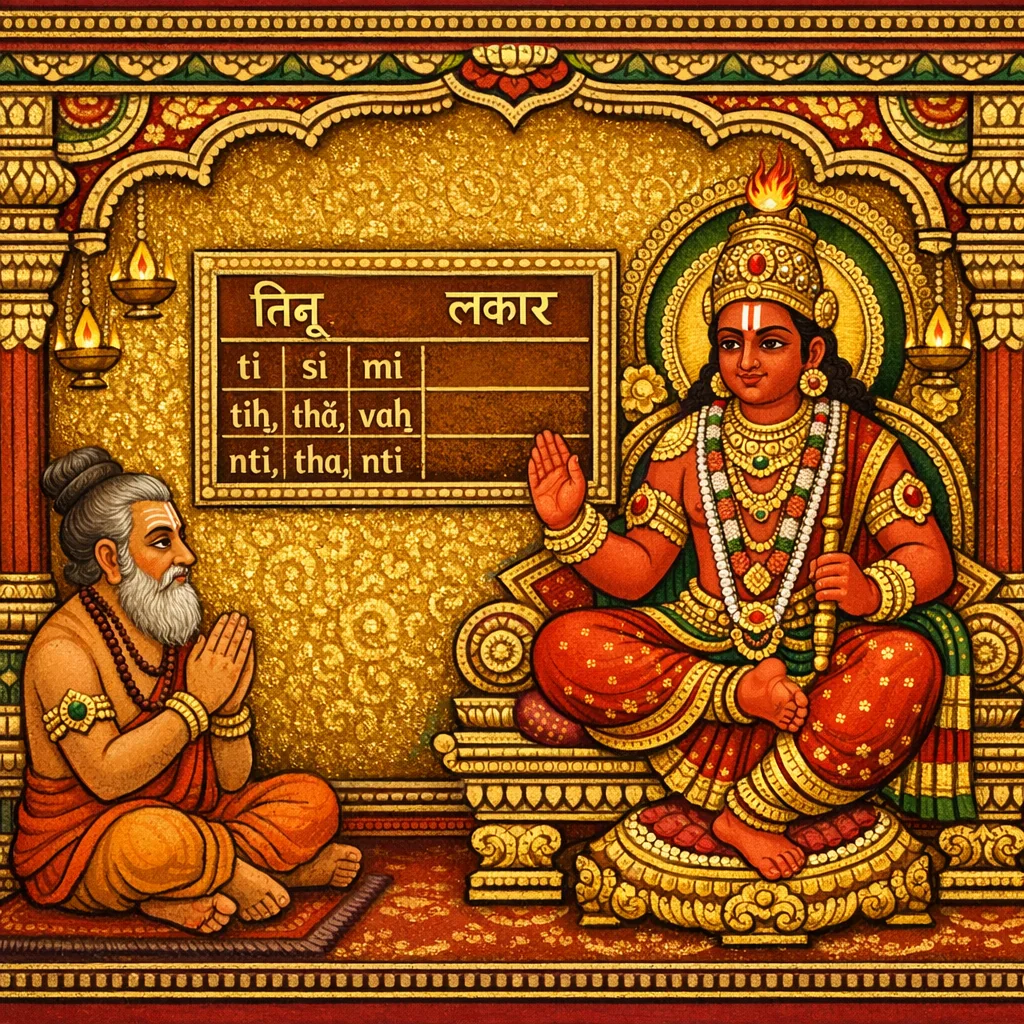
Adhyaya 357
Tिङ्विभक्तिसिद्धरूपम् (Established Forms of Tiṅ-Inflections)
ਇਸ ਅਧਿਆਇ ਵਿੱਚ ਪੁਰਾਣਿਕ ਵਿਸ਼ਵਕੋਸ਼ੀ ਢਾਂਚੇ ਅੰਦਰ ਸੰਖੇਪ ਵਿਆਕਰਣ-ਪ੍ਰਕਰਨ ਵਜੋਂ ਤਿਙ੍-ਪ੍ਰਤ੍ਯਯ (ਕ੍ਰਿਆ ਦੇ ਪੁਰਸ਼-ਵਚਨ ਅੰਤ) ਅਤੇ ਉਹਨਾਂ ਦਾ ਭਾਵ, ਕਰਮ ਅਤੇ ਕਰਤ੍ਰਿ-ਪ੍ਰਯੋਗਾਂ ਵਿੱਚ ਵਿਨਿਯੋਗ ਸਮਝਾਇਆ ਗਿਆ ਹੈ। ਪਿਛਲੇ ਉਣਾਦਿ ਵਿਸ਼ੇ ਵਿੱਚ ਪਾਠ-ਵਿਛੋੜੇ ਦਾ ਸੰਕੇਤ ਦੇ ਕੇ ਲਕਾਰਾਂ ਦੇ ਅਰਥ-ਖੇਤਰ ਕ੍ਰਮਵਾਰ ਦੱਸੇ ਜਾਂਦੇ ਹਨ—ਲਟ੍ ਵਰਤਮਾਨ, ਲਿਙ੍ ਵਿਧੀ/ਆਸ਼ੀਰਵਾਦ, ਲੋਟ੍ ਆਗਿਆ/ਆਸ਼ੀਸ਼, ਲਙ੍ ਦੂਰ ਭੂਤ, ਲੁਙ੍ ਅਤੇ ਲਿਟ੍ ਭੂਤ (ਲਿਟ੍ ਵਿੱਚ ਪਰੋਖ/ਅਦ੍ਰਿਸ਼ਟ ਵਿਸ਼ੇਸ਼ਤਾ), ਅਤੇ ਲੁਟ੍/ਲ੍ਰਿਙ੍ ਭਵਿੱਖਤ। ਪਰਸਮੈਪਦ-ਆਤਮਨੇਪਦ ਭੇਦ ਸਮੇਤ ਪੁਰਸ਼-ਪ੍ਰਤ੍ਯਯਾਂ ਦੀ ਸੂਚੀ ਦੇ ਕੇ ਭੂ, ਏਧ੍ ਆਦਿ ਧਾਤੂਆਂ ਨਾਲ ਰੂਪ ਦਿਖਾਏ ਗਏ ਹਨ; ਹੋਰ ਧਾਤੂ-ਸਮੂਹ ਅਤੇ ਵਿਕਰਣ ਨੋਟ ਵੀ ਹਨ। ਅੰਤ ਵਿੱਚ ਸਨ੍ (ਇੱਛਾਰਥ), ਣਿਚ੍ (ਪ੍ਰੇਰਣਾਰਥ), ਯਙ੍ (ਆਵ੍ਰਿਤੀ) ਅਤੇ ਯਙ੍-ਲੁਕ੍ ਦੇ ਉਤਪੰਨ ਰੂਪ ਉਦਾਹਰਣਾਂ ਅਤੇ ‘ਰੂਪਕ’ ਨਮੂਨਿਆਂ ਨਾਲ ਜੋੜ ਕੇ ਸਮਝਾਏ ਗਏ ਹਨ।
Shlokas
No shlokas available for this adhyaya yet.
Frequently Asked Questions
The mapping of lakāras to time/meaning (present, past, future, injunction, benediction, conditional) along with tiṅ-ending paradigms across persons and voices, illustrated via bhū/edh and related dhātu examples plus san–ṇic–yaṅ derivations.
By safeguarding linguistic precision for mantra and śāstra, it supports correct ritual speech and disciplined study; this technical clarity is framed as Agneya Vidya—worldly mastery (bhukti) placed in service of dharma and inner purification toward mukti.