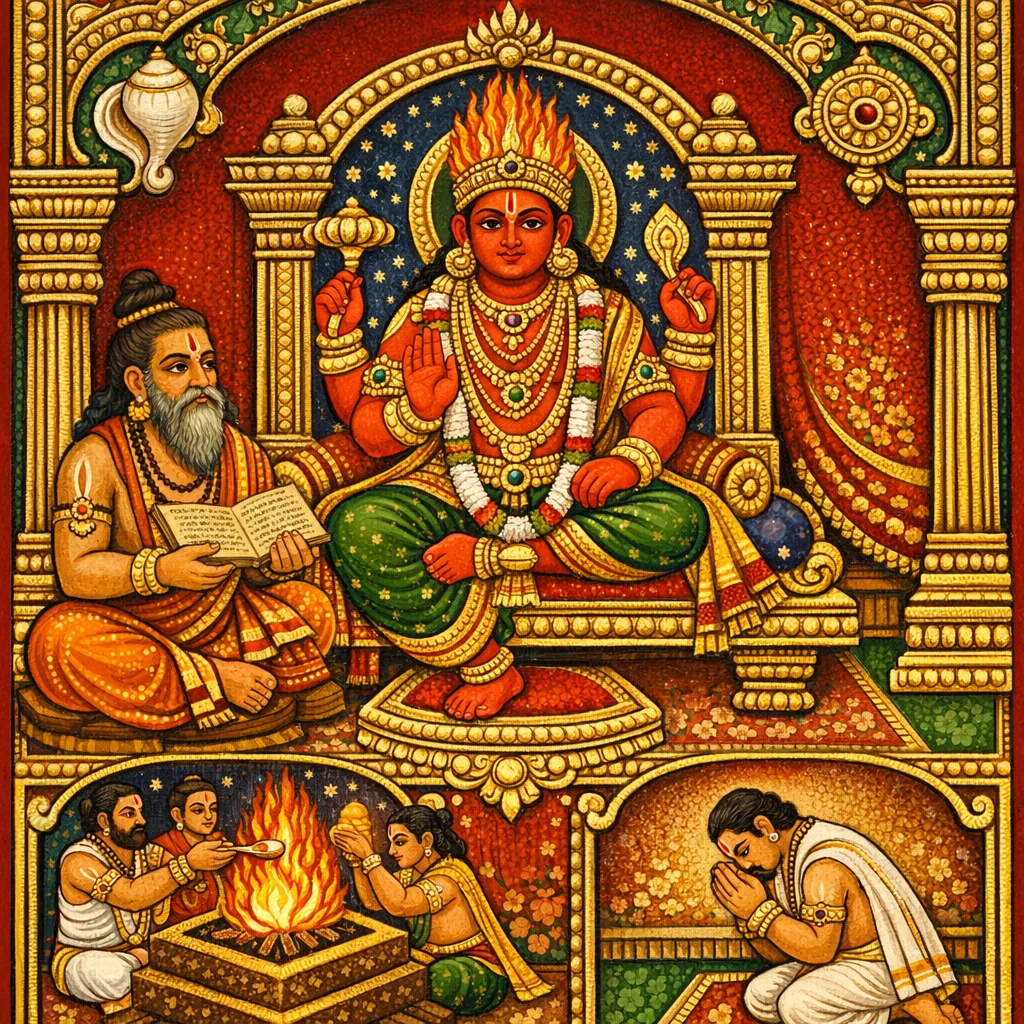
Adhyaya 353
Chapter 353: कारकं (Kāraka — Syntactic Relations) with Vibhakti-Artha (Case-Meaning Integration)
ਨਪੁੰਸਕ ਲਿੰਗ ਦੇ ਰੂਪਾਂ ਤੋਂ ਬਾਅਦ ਇਹ ਅਧਿਆਇ ਸੁਕੰਦ ਦੇ ਇਸ ਵਚਨ ਨਾਲ ਸ਼ੁਰੂ ਹੁੰਦਾ ਹੈ ਕਿ ਉਹ ਵਿਭਕਤੀਆਂ ਦੇ ਅਰਥ ਸਮੇਤ ਕਾਰਕ ਸਮਝਾਵੇਗਾ। ਕਰਤਾ ਨੂੰ ਸੁਤੰਤਰ ਮੰਨ ਕੇ ਪ੍ਰੇਰਕ-ਕਰਤ੍ਰਿਤ੍ਵ ਦਾ ਭੇਦ ਦੱਸਿਆ ਗਿਆ ਹੈ। ਕਰਤਾ ਪੰਜ ਪ੍ਰਕਾਰ ਦਾ ਅਤੇ ਕਰਮ ਸੱਤ ਪ੍ਰਕਾਰ ਦਾ—ਸ਼੍ਰੀ ਸਮੇਤ ਵਿਸ਼ਣੂ ਨੂੰ ਨਮਸਕਾਰ, ਹਰਿ ਦੀ ਸ਼ੁਭਤਾ ਲਈ ਪੂਜਾ, ਅਤੇ ਵਿਸ਼ਣੂ-ਨਮਸਕਾਰ ਨਾਲ ਮੋਖਸ਼ ਵਰਗੇ ਵੈਸ਼ਣਵ ਭਾਵ ਵਾਲੇ ਉਦਾਹਰਨ ਦਿੱਤੇ ਹਨ। ਫਿਰ ਕਰਣ, ਸੰਪ੍ਰਦਾਨ, ਅਪਾਦਾਨ ਅਤੇ ਅਧਿਕਰਣ ਕਾਰਕਾਂ ਨੂੰ ਵਿਭਕਤੀ-ਪ੍ਰਯੋਗ ਨਾਲ ਜੋੜ ਕੇ ਵਿਸ਼ੇਸ਼ ਨਿਯਮ—ਕਰਮਪ੍ਰਵਚਨੀਯਾਂ ਨਾਲ ਦ੍ਵਿਤੀਆ, ‘ਨਮਃ/ਸ੍ਵਾਹਾ’ ਆਦਿ ਨਾਲ ਚਤੁਰਥੀ, ਅਤੇ ਅਨਭਿਹਿਤ ਸੰਦਰਭਾਂ ਵਿੱਚ ਤ੍ਰਿਤੀਆ ਤੇ ਛੱਠੀ—ਵਰਨਿਤ ਕੀਤੇ ਹਨ। ਵੈਸ਼ਯਿਕ ਅਤੇ ਸਾਮੀਪ੍ਯਕ ਦੋਸ਼, ਰੂੜ੍ਹ ਲੋਕਟਿਵ ਪ੍ਰਯੋਗ, ਛੱਠੀ ਦੇ ਉਪਯੋਗ ਅਤੇ ਕੁਝ ਤੱਧਿਤ ਬਣਤਰਾਂ ਵਿੱਚ ਛੱਠੀ-ਨਿਸ਼ੇਧ ਵੀ ਆਉਂਦਾ ਹੈ। ਸਮੂਹ ਵਿਆਕਰਣ ਨੂੰ ਅਗਨੇਯ ਵਿਦਿਆ ਵਜੋਂ ਧਰਮ, ਵਿਧੀ-ਵਾਕ ਦੀ ਸਪਸ਼ਟਤਾ ਅਤੇ ਭਕਤੀ-ਕੇਂਦ੍ਰਿਤ ਅਰਥ ਲਈ ਸੇਵਕ ਦੱਸਿਆ ਗਿਆ ਹੈ।
Shlokas
No shlokas available for this adhyaya yet.
Frequently Asked Questions
The chapter emphasizes kāraka–vibhakti integration: how agent, object, instrument, recipient, source, and locus relations are expressed through specific case-endings, including special rules for karmapravacanīyas, interjections (namaḥ/svāhā), and ‘anabhihita’ (unstated-sense) contexts.
By making linguistic roles and case-meanings precise, it safeguards correct understanding of śāstric injunctions and devotional statements; its examples explicitly point to Hari/Viṣṇu as the liberating refuge, aligning grammatical mastery (vidyā) with dharma-practice and mukti-oriented devotion.