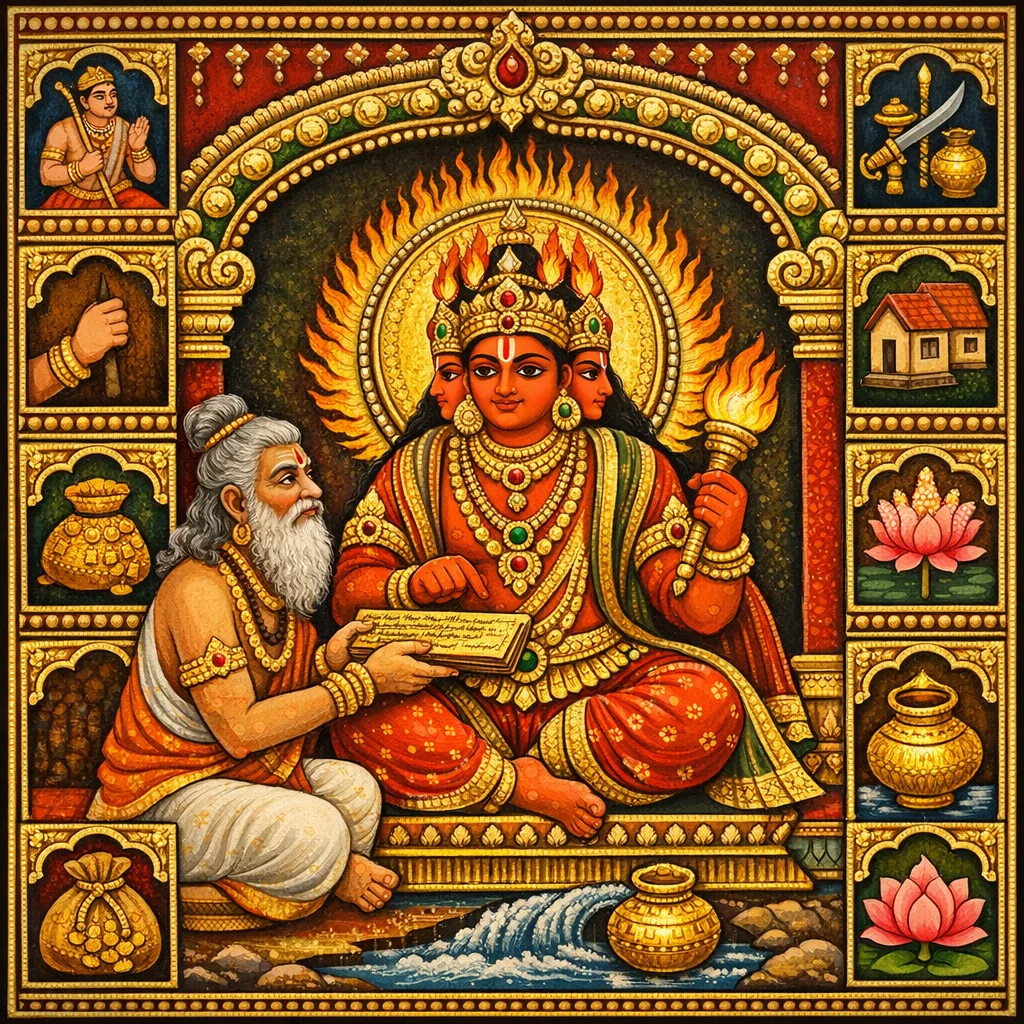
Adhyaya 350
Forms Established by the suP (Nominal Case-Endings) — सुब्विभक्तसिद्धरूपम्
ਇਸ ਅਧਿਆਇ ਵਿੱਚ ਸੰਧੀ ਤੋਂ ਬਣੇ ਰੂਪਾਂ ਤੋਂ ਅੱਗੇ ਨਾਮ-ਪਦਾਂ ਦੀ ਵਿਭਕਤੀ (ਸੁਪ੍) ਦੀ ਸਿੱਧੀ ਦਾ ਵਰਣਨ ਹੈ। ਸਕੰਦ ਕਾਤ੍ਯਾਯਨ ਨੂੰ ਦੋ ਪ੍ਰਤ੍ਯਯ-ਪ੍ਰਣਾਲੀਆਂ ਦੱਸਦਾ ਹੈ—ਨਾਮਾਂ ਲਈ ‘ਸੁਪ੍’ ਅਤੇ ਕ੍ਰਿਆਵਾਂ ਲਈ ‘ਤਿਙ੍’; ਅਤੇ ‘ਸੁਪ੍’ ਨੂੰ ਸੱਤ ਵਿਭਕਤੀਆਂ ਦਾ ਆਧਾਰ ਮੰਨਦਾ ਹੈ। ਹਰ ਵਿਭਕਤੀ ਦੇ ਸੁਪ੍-ਪ੍ਰਤ੍ਯਯ-ਸਮੂਹ ਗਿਣਾ ਕੇ ਉਨ੍ਹਾਂ ਨੂੰ ‘ਪ੍ਰਾਤਿਪਦਿਕ’ ਸੰਜਿਆ ਨਾਲ ਜੋੜਿਆ ਗਿਆ ਹੈ—ਜੋ ਧਾਤੂ ਅਤੇ ਤਿਙ੍ ਆਦਿ ਕ੍ਰਿਆ-ਪ੍ਰਤ੍ਯਯਾਂ ਤੋਂ ਰਹਿਤ ਨਾਮ-ਮੂਲ ਹੈ। ਪ੍ਰਾਤਿਪਦਿਕਾਂ ਨੂੰ ਅਜੰਤ/ਹਲੰਤ ਅਤੇ ਪੁਲਿੰਗ/ਇਸਤ੍ਰੀਲਿੰਗ/ਨਪੁੰਸਕਲਿੰਗ ਅਨੁਸਾਰ ਵੰਡ ਕੇ ‘ਨਾਯਕ’ ਆਦਿ ਉਦਾਹਰਨ-ਸ਼ਬਦਾਂ ਨਾਲ ਕਈ ਵੈਦਿਕ ਤੇ ਅਨਿਯਮਿਤ ਰੂਪ ਵੀ ਦਿੱਤੇ ਹਨ। ਕਾਰਕ-ਅਰਥਾਂ ਨਾਲ ਵਿਭਕਤੀ-ਅਰਥ ਜੋੜੇ ਗਏ ਹਨ—ਪ੍ਰਥਮਾ ਸਵਾਰਥ ਤੇ ਸੰਬੋਧਨ, ਦ੍ਵਿਤੀਯਾ ਕਰਮ, ਤ੍ਰਿਤੀਯਾ ਕਰਣ, ਚਤੁਰਥੀ ਸੰਪ੍ਰਦਾਨ, ਪੰਚਮੀ ਅਪਾਦਾਨ, ਛੱਠੀ ਸਵਾਮਿਤ੍ਵ, ਸਪਤਮੀ ਅਧਿਕਰਣ। ਅੰਤ ਵਿੱਚ ਸਖਾ, ਪਤੀ, ਪਿਤਾ, ਗੌḥ, ਰਾਜਾ, ਪੰਥਾ ਅਤੇ ਕ/ਅਯਮ/ਅਸੌ ਵਰਗੇ ਸਰਵਨਾਮਾਂ ਦੇ ਰੂਪ-ਪਾਠ, ਨਿਯਮ-ਅਪਵਾਦ ਅਤੇ ਸ਼ਿਸ਼ਟ-ਯਜ੍ਞੀ ਬੋਲੀ ਦੇ ਪ੍ਰਯੋਗ ਦਰਸਾਏ ਗਏ ਹਨ।
Shlokas
No shlokas available for this adhyaya yet.
Frequently Asked Questions
The chapter foregrounds suP-based nominal morphology: the precise suffix inventories for each vibhakti, the definition and classification of prātipadikas (ajanta/halanta; gendered), and kāraka-driven rules assigning cases by semantic role.
By disciplining speech through correct forms and semantic clarity, it supports accurate mantra and scripture usage, reduces interpretive error, and frames linguistic mastery as a dharmic practice—an Agneya Vidya that serves both worldly competence (bhukti) and spiritual refinement (mukti).