Adhyaya 201
Worship of the Nine Vyūhas (Nava-vyūha-arcana)
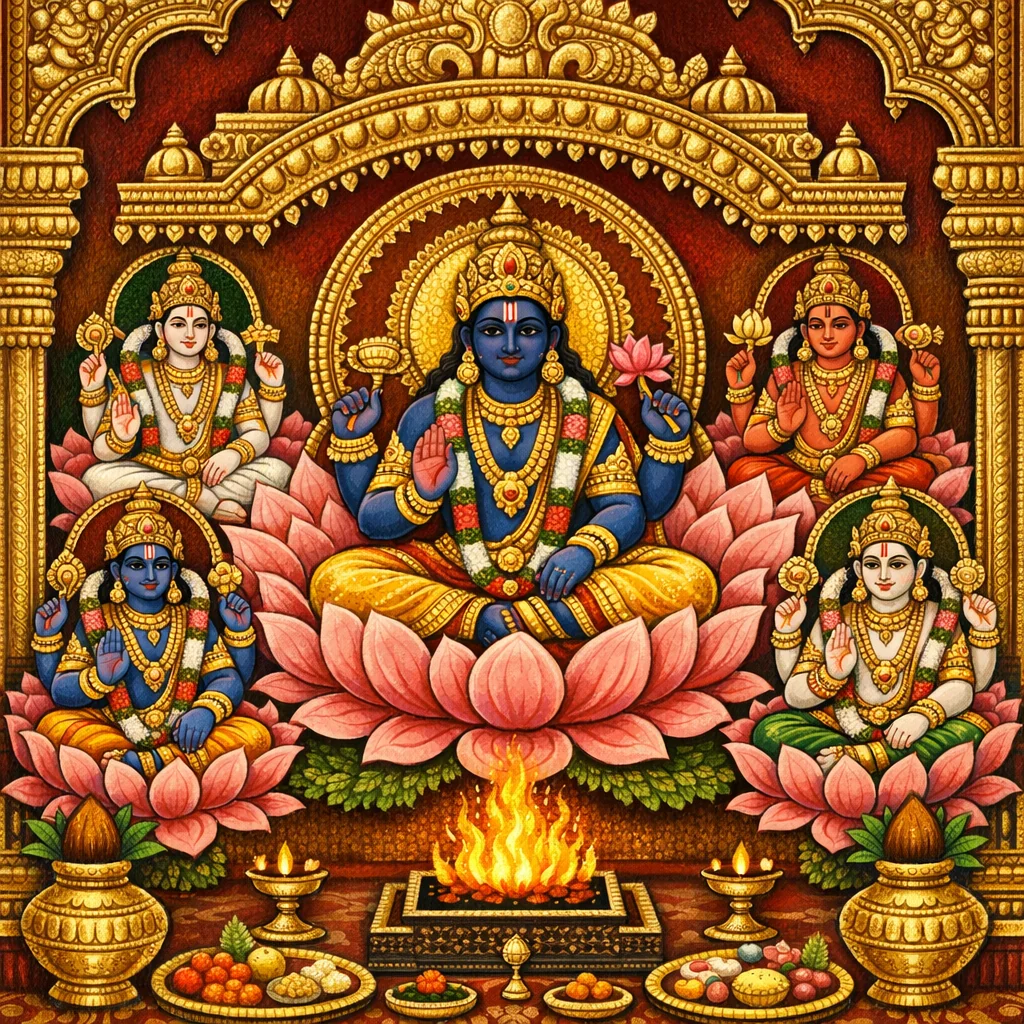
ਇਸ ਅਧਿਆਇ ਵਿੱਚ ਪਿਛਲੇ ਦੀਪਦਾਨ-ਵ੍ਰਤ ਦੀ ਸਮਾਪਤੀ ਦੱਸ ਕੇ ਤੁਰੰਤ ਹੀ ਹਰਿ-ਪ੍ਰਦੱਤ ਨਵਵਿਊਹ-ਅਰਚਨਾ ਦੀ ਤਕਨੀਕੀ ਵਿਧੀ ਆਰੰਭ ਹੁੰਦੀ ਹੈ। ਅਗਨੀ ਕਮਲ-ਮੰਡਲ ਦੀ ਰਚਨਾ ਸਿਖਾਉਂਦੇ ਹਨ—ਕੇਂਦਰ ਵਿੱਚ ਵਾਸੁਦੇਵ, ਦਿਸ਼ਾਵਾਂ ਵਿੱਚ ਸੰਕਰਸ਼ਣ, ਪ੍ਰਦ੍ਯੁਮਨ, ਅਨਿਰੁੱਧ ਅਤੇ ਨਾਰਾਇਣ; ਹਰ ਰੂਪ ਨਾਲ ਨਿਰਧਾਰਤ ਬੀਜ ਅੱਖਰ, ਤੱਤਵ/ਕਰਮ-ਸਥਾਨ ਅਤੇ ਜਲ-ਸਥਾਪਨਾ ਆਦਿ ਜੋੜੇ ਗਏ ਹਨ। ਅੱਗੇ ਸਦਬ੍ਰਹਮਾ, ਵਿਸ਼ਣੂ, ਨ੍ਰਿਸਿੰਹ, ਭੂਰ-ਵਰਾਹ ਆਦਿ ਰੂਪਾਂ ਦੇ ਮੰਤ੍ਰ-ਬੀਜ ਵਿਨਿਆਸ, ਦਰਵਾਜ਼ੇ ਤੇ ਪੱਛਮੀ ਭਾਗ ਵਿੱਚ ਸਹਾਇਕ ਨਿਆਸ, ਗਰੁੜ ਅਤੇ ਗਦਾ-ਮੰਤ੍ਰਾਂ ਦੀ ਵਿਸ਼ੇਸ਼ ਪ੍ਰਕਿਰਿਆ ਵਰਣਿਤ ਹੈ। ਫਿਰ ਬਾਹਰੀ ਮੰਡਲ ਤੋਂ ਅੰਦਰੂਨੀ ਸਾਧਨਾ—ਦਸ਼ਾਂਗ-ਕ੍ਰਮ ਪੂਜਾ, ਦਿਕਪਾਲਾਂ ਲਈ ਘਟ-ਸਥਾਪਨਾ, ਤੋਰਣ-ਵਿਤਾਨ ਦੀ ਕਲਪਨਾ ਅਤੇ ਚੰਦਰਾਮ੍ਰਿਤ ਧਿਆਨ। ਅੰਤ ਵਿੱਚ ਬਾਰਾਂ ਬੀਜਾਂ ਨਾਲ ਨਿਆਸ ਕਰਕੇ ‘ਦਿਵ੍ਯ ਦੇਹ’ ਦੀ ਰਚਨਾ, ਫੁੱਲ ਸੁੱਟ ਕੇ ਸ਼ਿਸ਼੍ਯ-ਪਛਾਣ, ਸ਼ੁੱਧੀ ਲਈ ਹੋਮ ਦੀ ਗਿਣਤੀ ਅਤੇ ਦੀਕਸ਼ਾ-ਦਕਸ਼ਿਣਾ ਦੱਸੀ ਗਈ ਹੈ—ਦੀਕਸ਼ਾ ਨੂੰ ਇਸ ਕਰਮ-ਵਿਗਿਆਨ ਦੀ ਸਮਾਜਿਕ ਤੇ ਆਧਿਆਤਮਿਕ ਮੋਹਰ ਮੰਨਿਆ ਗਿਆ ਹੈ।
Shlokas
No shlokas available for this adhyaya yet.
Frequently Asked Questions
A lotus-maṇḍala Navavyūha worship beginning with Vāsudeva at the center, followed by directional deity placements with specific bīja-syllables, then internalization through visualization, daśāṅga-krama, and nyāsa culminating in dīkṣā.
After mandala and mantra placements, it shifts to subtle-body contemplation (lunar nectar), self-identification with Viṣṇu, and nyāsa that produces a “divine body,” explicitly valuing heart-worship of Hari (anirmālyā) as the inner completion of the rite.
Disciples are seated to the left, identify a chosen form by blind flower-casting, perform homa with 108 and then 1000 oblations for purification, and receive dīkṣā after payment of prescribed fees honoring the guru.