Adhyaya 194
Aśoka-Pūrṇimā and Related Vows (अशोकपूर्णिमादिव्रत)
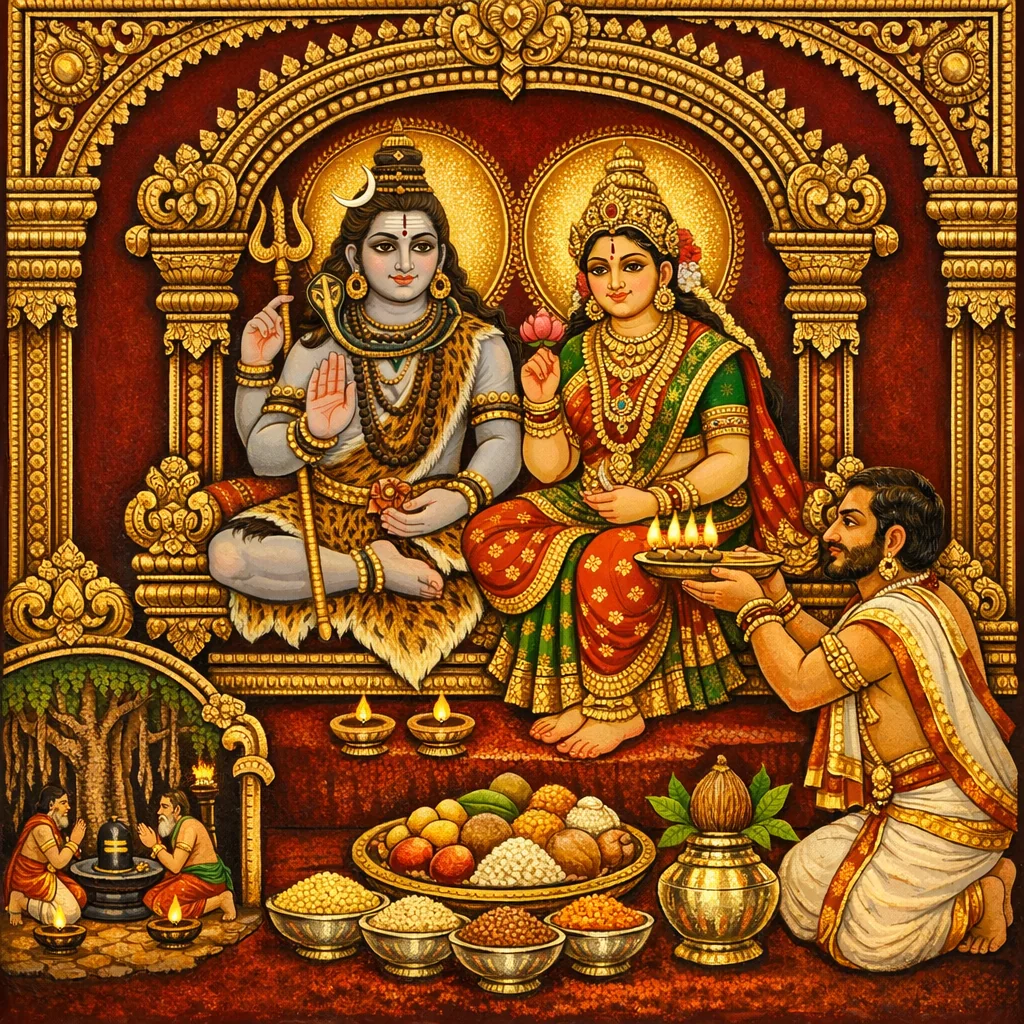
ਵ੍ਰਤ-ਖੰਡ ਦੀ ਕਾਲ-ਅਨੁਸ਼ਾਸਨ ਪਰੰਪਰਾ ਨੂੰ ਅੱਗੇ ਵਧਾਉਂਦੇ ਹੋਏ ਅਗਨੀ ਰਿਸ਼ੀ ਵਸਿਸ਼ਠ ਨੂੰ ਕਈ ਵ੍ਰਤਾਂ ਦੀ ਵਿਧੀ ਦੱਸਦੇ ਹਨ। ਪਹਿਲਾਂ ਸ਼ਿਵਰਾਤਰੀ ਵ੍ਰਤ ਨੂੰ ਭੁਕਤੀ–ਮੁਕਤੀ ਦੇਣ ਵਾਲਾ ਕਹਿ ਕੇ, ਫਿਰ ਫਾਲਗੁਣ ਸ਼ੁਕਲ ਪੱਖ ਦੀ ਅਸ਼ੋਕ ਪੂਰਨਿਮਾ ‘ਤੇ ਭੂਧਰ ਅਤੇ ਭੁਵ ਦੀ ਪੂਜਾ ਅਤੇ ਇੱਕ ਸਾਲ ਤੱਕ ਵ੍ਰਤ ਪਾਲਣ ਨਾਲ ਭੋਗ ਤੇ ਮੋਖਸ਼ ਪ੍ਰਾਪਤੀ ਦੱਸਦੇ ਹਨ। ਅਗੇ ਕਾਰਤਿਕ ਵਿੱਚ ਵ੍ਰਿਸ਼ੋਤਸਰਗ (ਬੈਲ ਛੱਡਣਾ/ਦਾਨ) ਅਤੇ ਨਕਤ ਭੋਜਨ (ਰਾਤ ਨੂੰ ਇਕ ਵਾਰ ਖਾਣਾ) ਸਮੇਤ ਪਰਮ ਵ੍ਰਿਸ਼-ਵ੍ਰਤ ਕਿਹਾ ਗਿਆ ਹੈ, ਜਿਸ ਨਾਲ ਸ਼ਿਵਲੋਕ ਮਿਲਦਾ ਹੈ। ਪਿਤ੍ਰ ਅਮਾਵਸਿਆ ‘ਤੇ ਪਿਤਰਾਂ ਲਈ ਅਕਸ਼ੈ ਦਾਨ, ਸਾਲ ਭਰ ਦਾ ਸੰਯਮ-ਉਪਵਾਸ ਅਤੇ ਪਿਤ੍ਰ ਪੂਜਾ ਪਾਪ ਨਾਸ ਕਰਕੇ ਸਵਰਗ ਦਿੰਦੀ ਹੈ। ਅੰਤ ਵਿੱਚ ਜੇਠ ਅਮਾਵਸਿਆ ਦਾ ਸਾਵਿਤਰੀ ਵ੍ਰਤ—ਇਸਤ੍ਰੀਆਂ ਤਿੰਨ ਰਾਤਾਂ ਉਪਵਾਸ ਕਰਕੇ ਵਟ ਦੇ ਮੂਲ ‘ਤੇ ਮਹਾਪਤਿਵ੍ਰਤਾ ਦੇਵੀ ਦੀ ਸੱਤ ਅਨਾਜਾਂ ਤੇ ਗਹਿਣਿਆਂ ਨਾਲ ਪੂਜਾ, ਰਾਤ ਜਾਗਰਣ ਗੀਤ-ਨ੍ਰਿਤ੍ਯ, ਬ੍ਰਾਹਮਣ ਨੂੰ ਨੈਵੇਦ੍ਯ, ਬ੍ਰਾਹਮਣ ਭੋਜਨ ਅਤੇ ਵਿਸਰਜਨ ਕਰਕੇ ਸੌਭਾਗ੍ਯ ਤੇ ਮੰਗਲ ਸਮ੍ਰਿੱਧੀ ਦੀ ਕਾਮਨਾ ਕਰਦੀਆਂ ਹਨ।
Shlokas
No shlokas available for this adhyaya yet.
Frequently Asked Questions
Worship of Bhūdhara and Bhuva in Phālguna’s bright fortnight, sustained as an observance for a year, stated to yield both Bhukti and Mukti.
By performing vṛṣotsarga (release/donation of a bull) and observing naktam (a single meal at night), the practitioner is said to attain Śiva’s state/abode.
It combines akṣayya offerings to the Pitṛs with a year-long fasting discipline and formal ancestor worship, promising sinlessness and attainment of heaven.
A three-night fast by women, worship at a banyan root with seven grains, night adornment and vigil with song/dance, offering naivedya to a brāhmaṇa, feeding brāhmaṇas, self-meal, and ritual dismissal, aiming at Devī’s favor and saubhāgya.