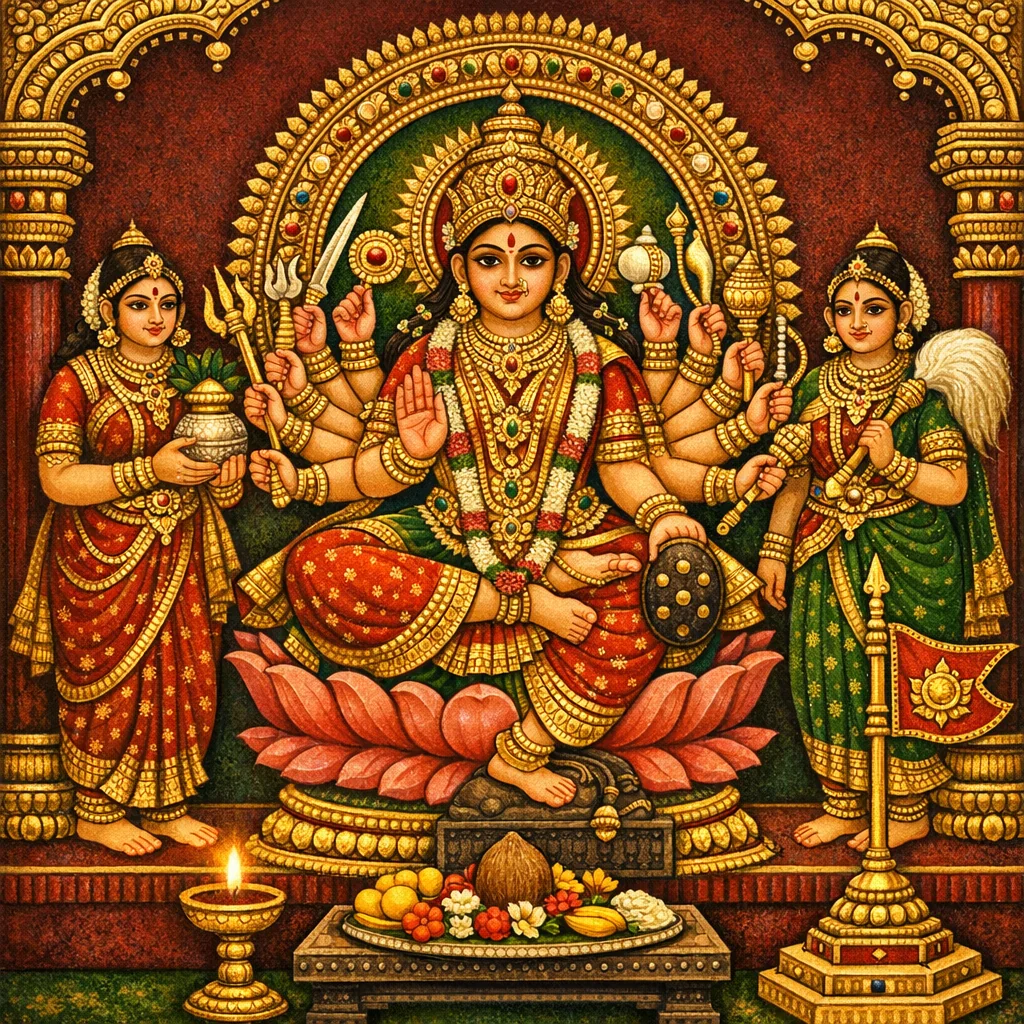
Adhyaya 185
Chapter 185 — नवमीव्रतानि (The Observances for Navamī)
ਭਗਵਾਨ ਅਗਨੀ ਵਸਿਸ਼ਠ ਨੂੰ ਗੌਰੀ/ਦੁਰਗਾ ਨਾਲ ਸੰਬੰਧਿਤ ਨਵਮੀ-ਵ੍ਰਤ ਸਿਖਾਉਂਦੇ ਹਨ ਅਤੇ ਭੁਕਤੀ ਤੇ ਮੁਕਤੀ—ਦੋਹਾਂ ਦੀ ਸਿੱਧੀ ਦਾ ਸਪਸ਼ਟ ਵਾਅਦਾ ਕਰਦੇ ਹਨ। ਨਵਮੀ ਨੂੰ ‘ਪਿਸ਼ਟਕਾ’ ਕਿਹਾ ਗਿਆ ਹੈ; ਆਸ਼ਵਿਨ ਸ਼ੁਕਲ ਨਵਮੀ ਦਾ ਠੀਕ ਸਮਾਂ, ਨਕਸ਼ਤਰ ਦੀਆਂ ਸ਼ਰਤਾਂ ਅਤੇ ਦੇਵੀ-ਪੂਜਾ ਤੋਂ ਬਾਅਦ ਆਟੇ/ਪਿਸ਼ਟ ਨਾਲ ਬਣੇ ਭੋਜਨ ਦੇ ਸੇਵਨ ਦਾ ਵਿਧਾਨ ਦਿੱਤਾ ਹੈ। ਅੱਗੇ ਮਹਿਸ਼ਮਰਦਿਨੀ ਦੁਰਗਾ ਕੇਂਦਰਿਤ ਰਾਜ-ਰੱਖਿਆ ਲਿਤੁਰਜੀ—ਦੇਵੀ ਨੂੰ ਨੌਂ ਸਥਾਨਾਂ ਵਿੱਚ ਜਾਂ ਇਕੋ ਮੰਦਰ ਵਿੱਚ ਅਧਿਸ਼ਠਿਤ ਮੰਨ ਕੇ, ਬਹੁ-ਭੁਜ ਰੂਪ ਦਾ ਨਿਰਧਾਰਿਤ ਆਯੁਧਾਂ ਸਮੇਤ ਧਿਆਨ। ਦਸ਼ਾਕਸ਼ਰੀ ਦੁਰਗਾ-ਰੱਖਿਆ ਮੰਤ੍ਰ, ਹੋਰ ਮੰਤ੍ਰ, ਅੰਗੂਠੇ ਤੋਂ ਕਨਿੱਠੀ ਤੱਕ ਨਿਆਸ, ਗੁਪਤਤਾ ਅਤੇ ਅਵਿਘਨ ਸਾਧਨਾ ਉੱਤੇ ਜ਼ੋਰ ਹੈ। ਆਯੁਧ-ਪੂਜਾ, ਉਗ੍ਰ ਦੇਵੀ-ਨਾਮ, ਦਿਸ਼ਾਵਾਂ ਵਿੱਚ ਬਲੀ (ਕੁਝ ਪਾਠਾਂ ਵਿੱਚ ਰਕਤ/ਮਾਸ), ਆਟੇ ਦੀ ਸ਼ਤ੍ਰੂ-ਪ੍ਰਤਿਮਾ ਨੂੰ ਨਿਸ਼ਪ੍ਰਭ ਕਰਨਾ, ਰਾਤ ਨੂੰ ਮਾਤ੍ਰਿਕਾ ਤੇ ਉਗ੍ਰ ਰੂਪਾਂ ਦੀ ਪੂਜਾ, ਪੰਚਾਮ੍ਰਿਤ ਸਨਾਨ, ਬਲੀ ਅਤੇ ਧਵਜ-ਸਥਾਪਨਾ/ਰਥ-ਯਾਤਰਾ ਵਰਗੇ ਉਤਸਵ-ਚਿੰਨ੍ਹ—ਭਕਤੀ, ਪ੍ਰਤਿਮਾ-ਧਿਆਨ ਅਤੇ ਰਾਜਧਰਮ-ਰੱਖਿਆ ਨੂੰ ਇਕੱਠਾ ਕਰਦੇ ਹਨ।
Shlokas
No shlokas available for this adhyaya yet.
Frequently Asked Questions
It is presented as siddhi-giving—supporting worldly accomplishment and protection (bhukti) while also generating merit conducive to liberation (mukti) through disciplined Durgā worship.
The chapter gives a ten-syllabled protective mantra: “Oṃ, O Durgā, O Durgā, protect (me)! Svāhā,” used as a rakṣā (protection) formula within the Navamī observance.
It includes a royal-protective procedure: in front of the invoked fire, the king bathes and ritually removes/neutralizes an enemy represented by a dough effigy, aligning goddess worship with victory and protection of the realm.
Durgā is visualized in multi-armed forms (notably eighteen-armed and sixteen-handed variants) and associated with a defined set of implements and weapons, which are themselves to be worshipped as part of the observance.