Adhyaya 212
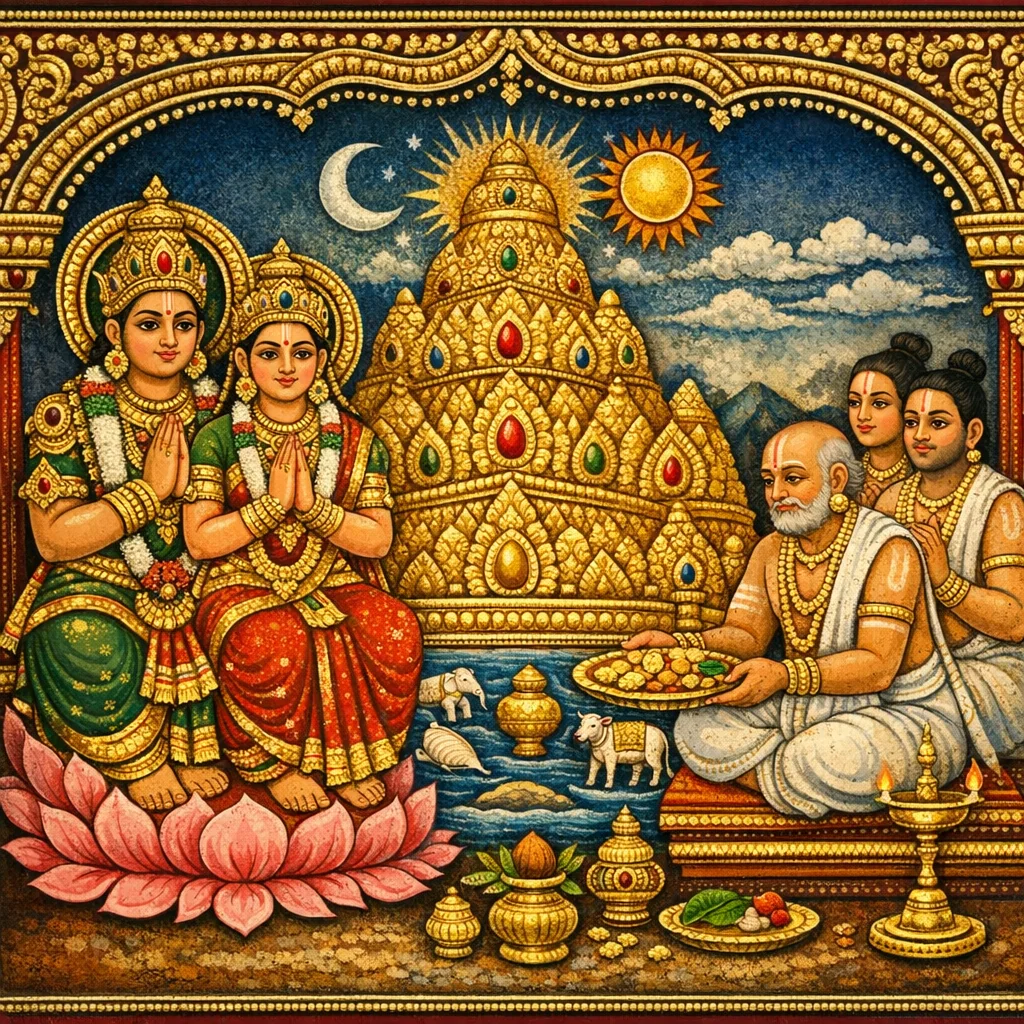
Meru-dānāni (Meru-Donations) — Kāmya-dāna, Month-wise Offerings, and the Twelvefold Meru Rite
ਅਗਨੀਦੇਵ ਪਿਛਲੇ ਅਧਿਆਇ ਦੀ ਦਾਨ-ਸੂਚੀ ਤੋਂ ਅੱਗੇ ਵਧ ਕੇ ਕਾਮ੍ਯ-ਦਾਨ ਦਾ ਸੁਚੱਜਾ ਵਿਧਾਨ ਦੱਸਦੇ ਹਨ—ਮਹੀਨੇ-ਮਹੀਨੇ ਨਿਰੰਤਰ ਪੂਜਾ ਨਾਲ ਅਰਪਣ, ਕੁਝ ਪਿਸ਼ਟਕ (ਆਟੇ) ਦੀਆਂ ਪ੍ਰਤਿਮਾਵਾਂ ਰੂਪ ਵਿੱਚ, ਉਨ੍ਹਾਂ ਦੇ ਫਲ, ਅਤੇ ਸਾਲ ਦੇ ਅੰਤ ਵਿੱਚ ਮਹਾਵਿਧੀ। ਫਿਰ ਕਾਰਤਿਕ ਵਿੱਚ ਦ੍ਵਾਦਸ਼ਵਿਧ ‘ਮੇਰੂ-ਦਾਨ’ ਵ੍ਰਤ ਮੁੱਖ ਰੂਪ ਵਿੱਚ ਆਉਂਦਾ ਹੈ, ਜੋ ਭੁਕਤੀ ਅਤੇ ਮੁਕਤੀ ਦੋਵੇਂ ਦੇਣ ਵਾਲਾ ਕਿਹਾ ਗਿਆ ਹੈ। ਨਿਸ਼ਚਿਤ ਮਾਪਾਂ ਅਤੇ ਸੋਨੇ ਆਦਿ ਪਦਾਰਥਾਂ ਨਾਲ ਮੇਰੂ ਬਣਾਕੇ, ਪਦਮ-ਯੰਤਰ ਵਿੱਚ ਪ੍ਰਤਿਸ਼ਠਾ, ਕੇਂਦਰ ਵਿੱਚ ਬ੍ਰਹਮਾ–ਵਿਸ਼ਨੂ–ਈਸ਼ ਅਤੇ ਦਿਸ਼ਾ-ਕ੍ਰਮ ਅਨੁਸਾਰ ਨਾਮਿਤ ਪਹਾੜਾਂ ਦੀ ਵਿਵਸਥਾ ਦੱਸੀ ਜਾਂਦੀ ਹੈ। ਮੰਤ੍ਰ, ਗੋਤ੍ਰ ਉਚਾਰਣ ਨਾਲ ਦਾਨ, ਕਪਟ ਧਨ ਤੋਂ ਬਚਾਵ; ਸੰਕ੍ਰਾਂਤੀ, ਅਯਨ, ਗ੍ਰਹਣ ਆਦਿ ਸ਼ੁਭ ਸਮੇਂ; ਅਤੇ ਸੋਨਾ, ਚਾਂਦੀ, ਘੋੜੇ, ਗਾਂ, ਵਸਤ੍ਰ, ਘੀ, ਅਨਾਜ, ਤਿਲ, ਖੰਡ-ਮੇਰੂ ਆਦਿ ਕਈ ਭੇਦ ਵਰਣਿਤ ਹਨ। ਅੰਤ ਵਿੱਚ ਮੇਰੂ ਨੂੰ ਵਿਸ਼ਨੂ-ਸਰੂਪ ਮੰਨ ਕੇ ਸਤੁਤੀ ਤੇ ਨਿਵੇਦਨ—ਸ਼ੁੱਧੀ, ਕੁਲ-ਉੱਨਤੀ, ਸਵਰਗ-ਲਾਭ ਅਤੇ ਅਖੀਰ ਹਰਿ-ਸਾਨਿਧ੍ਯ ਲਈ।
Shlokas
No shlokas available for this adhyaya yet.
Frequently Asked Questions
Regular monthly worship → year-end grand worship → Kārttika Meru-vrata with bathing/fasting → worship of Viṣṇu (or Śiva) → mantra-guided gifting of a constructed Meru to a brāhmaṇa (often gotra-addressed) → dedication (nivedana) for bhukti and mukti.
Ratna-meru (jeweled), Hema/Svarṇa-meru (gold), Rāupya-meru (silver), Hasti-meru (elephant-form), Aśva-meru (horses), Go-meru (cows), Vastra-meru (cloth), Ājya-parvata (ghee mountain), Dhānya-meru (grain), Tila-meru (sesame), and Khaṇḍa-meru (symbolic/segmented Meru).
It frames giving as a mokṣa-supporting discipline: purity through non-deceit, devotion-centered worship, cosmological visualization (Meru as Viṣṇu-form), lineage uplift, and final orientation toward Hari/Viṣṇuloka—thus integrating merit, devotion, and liberation.
Graded measurement logic (highest/middle/lower), prescribed weights (palas, khāras, prastha), construction rules (three peaks with Brahmā–Viṣṇu–Maheśvara), directional mountain placement, and calendrical triggers (Kārttika, saṅkrānti, ayana, grahaṇa).