
Shloka 42
Vishwarupa Darshana Yoga — Vishwarupa Darshana Yoga
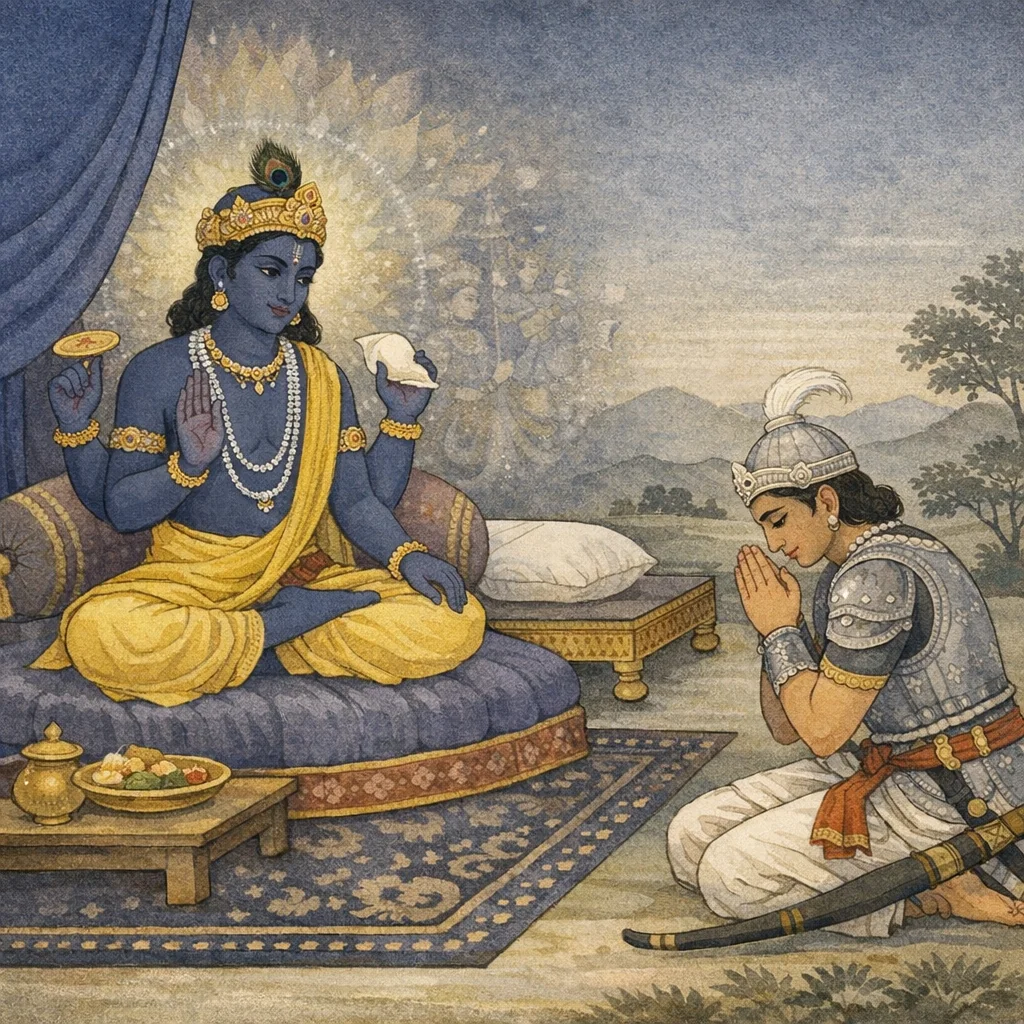
यच्चावहासार्थमसत्कृतोऽसि विहारशय्यासनभोजनेषु ।
एकोऽथवाप्यच्युत तत्समक्षं तत्क्षामये त्वामहमप्रमेय ॥
yaccāvahāsārtham asatkṛto ’si vihāraśayyāsanabhojaneṣu |
eko ’thavāpy acyuta tat-samakṣaṁ tat kṣāmaye tvām aham aprameya ||

ହେ ଅଚ୍ୟୁତ! ଖେଳୁଥିବାବେଳେ, ଶୋଇଥିବାବେଳେ, ବସିଥିବାବେଳେ ଓ ଭୋଜନ କରୁଥିବାବେଳେ— ଏକାନ୍ତରେ କିମ୍ବା ଲୋକମାନଙ୍କ ସମ୍ମୁଖରେ ମଧ୍ୟ— ହାସ୍ୟ-ପରିହାସରେ ମୁଁ ତୁମକୁ ଯେ ଅସତ୍କାର/ଅପମାନ କରିଥିଲି, ସେ ସମସ୍ତ ପାଇଁ, ହେ ଅପ୍ରମେୟ, ମୁଁ ତୁମ ପାଖରେ କ୍ଷମା ପ୍ରାର୍ଥନା କରୁଛି।
हे अच्युत! खेलते समय, सोते समय, बैठते समय और भोजन करते समय, एकान्त में या लोगों के सामने भी, मैंने हँसी-दिल्लगी में आपका जो अपमान किया है, उन सबके लिए—हे अप्रमेय! मैं आपसे क्षमा माँगता हूँ।
And whatever disrespect you were shown by me for the sake of jest, in recreation, in bed, in sitting, and in meals—whether alone or even in the presence of others—O Acyuta, I ask your forgiveness for that, O immeasurable one.
This verse is textually stable across common recensions; differences are mainly stylistic in translation. “asatkṛtaḥ” can be rendered as “dishonoured/disrespected/treated without due regard.” The address “aprameya” emphasizes Krishna’s immeasurable nature, intensifying Arjuna’s shift from familiarity (friendship) to reverence after the theophany (viśvarūpa).
FAQs
Arjuna’s response reflects a common psychological reversal after an overwhelming insight: earlier casual behavior is reinterpreted as inappropriate. The verse models moral self-audit—acknowledging how familiarity can lead to diminished respect—and expresses reparative intent through apology.
After seeing the viśvarūpa, Arjuna recognizes Krishna not merely as a companion but as the immeasurable ground of reality. The apology signals a metaphysical reorientation: the finite social relationship is subsumed within a recognition of the infinite (aprameya).
This verse belongs to Arjuna’s confession (11.41–11.42) following the vision of the universal form (11.9–11.40). It bridges the narrative from awe and fear toward reconciliation and the request for Krishna to return to a more approachable form (11.45–11.46).
The verse can be read as guidance for ethical communication: humor and informality should not become disregard. It also supports restorative practices—acknowledging harm, taking responsibility, and seeking forgiveness—especially in close relationships where boundaries can blur.