
Bhagavad Gita — Vishwarupa Darshana Yoga, Shloka 14
Vishwarupa Darshana Yoga
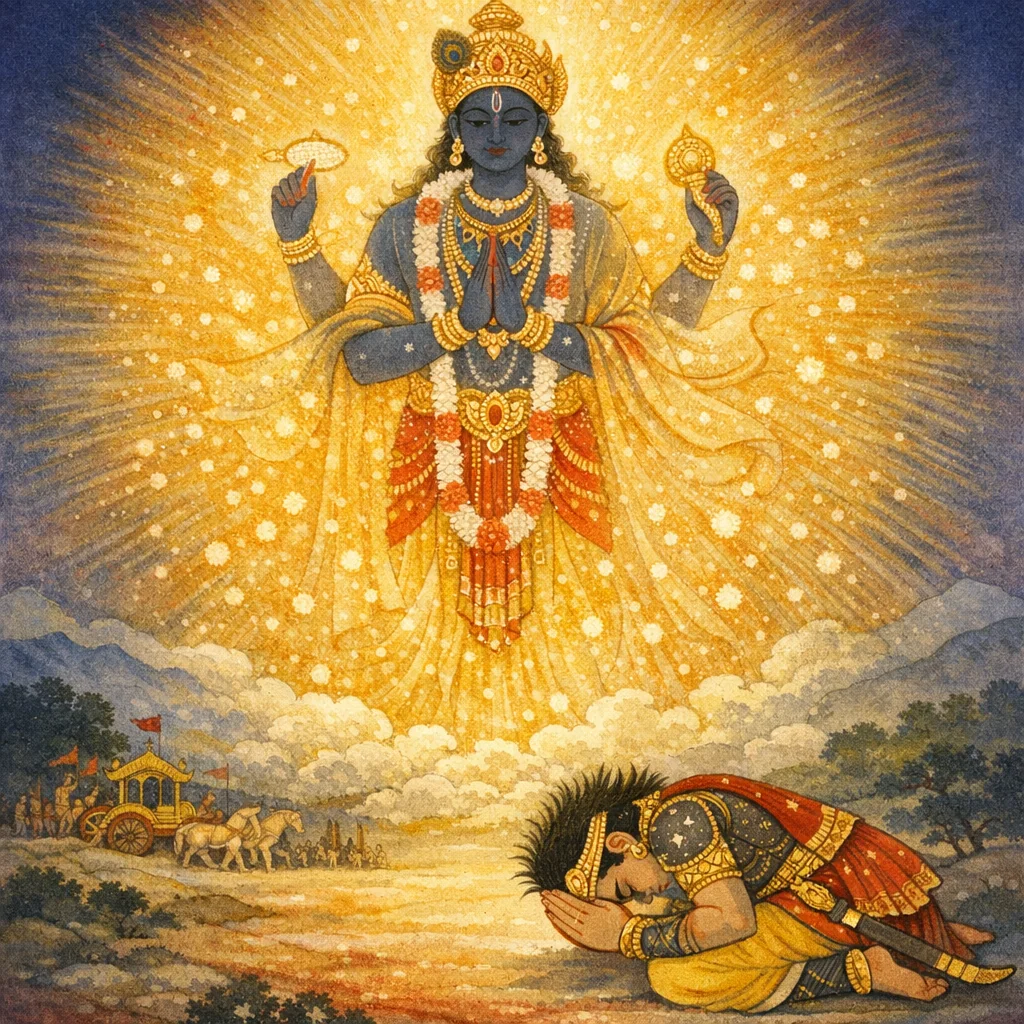
ततः स विस्मयाविष्टो हृष्टरोमा धनंजयः । प्रणम्य शिरसा देवं कृताञ्जलिरभाषत ॥ ११.१४ ॥
tataḥ sa vismayāviṣṭo hṛṣṭa-romā dhanañjayaḥ | praṇamya śirasā devaṃ kṛtāñjalir abhāṣata || 11.14 ||

ତାପରେ ବିସ୍ମୟରେ ଆବିଷ୍ଟ ଓ ହର୍ଷରେ ରୋମାଞ୍ଚିତ ଧନଞ୍ଜୟ ଶିର ନମାଇ ଦେବଙ୍କୁ ପ୍ରଣାମ କଲେ ଏବଂ କୃତାଞ୍ଜଳି ହୋଇ କହିଲେ।
तत्पश्चात् विस्मय से परिपूर्ण और हर्ष से रोमांचित धनंजय ने देव को सिर झुकाकर प्रणाम किया और हाथ जोड़कर बोला।
Then Dhanañjaya, filled with wonder and with hair standing on end, bowed his head to the god and spoke with hands joined.
The verse records embodied markers of awe (romāñca, vismaya) and the ritualized gesture of reverence (añjali). Academically, it can be read as a phenomenology of religious experience within epic narrative.
FAQs
The verse portrays awe as embodied: intense meaning can produce physiological responses and a spontaneous orientation toward humility and attention.
Reverence here functions as an appropriate response to perceived ultimacy—an experiential acknowledgment of a reality understood as greater than the individual ego.
It bridges the vision description and Arjuna’s direct testimony (beginning 11.15), signaling that the experience has transformed his stance.
It can be read as modeling reflective pause before action: when faced with vast complexity, one may benefit from humility, composure, and careful speech.