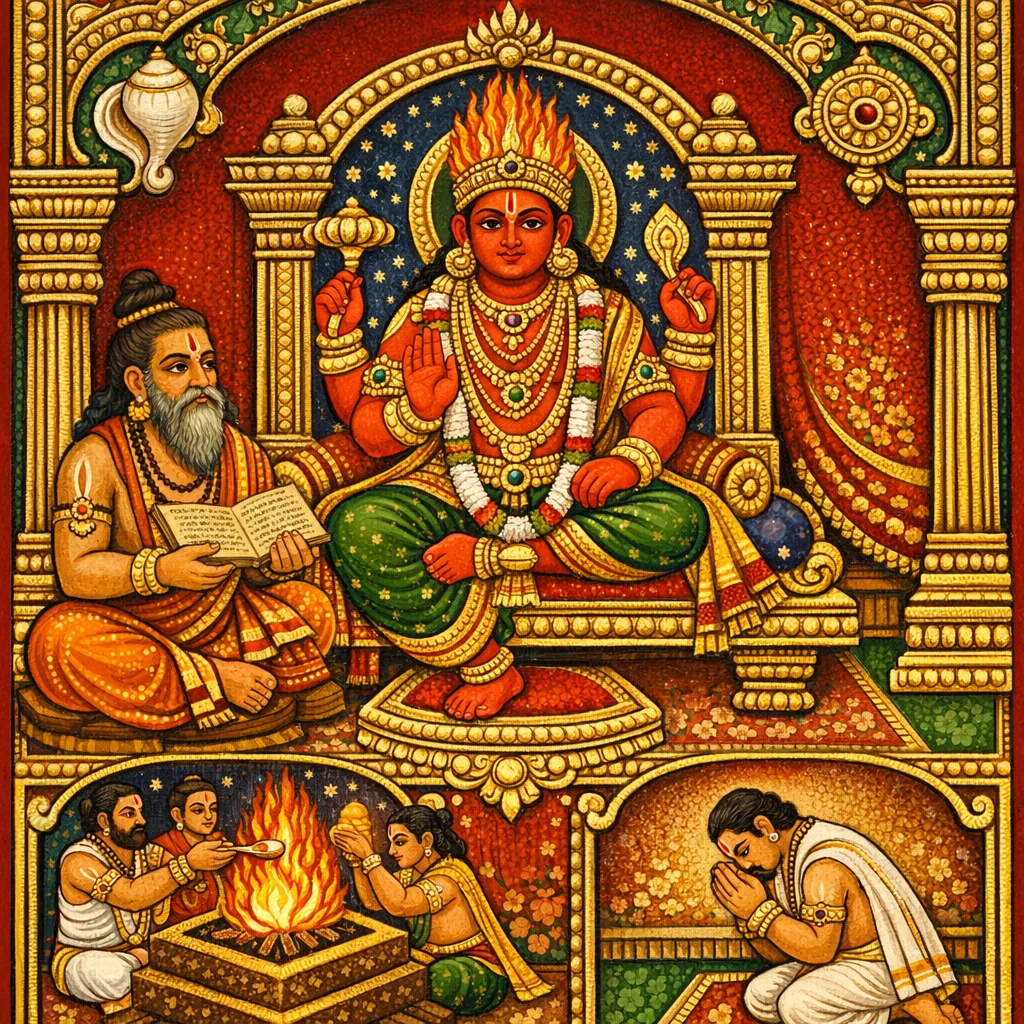
Adhyaya 353
Chapter 353: कारकं (Kāraka — Syntactic Relations) with Vibhakti-Artha (Case-Meaning Integration)
ନପୁଂସକଲିଙ୍ଗ ରୂପ ପରେ ଏହି ଅଧ୍ୟାୟରେ ସୁକନ୍ଦ କହନ୍ତି ଯେ ବିଭକ୍ତିର ଅର୍ଥ ସହିତ କାରକ ବ୍ୟାଖ୍ୟା କରିବେ। କର୍ତ୍ତାକୁ ସ୍ୱାଧୀନ ବୋଲି ନିର୍ଦ୍ଧାରଣ କରି ପ୍ରେରକ-କର୍ତ୍ତୃତ୍ୱର ଭେଦ ଦେଖାଯାଇଛି। କର୍ତ୍ତା ପାଞ୍ଚ ପ୍ରକାର ଓ କର୍ମ ସାତ ପ୍ରକାର; ଶ୍ରୀସହିତ ବିଷ୍ଣୁଙ୍କୁ ନମସ୍କାର, ହରିଙ୍କ ଶୁଭାର୍ଥେ ପୂଜା, ବିଷ୍ଣୁ-ନମସ୍କାରରେ ମୋକ୍ଷ ଭଳି ବୈଷ୍ଣବ ଉଦାହରଣ ଦିଆଯାଇଛି। ପରେ କରଣ, ସମ୍ପ୍ରଦାନ, ଅପାଦାନ, ଅଧିକରଣ କାରକକୁ ବିଭକ୍ତି-ପ୍ରୟୋଗ ସହ ମେଳାଇ ବିଶେଷ ନିୟମ—କର୍ମପ୍ରବଚନୀୟ ସହ ଦ୍ୱିତୀୟା, ‘ନମଃ/ସ୍ୱାହା’ ସହ ଚତୁର୍ଥୀ, ଅନଭିହିତ ପ୍ରସଙ୍ଗରେ ତୃତୀୟା ଓ ଷଷ୍ଠୀ—ବର୍ଣ୍ଣିତ। ବୈଷୟିକ ଓ ସାମୀପ୍ୟକ ଦୋଷ, ରୂଢ଼ ଲୋକେଟିଭ୍, ଷଷ୍ଠୀର ବ୍ୟବହାର ଏବଂ କିଛି ତଦ୍ଧିତ ଗଠନରେ ଷଷ୍ଠୀ-ନିଷେଧ ମଧ୍ୟ ଉଲ୍ଲେଖିତ। ସମଗ୍ର ବ୍ୟାକରଣକୁ ଅଗ୍ନେୟ ବିଦ୍ୟା ଭାବେ ଧର୍ମ, ବିଧିବାକ୍ୟର ସ୍ପଷ୍ଟତା ଓ ଭକ୍ତିମୟ ଅର୍ଥ ପାଇଁ ଉପକାରୀ କୁହାଯାଇଛି।
Shlokas
No shlokas available for this adhyaya yet.
Frequently Asked Questions
The chapter emphasizes kāraka–vibhakti integration: how agent, object, instrument, recipient, source, and locus relations are expressed through specific case-endings, including special rules for karmapravacanīyas, interjections (namaḥ/svāhā), and ‘anabhihita’ (unstated-sense) contexts.
By making linguistic roles and case-meanings precise, it safeguards correct understanding of śāstric injunctions and devotional statements; its examples explicitly point to Hari/Viṣṇu as the liberating refuge, aligning grammatical mastery (vidyā) with dharma-practice and mukti-oriented devotion.