Adhyaya 206
Agastyārghyadāna-kathana (On the Giving of the Agastya Honor-Offering)
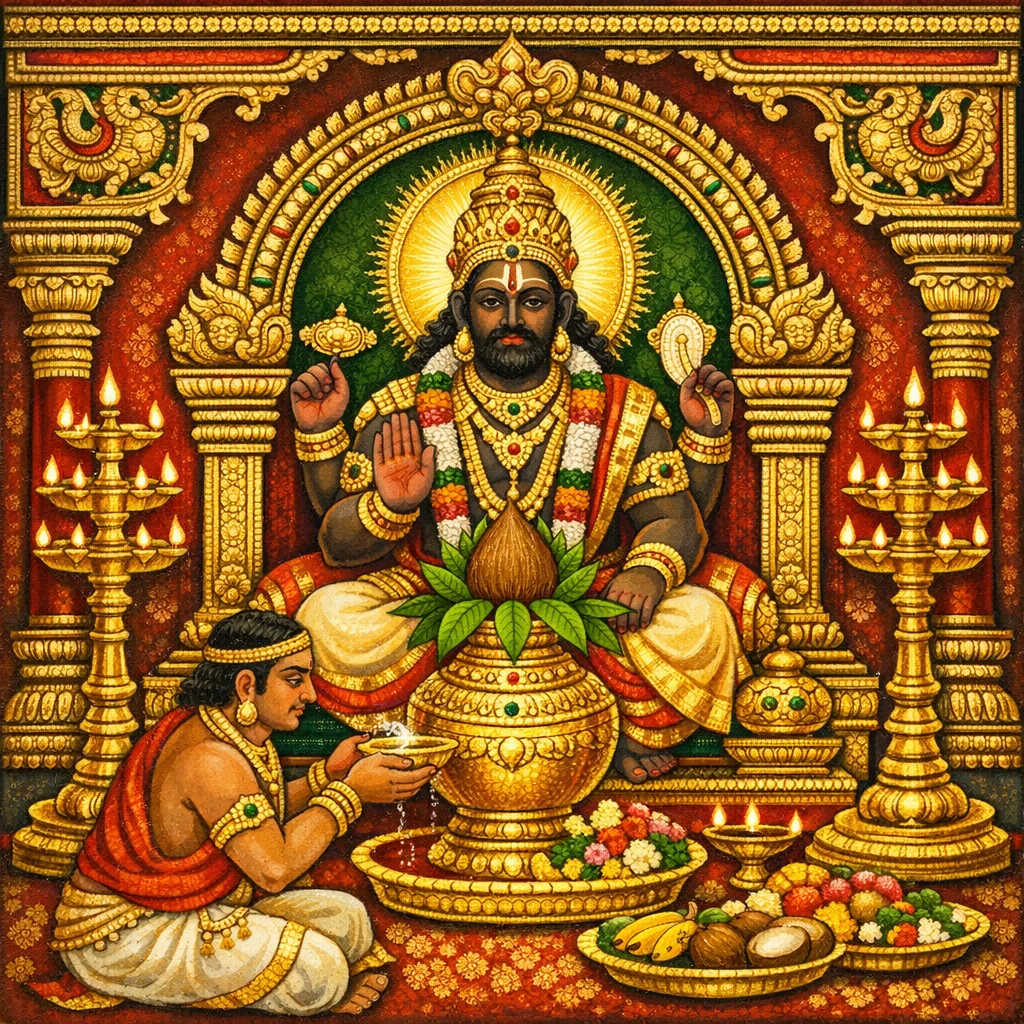
ଏହି ଅଧ୍ୟାୟରେ ଭଗବାନ ଅଗ୍ନି ଅଗସ୍ତ୍ୟଙ୍କୁ ବିଷ୍ଣୁସ୍ୱରୂପ ବୋଲି ସ୍ପଷ୍ଟ କରି ଅଗସ୍ତ୍ୟକେନ୍ଦ୍ରିତ ବ୍ରତ-ପୂଜାର ବିଧି କହିଛନ୍ତି, ଯାହା ହରିପ୍ରାପ୍ତି ସହ ଯୋଡ଼ାଯାଏ। ତିନି ଦିନ ସୂର୍ଯ୍ୟୋଦୟ ପୂର୍ବରୁ ଉପବାସ, ପୂଜା ଓ ଅଗସ୍ତ୍ୟଙ୍କୁ ଅର୍ଘ୍ୟ ଦେବା ଉଚିତ। ପ୍ରଦୋଷକାଳେ କାଶଫୁଲର ପ୍ରତିମାକୁ ଜଳଘଟ/କୁମ୍ଭରେ ସ୍ଥାପନ କରି ରାତ୍ରିଜାଗରଣ (ପ୍ରଜାଗର) କରାଯାଏ। ପରେ ପ୍ରଭାତେ ଜଳାଶୟ ନିକଟେ ଅର୍ଘ୍ୟ ଦେଇ ସମୁଦ୍ର ଶୋଷଣ ଓ ଆତାପି–ବାତାପି ନାଶ ଆଦି କୀର୍ତ୍ତି ସ୍ମରଣ କରି ସ୍ତୋତ୍ର ପାଠ ସହ ବର ଓ ଶୁଭ ପରଲୋକଗତି ପ୍ରାର୍ଥନା କରାଯାଏ। ଚନ୍ଦନ, ମାଳା, ଧୂପ, ବସ୍ତ୍ର, ଧାନ୍ୟ/ଚାଉଳ, ଫଳ, ସୁନା ଇତ୍ୟାଦି ଦ୍ରବ୍ୟ, ବ୍ରାହ୍ମଣଙ୍କୁ ଘଟଦାନ, ଭୋଜନ ଓ ଦକ୍ଷିଣା (ଗୋ, ବସ୍ତ୍ର, ସୁନା) ଉଲ୍ଲେଖିତ। ମନ୍ତ୍ରପାଠର ଭେଦ ଅଛି; ନାରୀ ଓ ଶୂଦ୍ରଙ୍କ ପାଇଁ ବେଦମନ୍ତ୍ର ବିନା ବିଧି। ସାତ ବର୍ଷ ଅର୍ଘ୍ୟବ୍ରତରେ ସର୍ବସମୃଦ୍ଧି, ନିଃସନ୍ତାନଙ୍କୁ ପୁତ୍ରଲାଭ ଓ କନ୍ୟାଙ୍କୁ ରାଜପତି ଲାଭ ଫଳ କୁହାଯାଇଛି।
Shlokas
No shlokas available for this adhyaya yet.
Frequently Asked Questions
Fasting and worship precede the arghya; at pradoṣa a kāśa-flower image is placed in a ghaṭa/kumbha, followed by night vigil; in the morning the arghya is offered near water, then tyāga (grain, fruit, libation) and charitable gifts/feeding of brāhmaṇas conclude the rite.
Sandalwood, garlands, incense, cloth, rice/grains, fruits, gold (and in an expanded description: five gems, gold and silver, seven grains, curd, sandalwood), plus a pot-gift to a brāhmaṇa and dakṣiṇā including cow, garments, and gold.
The rite explicitly aims at attaining Hari through Agastya-worship (mukti-oriented devotion) while also promising dharma-anchored prosperity—health, fortune, desired boons, lineage, and marital success—thus integrating dharma, artha, kāma, and mokṣa.
It states that for women and Śūdras the rite is ‘non-Vedic,’ i.e., performed without Vedic mantras, indicating an inclusive procedural adaptation while preserving the devotional and charitable structure.
By giving the arghya for seven years, ‘all obtain everything’: a childless woman gains sons and good fortune, and a maiden gains a husband of royal birth; the arghya is also described in some readings as imperishable and mind-fulfilling.