Adhyaya 201
Worship of the Nine Vyūhas (Nava-vyūha-arcana)
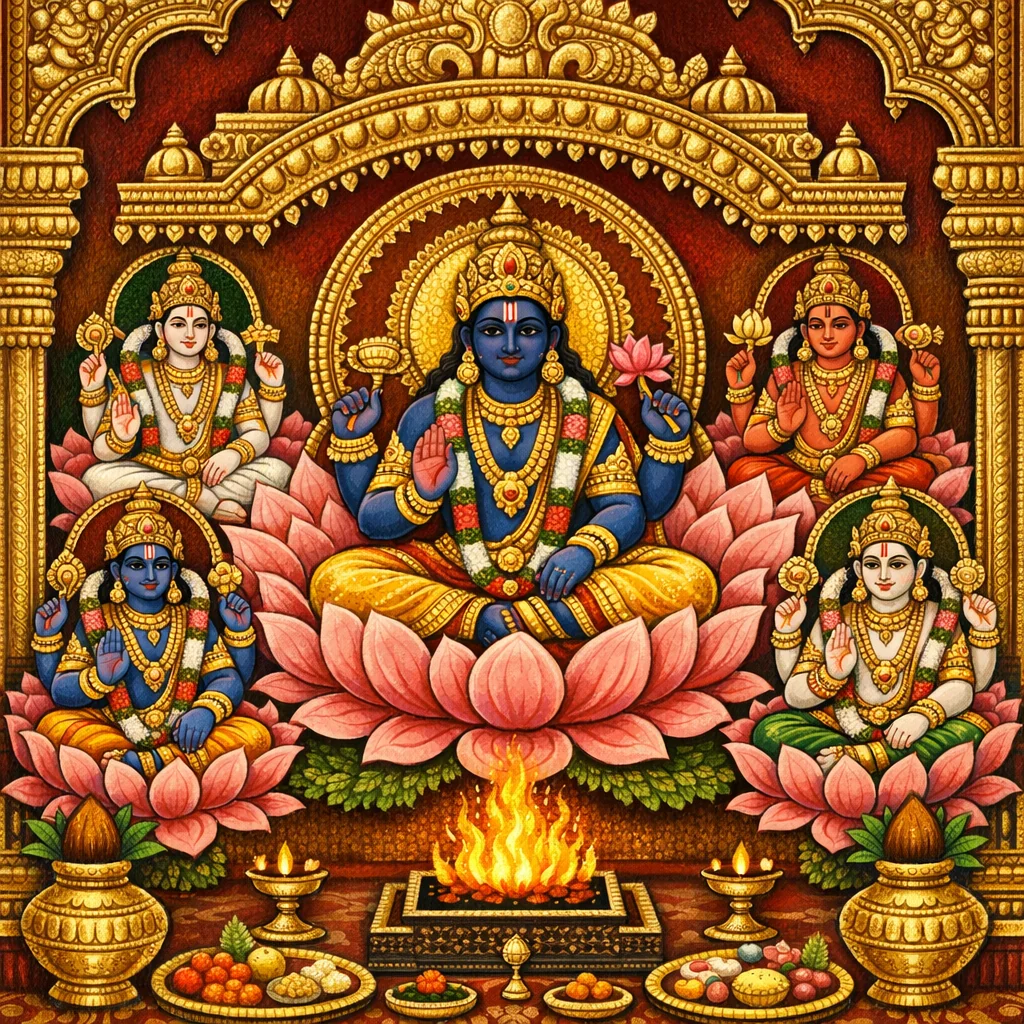
ଏହି ଅଧ୍ୟାୟରେ ପୂର୍ବୋକ୍ତ ଦୀପଦାନ-ବ୍ରତର ସମାପ୍ତି ଉଲ୍ଲେଖ କରି ସହସା ହରିପ୍ରଦତ୍ତ ନବବ୍ୟୂହ-ଅର୍ଚ୍ଚନାର ପ୍ରାୟୋଗିକ ବିଧି ଆରମ୍ଭ ହୁଏ। ଅଗ୍ନି ପଦ୍ମ-ମଣ୍ଡଳ ବିନ୍ୟାସ ଶିଖାନ୍ତି—ମଧ୍ୟରେ ବାସୁଦେବ, ଦିଗମାନେ ସଙ୍କର୍ଷଣ, ପ୍ରଦ୍ୟୁମ୍ନ, ଅନିରୁଦ୍ଧ ଓ ନାରାୟଣ; ପ୍ରତ୍ୟେକଙ୍କ ସହ ନିର୍ଦ୍ଦିଷ୍ଟ ବୀଜାକ୍ଷର, ତତ୍ତ୍ୱ/କର୍ମସ୍ଥାନ ଏବଂ ଜଳ-ସ୍ଥାପନ ଆଦି ନିୟମ ଅଛି। ପରେ ସଦ୍ବ୍ରହ୍ମା, ବିଷ୍ଣୁ, ନୃସିଂହ, ଭୂର୍ବରାହ ଆଦି ରୂପର ମନ୍ତ୍ର-ବୀଜ ବିନ୍ୟାସ, ଦ୍ୱାରଦେଶ ଓ ପଶ୍ଚିମ ଭାଗର ସହାୟକ ନ୍ୟାସ, ଗରୁଡ ଓ ଗଦା-ମନ୍ତ୍ରର ବିଶେଷ ପ୍ରକ୍ରିୟା ବର୍ଣ୍ଣିତ। ତାପରେ ବାହ୍ୟ ମଣ୍ଡଳରୁ ଅନ୍ତର୍ମୁଖୀ ସାଧନା—ଦଶାଙ୍ଗ-କ୍ରମ ପୂଜା, ଦିକ୍ପାଳ ଘଟ-ସ୍ଥାପନ, ତୋରଣ-ବିତାନ କଳ୍ପନା, ଚନ୍ଦ୍ରାମୃତ ଧ୍ୟାନ। ଶେଷରେ ଦ୍ୱାଦଶ ବୀଜ ନ୍ୟାସରେ ‘ଦିବ୍ୟ ଦେହ’ ନିର୍ମାଣ, ପୁଷ୍ପକ୍ଷେପରେ ଶିଷ୍ୟ ପରିଚୟ, ଶୁଦ୍ଧି ପାଇଁ ହୋମ ସଂଖ୍ୟା ଓ ଦୀକ୍ଷା-ଦକ୍ଷିଣା ନିର୍ଦ୍ଦିଷ୍ଟ—ଦୀକ୍ଷାକୁ ଏହି କର୍ମବିଜ୍ଞାନର ସାମାଜିକ-ଆଧ୍ୟାତ୍ମିକ ମୁଦ୍ରା ଭାବେ ଦର୍ଶାଯାଇଛି।
Shlokas
No shlokas available for this adhyaya yet.
Frequently Asked Questions
A lotus-maṇḍala Navavyūha worship beginning with Vāsudeva at the center, followed by directional deity placements with specific bīja-syllables, then internalization through visualization, daśāṅga-krama, and nyāsa culminating in dīkṣā.
After mandala and mantra placements, it shifts to subtle-body contemplation (lunar nectar), self-identification with Viṣṇu, and nyāsa that produces a “divine body,” explicitly valuing heart-worship of Hari (anirmālyā) as the inner completion of the rite.
Disciples are seated to the left, identify a chosen form by blind flower-casting, perform homa with 108 and then 1000 oblations for purification, and receive dīkṣā after payment of prescribed fees honoring the guru.