Adhyaya 198
Monthly Vows (Māsa-vratāni) and Cāturmāsya Disciplines; Introduction of Kaumudī-vrata
ଏହି ଅଧ୍ୟାୟରେ ଭଗବାନ ଅଗ୍ନି ମାସ-ବ୍ରତକୁ ଭୁକ୍ତି ଓ ମୁକ୍ତିଦାୟକ ଶିଷ୍ଟାଚାରମୟ ସାଧନା ଭାବେ ବର୍ଣ୍ଣନା କରନ୍ତି। ଆରମ୍ଭରେ ଚାତୁର୍ମାସ୍ୟ ନିୟମ—ବିଶେଷତଃ ପବିତ୍ର ଚାରି ମାସରେ ତେଲ-ଅଭ୍ୟଙ୍ଗ ତ୍ୟାଗ—ତାପରେ ମାସାନୁସାରେ ତ୍ୟାଗ ଓ ଦାନ (ବୈଶାଖରେ ଗୋଦାନ; ମାଘ କିମ୍ବା ଚୈତ୍ରରେ ଗୁଡ଼-ଗାଈ ଦାନ ଇତ୍ୟାଦି) ଉଲ୍ଲେଖ ଅଛି। ନକ୍ତଭୋଜନ, ଏକଭକ୍ତ, ଫଳବ୍ରତ, ଏକଦିନ ଛାଡ଼ି ଉପବାସ, ମୌନ, ଚାନ୍ଦ୍ରାୟଣ, ପ୍ରାଜାପତ୍ୟ ଆଦି ତପସ୍ୟାରେ ସ୍ୱର୍ଗ, ବିଷ୍ଣୁଲୋକ ଓ ଶେଷରେ ମୋକ୍ଷାଭିମୁଖ ପୁଣ୍ୟ କ୍ରମେ ମିଳେ ବୋଲି କୁହାଯାଇଛି। ସଙ୍କଳ୍ପ ଓ କାଳ-ନିର୍ଦ୍ଧାରଣରେ ବ୍ରତ ସମ୍ପୂର୍ଣ୍ଣ—ଚାତୁର୍ମାସ୍ୟ ପ୍ରସ୍ତୁତି, ସୂର୍ଯ୍ୟ କର୍କଟରେ ପ୍ରବେଶ କଲେ ହରିପୂଜା, ଏବଂ ମଧ୍ୟରେ ମୃତ୍ୟୁ ହେଲେ ମଧ୍ୟ ବ୍ରତ ପୂର୍ଣ୍ଣ ଗଣାଯାଉ ବୋଲି ପ୍ରାର୍ଥନା। ଶେଷରେ ଆଶ୍ୱିନରେ କୌମୁଦୀ-ବ୍ରତ: ଦ୍ୱାଦଶୀରେ ପୁଷ୍ପ, ଦୀପ, ଘିଅ ଓ ତିଳତେଲ ଅର୍ପଣ ସହ ବିଷ୍ଣୁପୂଜା, ‘ଓଁ ନମୋ ବାସୁଦେବାୟ’ ମନ୍ତ୍ର; ଚାରି ପୁରୁଷାର୍ଥ ସିଦ୍ଧିର ଫଳଶ୍ରୁତି।
Shlokas
No shlokas available for this adhyaya yet.
Frequently Asked Questions
Renunciation of oil-anointing (abhyanga/taila-tyāga) during the four months beginning with Āṣāḍha, paired with dawn-bathing and devotion to Hari.
It repeatedly couples renunciation/fasting with formal gifts—especially go-dāna and guḍa-dhenu—presenting donation as the outward completion of inner restraint and a generator of merit and higher worlds.
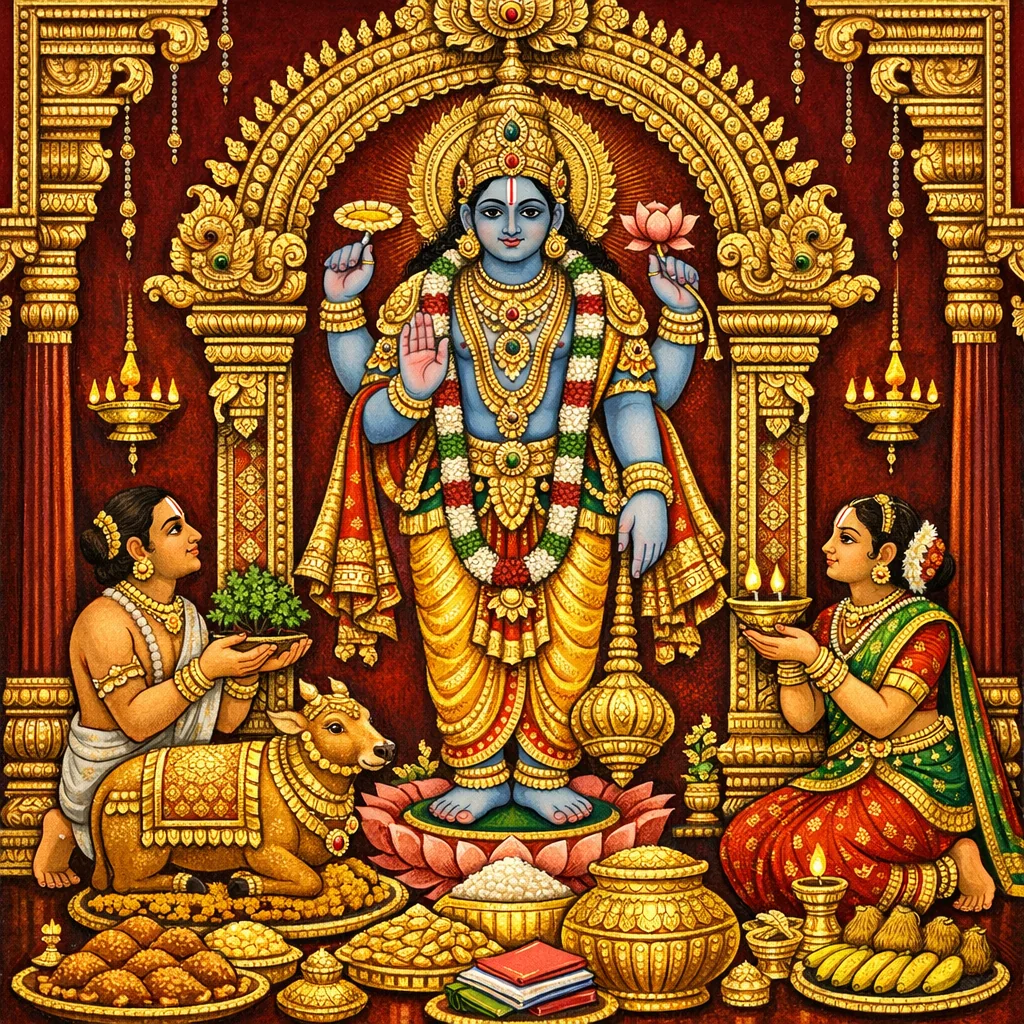
The Kaumudī-vrata (Āśvina) is introduced: on Dvādaśī, worship Viṣṇu with lotus-type flowers, offer lamp and naivedya using ghee and sesame-oil, and recite ‘Om namo Vāsudevāya’.
By mapping regulated conduct (niyama), calendrical worship, and charitable giving to tangible outcomes (bhukti) while explicitly promising Viṣṇuloka/Vaikuṇṭha and liberation-oriented fruits (mukti), culminating in the fourfold puruṣārtha attainment through Kaumudī-vrata.