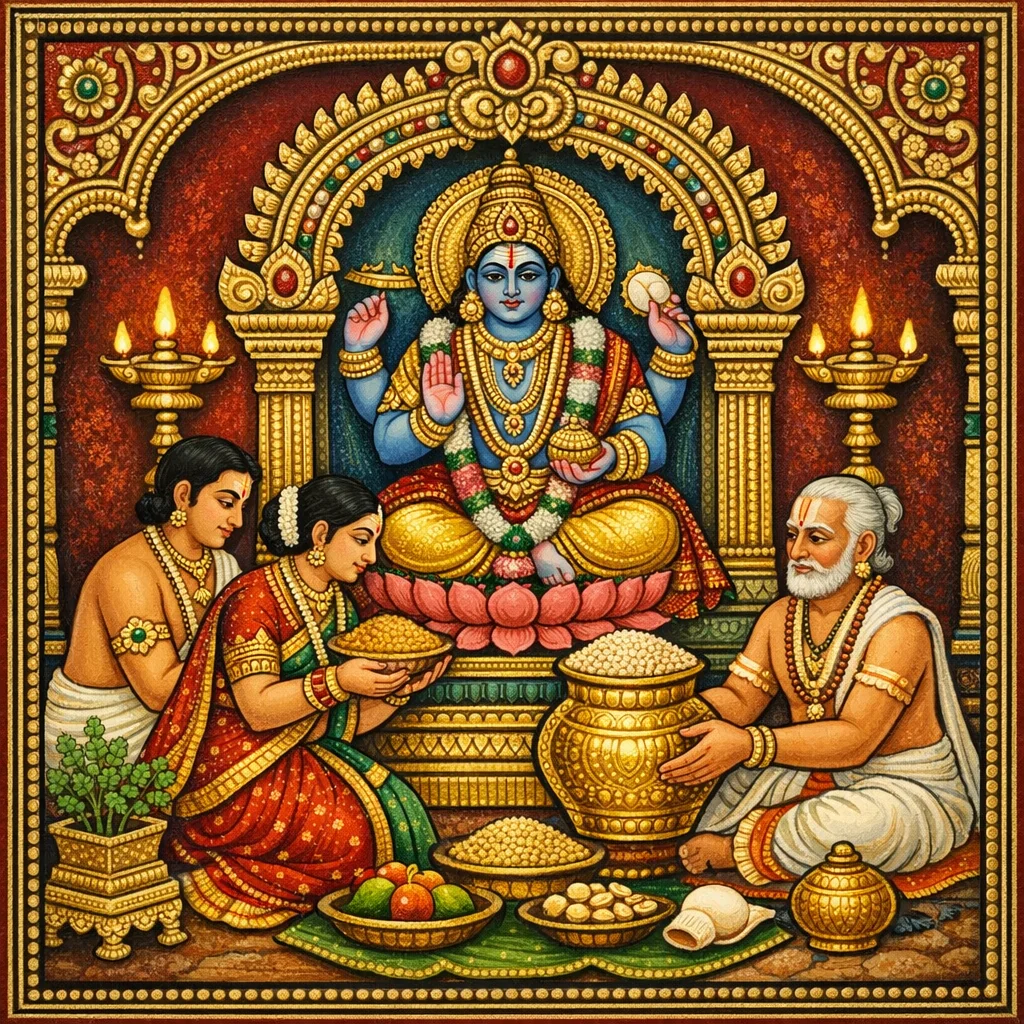
Adhyaya 190
Chapter 190: Akhaṇḍa-dvādaśī-vrata (The Unbroken Dvādaśī Vow)
ଭଗବାନ ଅଗ୍ନି ଋଷି ବଶିଷ୍ଠଙ୍କୁ ଅଖଣ୍ଡ-ଦ୍ୱାଦଶୀ-ବ୍ରତ ଶିଖାନ୍ତି—ଏହା ବ୍ରତମାନଙ୍କର ‘ସମ୍ପୂର୍ଣ୍ଣତା’ କରି ଭଙ୍ଗ ନ ହେବାର ଉପାୟ। ମାର୍ଗଶୀର୍ଷ ଶୁକ୍ଳ ଦ୍ୱାଦଶୀରେ ବିଷ୍ଣୁପୂଜା କରି, ପଞ୍ଚଗବ୍ୟ-ଜଳରେ ସ୍ନାନ କରି, ଶୁଦ୍ଧିକାରକ ଦ୍ରବ୍ୟ ବିଧିମତେ ସେବନ କରି ଉପବାସ କରିବାକୁ କୁହାଯାଏ। ଦ୍ୱାଦଶୀରେ ଦାନ ମୁଖ୍ୟ—ଯବ ଓ ଚାଉଳ ଭରା ପାତ୍ର ବ୍ରାହ୍ମଣଙ୍କୁ ଦାନ କରିବା। ବ୍ରତୀ ବିଷ୍ଣୁଙ୍କୁ ପ୍ରାର୍ଥନା କରେ—ସାତ ଜନ୍ମରେ ସଞ୍ଚିତ ବ୍ରତର ଅପୂର୍ଣ୍ଣତା ଓ ଦୋଷ ଆପଣ ପୂରଣ କରନ୍ତୁ; ପୁରୁଷୋତ୍ତମରେ ବିଶ୍ୱ ଅଖଣ୍ଡ ଭାବେ ଅବସ୍ଥିତ—ଏହି ତତ୍ତ୍ୱରେ ପ୍ରାର୍ଥନା ଭିତ୍ତିଶୀଳ। ପରେ ମାସିକ ନିୟମ ଓ ଚାତୁର୍ମାସ୍ୟ ବିଧାନ, ମାସଭେଦେ ଶକ୍ତୁ (ଭୁନା ଯବ ଗୁଣ୍ଡ) ଆଦି ଦାନ କଥା ରହିଛି। ଶ୍ରାବଣରୁ ଆରମ୍ଭ କରି କାର୍ତ୍ତିକାନ୍ତ ପାରଣ ପର୍ଯ୍ୟନ୍ତ ସଠିକ୍ ସମୟ ପାଳନର ଉପଦେଶ; ତ୍ରୁଟି ସାତ ଜନ୍ମ ପର୍ଯ୍ୟନ୍ତ ପ୍ରତିଧ୍ୱନିତ ହୋଇପାରେ, ଏବଂ ସଫଳ ଅନୁଷ୍ଠାନରେ ଦୀର୍ଘାୟୁ, ଆରୋଗ୍ୟ, ଶ୍ରୀ, ରାଜ୍ୟ ଓ ଭୋଗ ମିଳେ।
Shlokas
No shlokas available for this adhyaya yet.
Frequently Asked Questions
It is explicitly framed as a rite for vrata-sampūrṇatā—making vows complete and ‘unbroken,’ including repairing deficiencies believed to persist across seven births through Viṣṇu’s grace.
Fasting on bright Mārgaśīrṣa Dvādaśī for Viṣṇu, bathing in pañcagavya-water and partaking of it, and giving a brāhmaṇa a vessel containing barley and rice on Dvādaśī.
The votary’s prayer links personal vow-completion to the cosmic ‘unbroken wholeness’ of the universe identified with Puruṣottama (Viṣṇu), making ritual integrity a mirror of ontological unity.
The course is described as beginning in Śrāvaṇa and reaching pāraṇa at the end of Kārttika, aligning with the Cāturmāsya-related discipline and its closure.
Long life, freedom from disease, good fortune, sovereignty/kingship, and enjoyments (along with similar prosperities) are stated as outcomes.