Adhyaya 186
Daśamī-vrata (Observance for the Tenth Lunar Day)
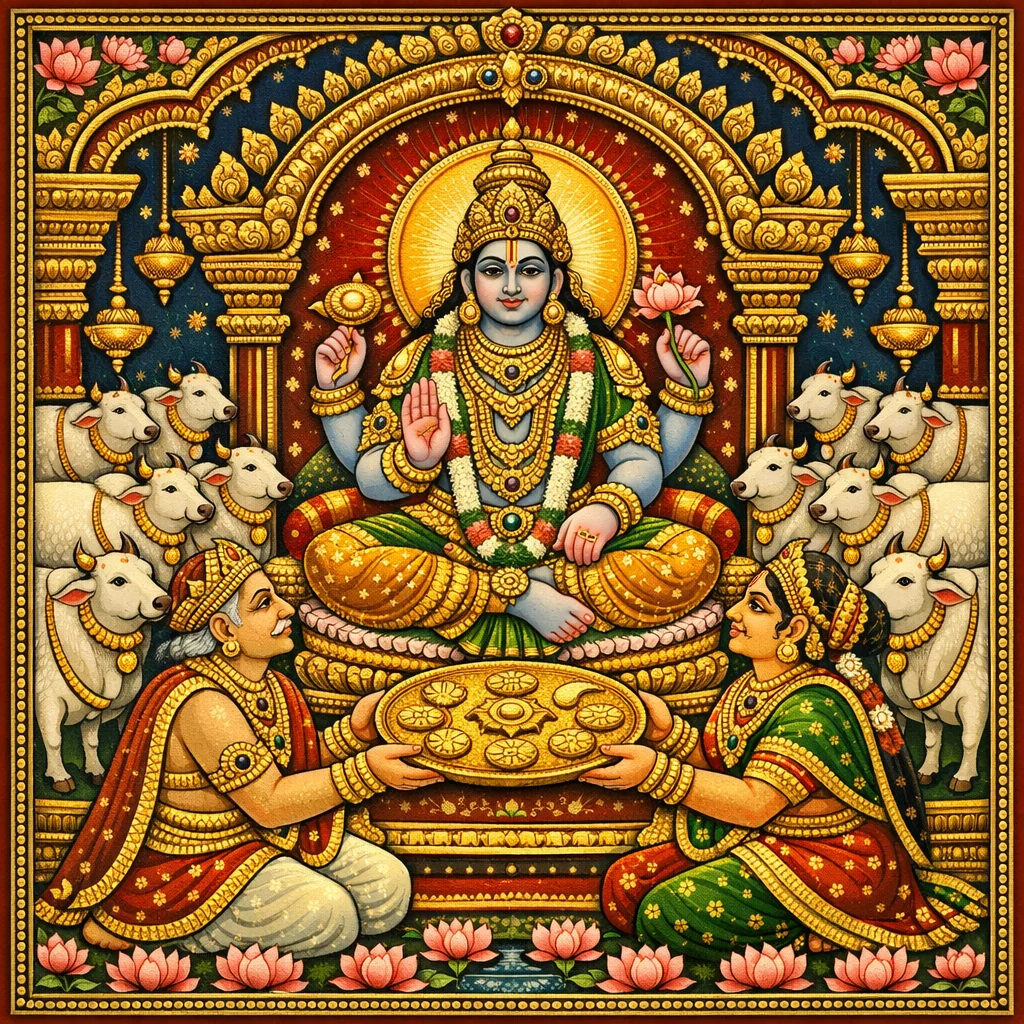
ନବମୀ-ବ୍ରତମାନଙ୍କ ପରେ ବ୍ରତଖଣ୍ଡର ତିଥି-ଆଧାରିତ କ୍ରମବର୍ଣ୍ଣନାରେ ଭଗବାନ ଅଗ୍ନି ଦଶମୀ-ବ୍ରତ ଉପଦେଶ କରନ୍ତି। ଏହାର ଫଳ ପୁରୁଷାର୍ଥ ଭାଷାରେ—ଧର୍ମ, କାମ ଓ ସମ୍ବନ୍ଧିତ ଲକ୍ଷ୍ୟ—ବୋଲି କୁହାଯାଇ, ଆଚାର-ନିୟମ ନୈତିକ-ଆଧ୍ୟାତ୍ମିକ ପୁଣ୍ୟ ସହ ସୁସଂଗଠିତ ଲୌକିକ ସମୃଦ୍ଧିର ଉପାୟ ବୋଲି ପ୍ରତିପାଦିତ ହୁଏ। ଦଶମୀ ଦିନ ଏକଭକ୍ତ (ଏକଥର ଭୋଜନ) କରିବାକୁ ବିଧାନ ଅଛି; ସଂଯମିତ ଆହାରକୁ ଶୁଦ୍ଧିର ପଦ୍ଧତି କୁହାଯାଇଛି। ବ୍ରତର ସମାପ୍ତି ଦାନରେ—ଦଶ ଗାଈ ଦାନ—ଯାହାଦ୍ୱାରା ବ୍ୟକ୍ତିଗତ ତପ ସାମାଜିକ ଉପକାରରେ ପୂର୍ଣ୍ଣ ହୁଏ। ଆଉ ଏକ ପ୍ରତିଷ୍ଠାସୂଚକ ଦାନ: ସୁବର୍ଣ୍ଣରେ ନିର୍ମିତ ଅଷ୍ଟଦିଗ (ଦିକ୍) ଅର୍ପଣ; ଏହାରେ ଦାତା ବ୍ରାହ୍ମଣମାନଙ୍କ ମଧ୍ୟରେ ପ୍ରଭୁତ୍ୱସମ ମର୍ଯ୍ୟାଦା ପାଏ ବୋଲି କୁହାଯାଇଛି। ଏଭଳି ନିୟମ, ତିଥି ଓ ଦାନ ଏକ ଧାର୍ମିକ କାର୍ଯ୍ୟକ୍ରମରେ ଏକତ୍ର ହୁଏ।
Shlokas
No shlokas available for this adhyaya yet.
Frequently Asked Questions
The practitioner observes ekabhakta on Daśamī—taking a single meal—establishing dietary restraint as the vow’s primary discipline.
Upon completion of the vow, one should gift ten cows (daśa-dhenu-dāna), making dana the culminating act that externalizes the merit of the observance.
The text states that gifting the directions (dik) fashioned in gold results in becoming a lord among Brāhmaṇas, indicating social-spiritual elevation linked to high-value symbolic dana.
By combining tithi-discipline (Daśamī), bodily restraint (ekabhakta), and compassionate redistribution (dana), the vrata trains self-control and generosity—core dharmic virtues that support both worldly order and inner purification.