Adhyaya 143
Chapter 143 — Worship of Kubjikā (कुब्जिकापूजा)
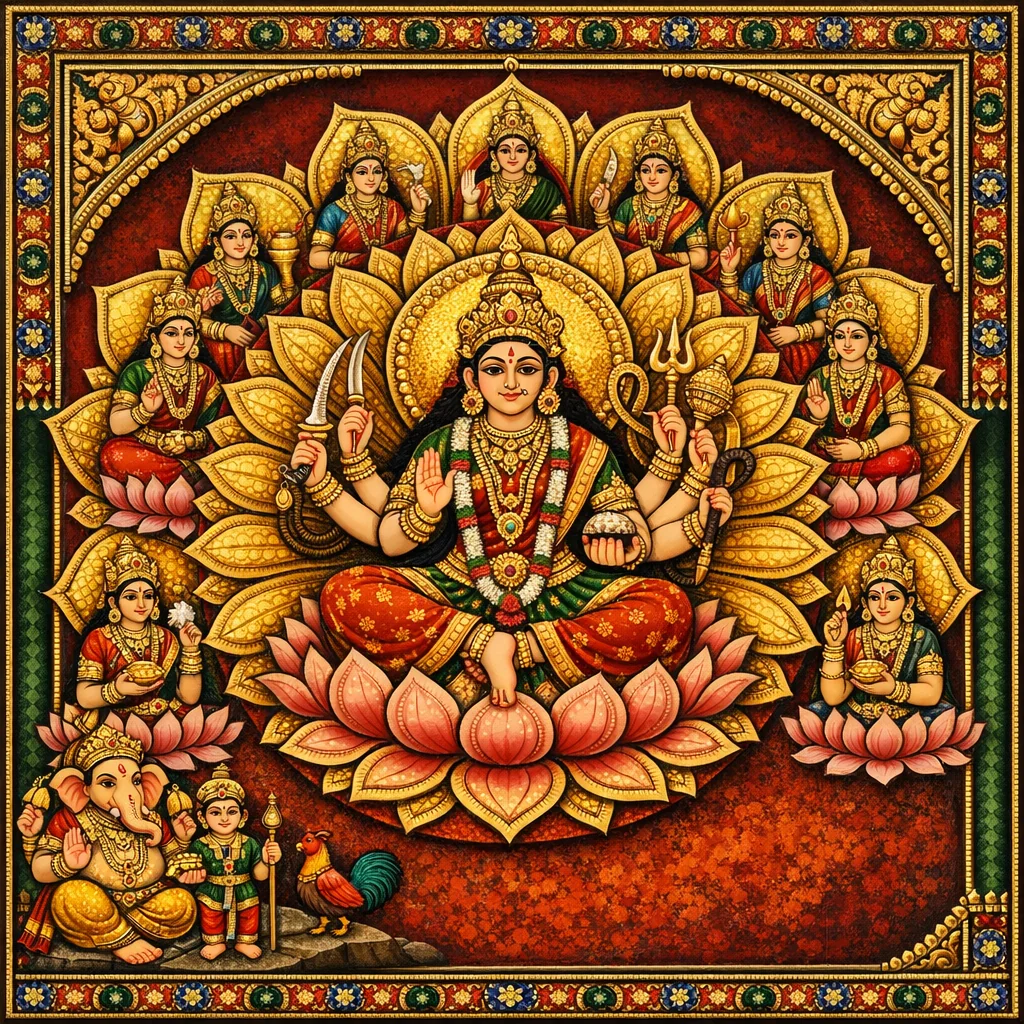
ଏହି ଅଧ୍ୟାୟରେ ମନ୍ତ୍ର ଓ ଔଷଧ‑ଉପାୟରୁ ଅଗ୍ରସର ହୋଇ ଯୁଦ୍ଧଜୟାର୍ଣବ ପରମ୍ପରାର ଶାକ୍ତ‑ତାନ୍ତ୍ରିକ ବିଜୟ‑କର୍ମ ବର୍ଣ୍ଣିତ। ଭଗବାନ କୁବ୍ଜିକାଙ୍କ କ୍ରମପୂଜାକୁ “ସର୍ବାର୍ଥ‑ସାଧନୀ” ବୋଲି କହିଛନ୍ତି—ଅଭିମନ୍ତ୍ରିତ ଦ୍ରବ୍ୟ, ବିଶେଷତଃ ଆଜ୍ୟ (ଘି), ଏବଂ ଶସ୍ତ୍ର‑ଅଧିବାସନ ସହ ଯୁଦ୍ଧଜୟ ଦେଇଥାଏ। ଚକ୍ରପୂଜାର ଚିହ୍ନ, ବୀଜାକ୍ଷର ଓ ଗୁହ୍ୟାଙ୍ଗ‑ହସ୍ତ‑ହୃଦୟ‑ଶିରରେ ନ୍ୟାସବିଧି ଦ୍ୱାରା ସାଧକଦେହକୁ ଶକ୍ତିକ୍ଷେତ୍ର କରାଯାଏ। ପରେ ମଣ୍ଡଳର ଦିଗଗୁଡ଼ିକରେ ଅସ୍ତ୍ର, କବଚ, ନେତ୍ର, ଶିଖା ଆଦି ମନ୍ତ୍ର ସ୍ଥାପନ ଏବଂ ୩୨‑ଦଳ କେନ୍ଦ୍ରରେ ମୁଖ୍ୟ ବହୁଅକ୍ଷରୀ ବୀଜ ପ୍ରତିଷ୍ଠା କୁହାଯାଇଛି। ଚଣ୍ଡିକାଙ୍କ ପରମତ୍ୱରୁ ମାତୃକାମାନଙ୍କ ଉଦ୍ଭବ, ପୀଠ ଓ ଦିଗବିନ୍ୟାସ, ଏବଂ ବିମଳପଞ୍ଚକର ବିଭାଗ ମଧ୍ୟ ଅଛି। ଶେଷରେ ଗଣପତି/ବଟୁକ, ଗୁରୁ, ନାଥ ଓ ଅନ୍ୟ ଦେବତାମାନଙ୍କ ଦ୍ୱାରା ମଣ୍ଡଳପୂରଣ କରି କୁବ୍ଜିକା (ଏବଂ କୁଲଟା)କୁ କେନ୍ଦ୍ରରେ ରଖି ରକ୍ଷା, ଅଧିକାର ଓ ଧର୍ମସମ୍ମତ ବିଜୟ ପାଇଁ କ୍ରମପୂଜା ସମାପ୍ତ ହୁଏ।
Shlokas
No shlokas available for this adhyaya yet.
Frequently Asked Questions
A krama (sequential) Kubjikā worship that combines chakra-pūjā, nyāsa (body-installation of mantras), and maṇḍala-based directional placements of protective and weapon mantras (kavaca, netra, astra, śikhā, etc.).
The Māyā-bīja is placed on the secret organ; the ṣaṭkarma-astra is assigned to the hand; “Kālī, Kālī” is placed on the heart; and “Duṣṭa-cāṇḍālikā” is placed on the head.
It frames Kubjikā worship as sarvārtha-sādhanī and explicitly links success over adversaries to consecrated empowerment—weaponization through mantra (astra), protection through kavaca, and correct directional/mandala deployment.
Mantras are stationed by quarters (dik): kavaca and netra are centralized, astra is distributed to directions, and a specific essential bīja-string is installed in a 32-petalled core (karṇikā), establishing a layered protective grid.
The chapter invokes the Mātṛkās arising from Caṇḍikā, the Vimalapañcaka distributed across quarters/peaks, and a populated mandala including Gaṇapati/Vaṭuka, gurus, nāthas, and surrounding deities with Kubjikā at the center.