Adhyaya 130
Chapter 130: घातचक्रम् (Ghāta-cakra) — Maṇḍalas, Portents, and Regional Prognostics for Victory
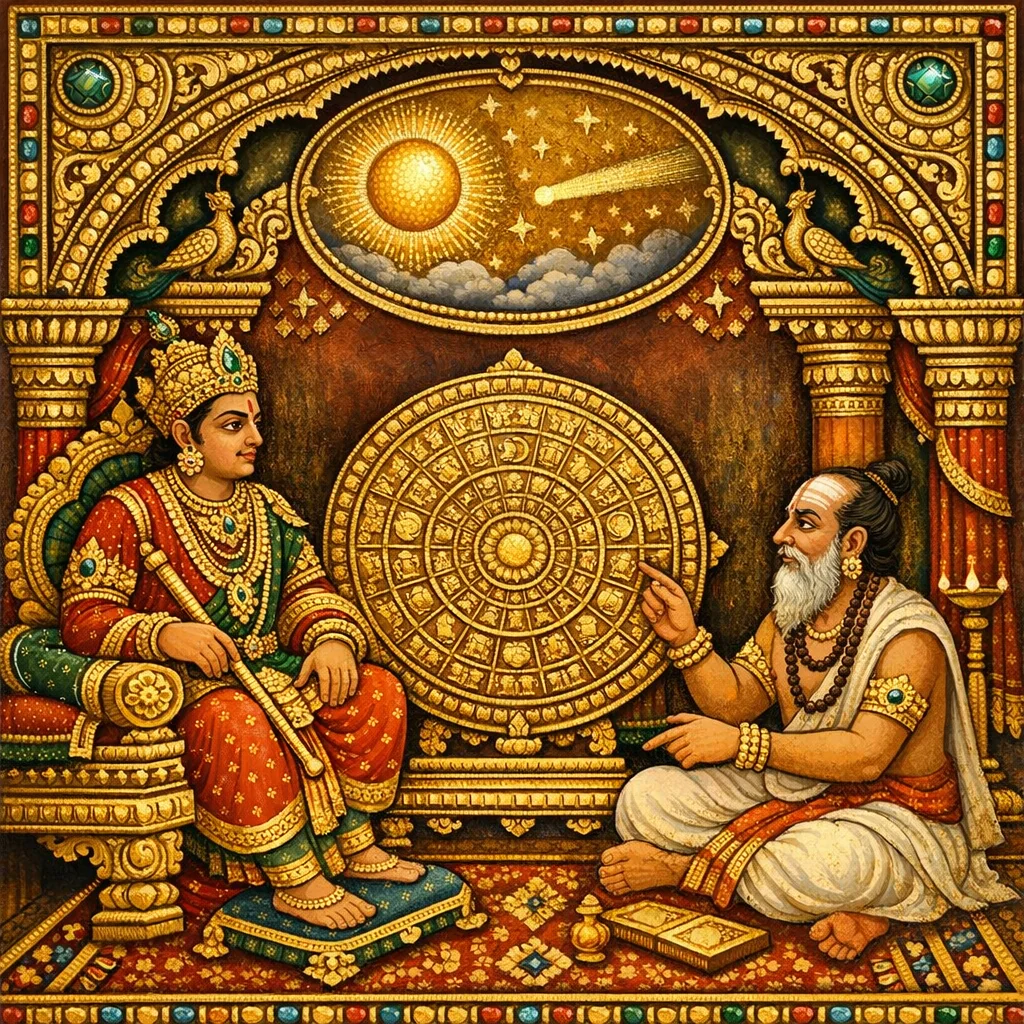
ଭଗବାନ୍ ଅଗ୍ନି ଘାତଚକ୍ର ଶିକ୍ଷା ଆରମ୍ଭ କରି ବିଜୟାର୍ଥ ମଣ୍ଡଳମାନଙ୍କୁ ଚାରି ବିଭାଗରେ ବ୍ୟାଖ୍ୟା କରନ୍ତି, ପରେ ଆଗ୍ନେୟ ମଣ୍ଡଳର ଲକ୍ଷଣ ବିଶେଷରେ କହନ୍ତି। ଅସାମାନ୍ୟ ପବନ, ସୂର୍ଯ୍ୟ-ଚନ୍ଦ୍ର ପରିବେଷ, ଭୂକମ୍ପ, ଭୟଙ୍କର ଗର୍ଜନ, ଗ୍ରହଣ, ଧୂମକେତୁ, ଧୂମ୍ର ଜ୍ୱାଳା, ରକ୍ତବୃଷ୍ଟି, ତୀବ୍ର ତାପ ଓ ଶିଳାପାତ ଭଳି ଅପଶକୁନକୁ ରୋଗ, ଦୁର୍ଭିକ୍ଷ, ଦୁଧ ଉତ୍ପାଦନ କମିବା, ଫସଲ ନଷ୍ଟ ଇତ୍ୟାଦି ସାମାଜିକ-ପରିବେଶୀୟ ଦୁଃଖ ସହ ଯୋଡ଼ାଯାଇଛି। ପରେ ନକ୍ଷତ୍ର ଅନୁସାରେ ଏହି ନିମିତ୍ତମାନଙ୍କର ଭୂ-ରାଜନୈତିକ ଫଳ—ଉତ୍ତରାପଥ ଓ ଅନ୍ୟ ଜନପଦରେ ନିର୍ଦ୍ଦିଷ୍ଟ ନକ୍ଷତ୍ରକାଳେ ପତନ, ଏବଂ ବାୟବ୍ୟ, ବାରୁଣ, ମାହେନ୍ଦ୍ର ଭଳି ଦିଗ/ତତ୍ତ୍ୱାଧିପତ୍ୟ ନକ୍ଷତ୍ରଶ୍ରେଣୀରୁ ବିନାଶ ଠାରୁ ଆରୋଗ୍ୟ-ସମୃଦ୍ଧି ପର୍ଯ୍ୟନ୍ତ ଭିନ୍ନ ଫଳ—ବର୍ଣ୍ଣିତ। ମୁଖଗ୍ରାମ-ପୁଚ୍ଛଗ୍ରାମ ଭଳି ଗ୍ରାମ ପ୍ରକାର, ଏକ ରାଶିରେ ଚନ୍ଦ୍ର–ରାହୁ–ସୂର୍ଯ୍ୟ ସଂଯୋଗ, ଓ ତିଥିସନ୍ଧିରେ ସୋମଗ୍ରାମ ନିର୍ଣ୍ଣୟ ନିୟମ ମଧ୍ୟ ଅଛି। ସମଗ୍ର ଅଧ୍ୟାୟ ଧର୍ମରକ୍ଷାର୍ଥ ଯୁଦ୍ଧଜ୍ୟୋତିଷ ଓ ରାଜ୍ୟ-ପ୍ରଗ୍ନୋଷ୍ଟିକ୍ସର ଆଗ୍ନେୟ ବିଦ୍ୟାକୁ ପ୍ରକାଶ କରେ।
Shlokas
No shlokas available for this adhyaya yet.
Frequently Asked Questions
The chapter systematizes utpāta-reading for statecraft and warfare: it defines Agneya Maṇḍala lakṣaṇas, correlates specific celestial/terrestrial portents with famine and regional decline, and classifies outcomes through nakṣatra and directional (Vāyavya/Vāruṇa/Māhendra) frameworks.
By treating predictive and strategic knowledge as Dharma-aligned vidyā: correct interpretation of omens guides rulers to protect populations, restrain destructive conflict, and uphold cosmic order—turning applied Jyotiṣa and war-science into loka-saṅgraha that supports inner discipline and righteous action.