Adhyaya 123
युद्धजयार्णवीयनानायोगाः (Various Yogas from the Yuddha-jayārṇava)
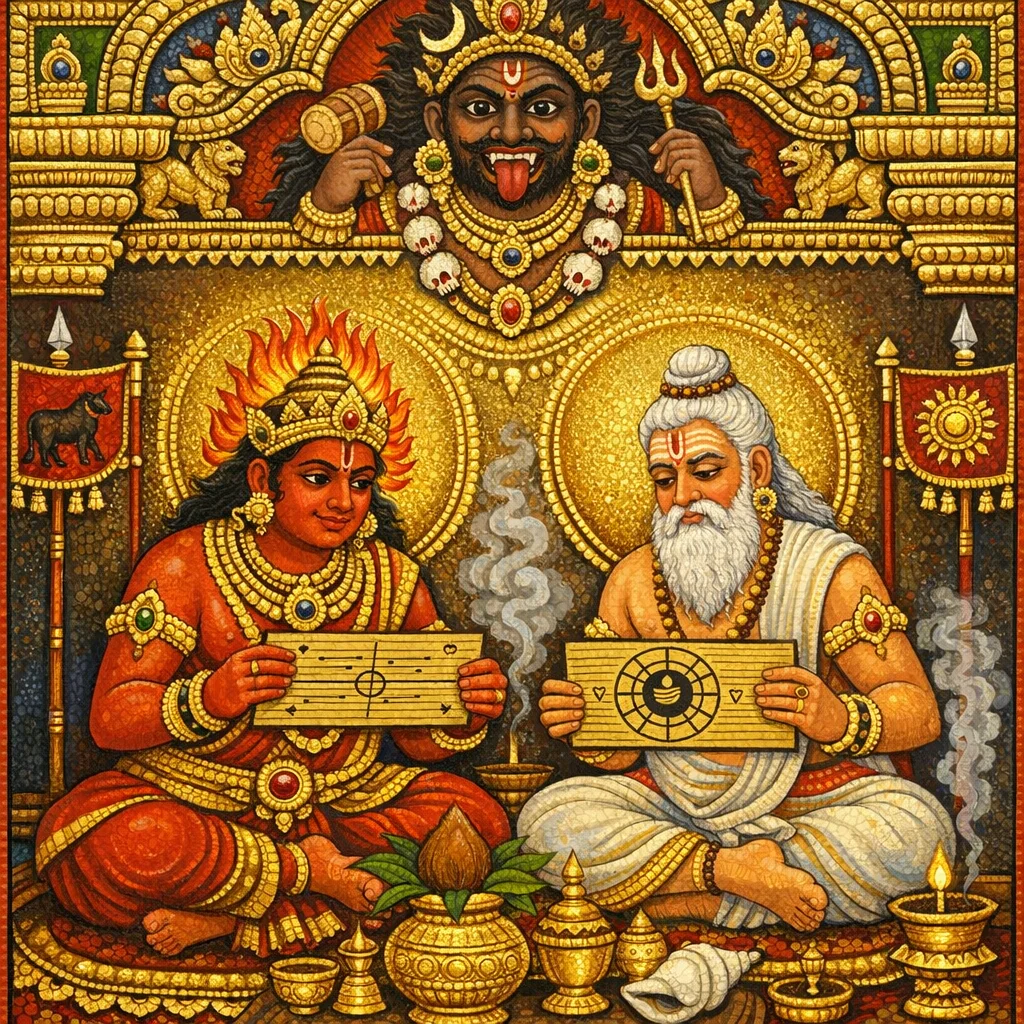
ପୂର୍ବ ଅଂଶରେ କାଳ-ଗଣନା (ସମୟ ଗଣିତ) ସମାପ୍ତ କରି ଭଗବାନ ଅଗ୍ନି ‘ଯୁଦ୍ଧଜୟାର୍ଣବ’ରୁ ସଂଗୃହୀତ ଯୁଦ୍ଧ-ବିଜୟବିଦ୍ୟାର ସାର ଆରମ୍ଭ କରନ୍ତି। ଏଠାରେ ବର୍ଣ୍ଣ ଓ ତିଥିକୁ ନନ୍ଦା ଆଦି ବର୍ଗରେ ବିଭାଜନ କରି କାର୍ଯ୍ୟ-ନିର୍ଣ୍ଣୟ ହୁଏ, ଏବଂ ଅକ୍ଷର-ସମୂହକୁ ଗ୍ରହାଧିପତିଙ୍କ ସହ ଯୋଡ଼ି ଭାଷିକ-ଆକାଶୀୟ ସଙ୍କେତଜାଲ ଭାବେ ଶକୁନ/ଦିବ୍ୟଜ୍ଞାନ ସ୍ଥାପିତ ହୁଏ। ନାଡ଼ୀ-ସ୍ପନ୍ଦନ, ଉଚ୍ଛ୍ୱାସ ଓ ପଳ ଆଦି କାଳମାନ ଦ୍ୱାରା ଦେହ-କାଳ ସଙ୍କେତରୁ ଫଳ-ନିର୍ଣ୍ଣୟ କୁହାଯାଇଛି। ପରେ ସ୍ୱରୋଦୟ-ଚକ୍ର, ଶନି-ଚକ୍ର, କୂର୍ମ-ଚକ୍ର ଓ ରାହୁ-ଚକ୍ରର ବିଭାଗ, ଦିଗ୍-ସ୍ଥାପନ ଓ ମୃତ୍ୟୁଦାୟକ ଅଂଶ ନିର୍ଦ୍ଦିଷ୍ଟ; ନକ୍ଷତ୍ର-ମୁହୂର୍ତ୍ତ ନାମରେ କେଉଁ ସମୟରେ କେଉଁ କର୍ମ ଯୋଗ୍ୟ ତାହା ନିଶ୍ଚିତ ହୁଏ। ଶେଷରେ ଭୈରବ-ମନ୍ତ୍ରର ରକ୍ଷାପ୍ରୟୋଗ—ଶିଖାବନ୍ଧ, ତିଳକ, ଅଞ୍ଜନ, ଧୂପ-ଲେପନ—ଏବଂ ଧାରଣୀୟ ଔଷଧି, ବଶୀକରଣ-ଯୋଗ, ତିଳକ-ଲେପ, ତେଲ ଆଦି ବିଜୟାର୍ଥେ କୁହାଯାଇଛି; ଏଭଳି ଜ୍ୟୋତିଷ, ଆଚାର-ପ୍ରଯୁକ୍ତି ଓ ଔଷଧପ୍ରୟୋଗର ଧର୍ମାନୁଗତ ସମନ୍ୱୟ ପ୍ରକାଶିତ ହୁଏ।
Shlokas
No shlokas available for this adhyaya yet.
Frequently Asked Questions
A war-oriented Jyotiṣa toolkit: tithi and letter-to-graha mappings, multiple prognostic cakras (Svarodaya, Śani, Kūrma, Rāhu), and muhūrta-based prescriptions for what actions to perform or avoid.
They act as diagrammatic decision systems: divisions, directional placements, and specific ‘death-giving’ portions (notably linked with Śani) guide timing and risk assessment for actions related to conflict and protection.
The chapter treats victory as a synthesis of right timing (Jyotiṣa), protective rite (mantra and ritual acts like tilaka/añjana), and supportive materia medica—typical of the Agni Purana’s encyclopedic Agneya-vidyā approach.
Action-appropriateness: Raudra is prescribed for fierce acts, while Śveta is aligned with purification activities like bathing—demonstrating karmic regulation through time-quality.
Yes. Shloka 25 explicitly notes differences between manuscripts (e.g., a line absent in the Gha manuscript and alternate readings in the Kha manuscript), which is valuable for critical study.