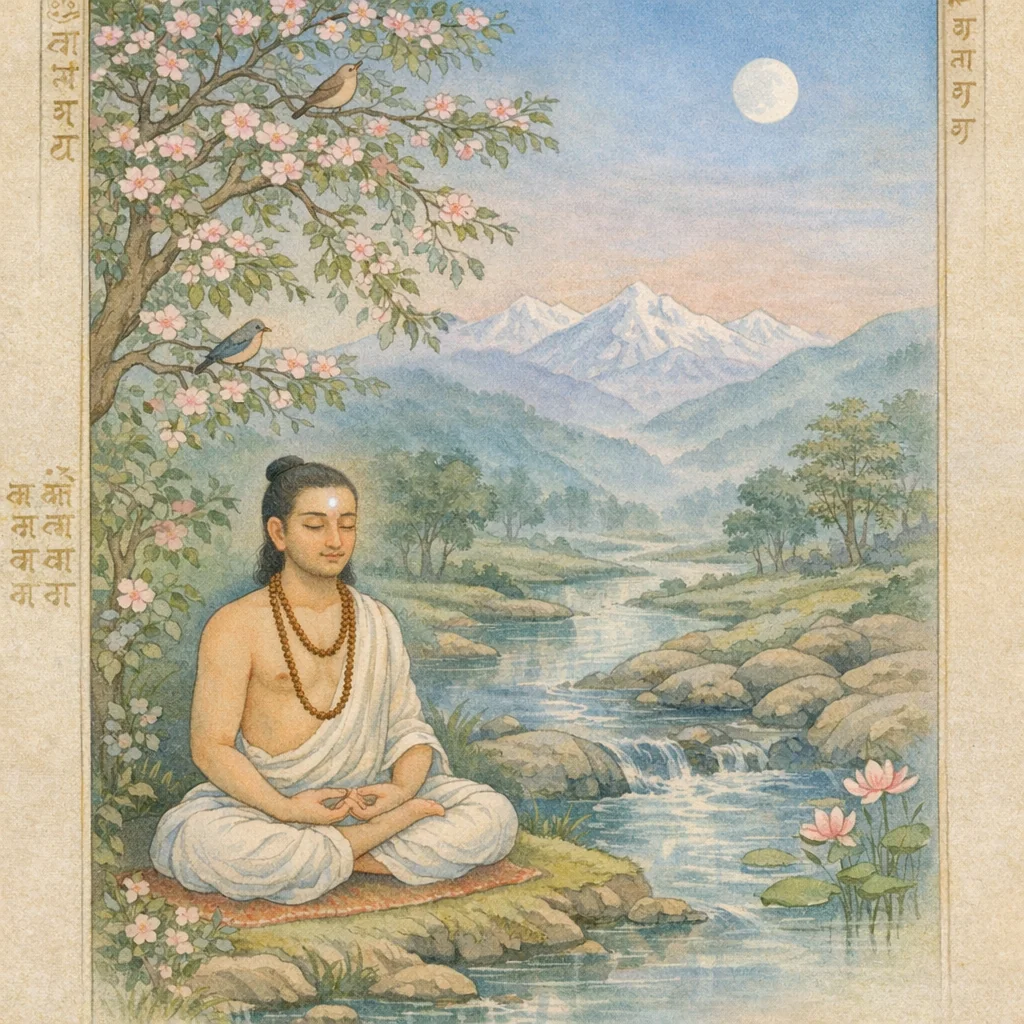
Dhyanabindu
ဓျာနဘိန္ဒု ဥပနိသဒ် (အထရဝေဒနှင့် ဆက်နွယ်) သည် ယောဂဥပနိသဒ်များအနက် အရေးပါသော စာတမ်းတစ်စောင်ဖြစ်ပြီး “ဓျာန” ကို အတ္တမသိ (Self-knowledge) သို့ ရောက်ရန် လက်တွေ့လမ်းကြောင်းအဖြစ် တင်ပြသည်။ “ဘိန္ဒု” သည် စိတ်၏ တစ်ချက်တည်းအာရုံစိုက်မှုကို သင်္ကေတပြု၍ ပြင်ပအရာဝတ္ထုများမှ စိတ်ကို ပြန်လှည့်ကာ အတွင်းသတိတရားသို့ စုစည်းစေသည်။ ဤစာတမ်းသည် ယောဂနည်းလမ်းများကို ဝေဒാന്ത၏ အဆုံးစွန်ရည်မှန်းချက်—အတ္တမနှင့် ဘြဟ္မန်၏ အဒွိတ (non-dual) အတွေ့အကြုံ—နှင့် ချိတ်ဆက်ထားသည်။ ဤဥပနိသဒ်တွင် စိတ်သည် ချည်နှောင်မှုနှင့် လွတ်မြောက်မှု နှစ်မျိုးလုံး၏ အကြောင်းရင်းဟု အလေးပေးသည်။ မန္တရ၊ ပရာဏထိန်းချုပ်မှုနှင့် အတွင်းနာဒ (inner sound) ကို စူးစမ်းခြင်းတို့ဖြင့် “အထောက်အကူရှိ” (sālambana) ဓျာနမှ “အထောက်အကူမရှိ” (nirālambana) သမာဓိသို့ တဖြည်းဖြည်း ရွေ့လျားစေသည်။ နိဂုံးချုပ်မှာ မောက္ခသည် အသစ်တဖန် ဖန်တီးရသောအရာမဟုတ်ဘဲ အဝိဇ္ဇာ ပျောက်ကွယ်သည့်အခါ မူလအတ္တသဘာဝ ပေါ်လွင်လာခြင်းပင် ဖြစ်သည်။
Key Teachings
- Dhyāna as the central discipline: turning attention inward from sense-objects to the witnessing Self
- Bindu symbolism: single-pointed concentration as the “seed” that gathers the mind and dissolves distraction
- Nāda (inner sound) and subtle contemplation: progressive interiorization from gross to subtle supports
- Sālambana to nirālambana: moving from supported meditation (mantra/form/breath) to supportless absorption
- Mind (manas) as the locus of bondage and release: mastery of thought-waves leads to clarity and freedom
- Yoga as a means to jñāna: practices purify and steady the mind so non-dual knowledge can dawn
- Non-duality (Advaita): Ātman is Brahman; liberation is recognition
not production
- Ethical/disciplinary foundations: restraint
moderation
and steadiness as prerequisites for deep meditation
Verses of the Dhyanabindu
Explore the verses of this Upanishad.
No verses available for this Upanishad yet.