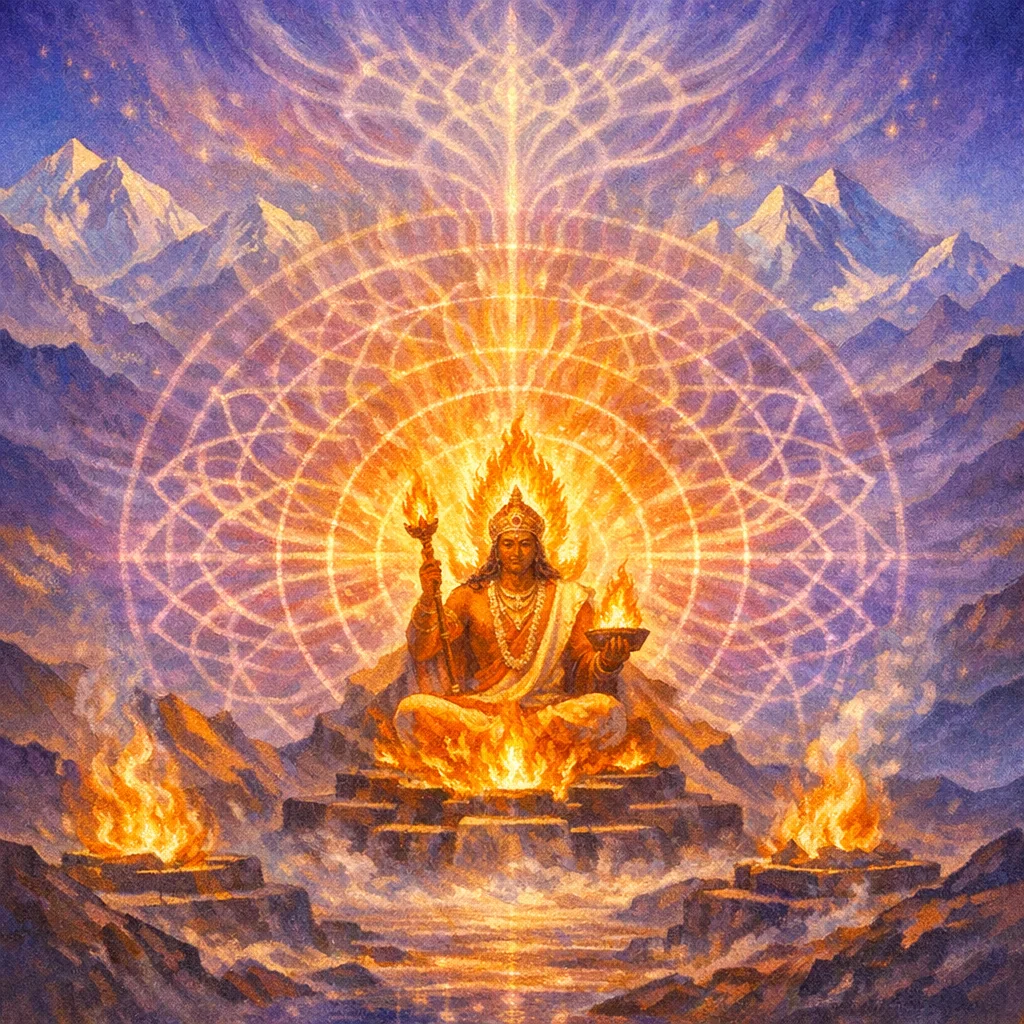
Dashati 5
Invocation of Agni as the immortal messenger who establishes and perfects the sacrifice
Agni
Bright kindling-energy (dīpti) with reverent urgency—suited to opening Agni-stotras
Vasiṣṭha
Soma-yajña stotra usage: Agni-praise as the enabling power that conveys offerings and stabilizes the rite (general Soma-liturgy applicability).
Mantras
Mantra 1
एना वो अग्निं नमसोर्जो नपातमा हुवे प्रियं चेतिष्ठमरतिं स्वाध्वरं विश्वस्य दूतममृतम्
By these (praises), with reverence, I invoke for you Agni, the son of nourishment; beloved, most intelligent, harmless, the accomplisher of a good sacrifice, the messenger of all, immortal.
Mantra 2
शेषे वनेषु मातृषु सं त्वा मर्तास इन्धते अतन्द्रो हव्यं वहसि हविष्कृत आदिद्देवेषु राजसि
In the remaining fuel, in the woods, in the generating mothers, mortals kindle thee; unwearied, thou bearest the oblation of the offerer; then, amongst the gods, thou reignest (as chief).
Mantra 3
अदर्शि गातुवित्तमो यस्मिन्व्रतान्यादधुः उपो षु जातमार्यस्य वर्धनमग्निं नक्षन्तु नो गिरः
Agni hath been manifested, the best knower of the path, in whom they have deposited the ordinances; (him) born, the augmenter of the Ārya, may our hymns approach and reach.
Mantra 4
अग्निरुक्थे पुरोहितो ग्रावाणो बर्हिरध्वरे ऋचा यामि मरुतो ब्रह्मणस्पते देवा अवो वरेण्यम्
Agni (is) the appointed priest in the hymn; the pressing-stones, the sacred grass in the sacrifice: with a ṛc I proceed (to invoke) the Maruts, O Lord of prayer; O gods, (grant) excellent aid.
Mantra 5
अग्निमीडिष्वावसे गाथाभिः शीरशोचिषम् अग्निं राये पुरुमीढ श्रुतं नरो ऽग्निः सुदीतये छर्दिः
Praise Agni for (our) aid, with songs, him of brilliant flame; (praise) Agni for wealth, the much-lauded, the renowned: Agni (is) for good kindling, (our) shelter.
Mantra 6
श्रुधि श्रुत्कर्ण वह्निभिर्देवैरग्ने सयावभिः आ सीदतु बर्हिषि मित्रो अर्यमा प्रातर्यावभिरध्वरे
Hear, O thou of listening ear, with the bearers, with the gods, O Agni, with thy companions; let Mitra and Aryaman sit upon the sacred grass, with the morning-comers, in the sacrifice.
Mantra 7
प्र दैवोदासो अग्निर्देव इन्द्रो न मज्मना अनु मातरं पृथिवीं वि वावृते तस्थौ नाकस्य शर्मणि
Forth hath advanced Agni, the divine bestower, like Indra in his greatness; he hath encompassed mother Earth, and hath stood in the shelter of heaven.
Mantra 8
अध ज्मो अध वा दिवो बृहतो रोचनादधि अया वर्धस्व तन्वा गिरा ममा जाता सुक्रतो पृण
Now on earth, now also from the great heaven’s shining region: by this (song) increase with thy body; by my hymn, O mighty in good purpose, fulfil (our desire).
Mantra 9
कायमानो वना त्वं यन्मात्र्^ईरजगन्नपः न तत्ते अग्ने प्रमृषे निवर्तनं यद्दूरे सन्निहाभुवः
Seeking the woods, when thou didst approach the mothers, (and) the waters, there is for thee, O Agni, no turning back that I may restrain; for, though far, thou hast become nigh.
Mantra 10
नि त्वामग्ने मनुर्दधे ज्योतिर्जनाय शश्वते दीदेथ कण्व ऋतजात उक्षितो यं नमस्यन्ति कृष्टयः
Manu hath established thee, O Agni, a light for mankind for ever; thou shinest forth, O Kaṇva, born of sacred order, strengthened (with oblations), whom the peoples adore.
Frequently Asked Questions
It centers on calling Agni with reverence as the immortal messenger who makes the sacrifice succeed, gives protection, and shines as the guiding light for people.
“Ūrjaḥ-napāt” presents Agni as born of nourishment and vitality, while “dūta” highlights his role as the envoy who carries offerings and prayers from the ritual to the gods.
It frames Agni as the foundational institution of sacrifice: set in place according to ṛta (right order), he becomes both the physical fire and the enduring light that guides and sustains the ritual community.