Adhyaya 206
Agastyārghyadāna-kathana (On the Giving of the Agastya Honor-Offering)
အဂ္နိဘုရားက အဂஸ္တျကို ဗိဿ္ဏုနှင့်တူညီဟု ထင်ရှားစွာ ဖော်ပြ၍ ဟရိကို ရောက်နိုင်သော ဝိုင်ရှ္ဏဝ သောတေရီယာနှင့် ရှင်ပုဂ္ဂိုလ်ကိုးကွယ်မှုကို ချိတ်ဆက်သည့် ဝရတပူဇာကို သတ်မှတ်ပေးသည်။ အခမ်းအနားသည် အချိန်ကန့်သတ်ထားပြီး ၃ ရက်တာ နေထွက်မီ အစာရှောင်၊ ပူဇာပြု၊ အဂஸ္တျထံ အရဃျာ ဆက်ကပ်ရသည်။ ပရဒိုးရှကာလတွင် ကာရှပန်းဖြင့် ပြုလုပ်သော ရုပ်ပုံကို ရေကွန်ဘ (ကုံဘ/ဃဋ) ထဲ တင်သွင်းပြီး ညလုံးနိုး (ပရာဇာဂရ) ပြုရသည်။ နံနက်တွင် ရေကန်အနီး အရဃျာ ဆက်ကပ်ကာ သမုဒ္ဒရာကို ခြောက်စေခြင်း၊ အာတာပိ–ဝာတာပိကို ဖျက်ဆီးခြင်း စသည့် အဂஸ္တျ၏ ဒဏ္ဍာရီလုပ်ရပ်များကို ချီးမွမ်း၍ ကောင်းချီးနှင့် သုခမင်္ဂလာသော နောက်ဘဝကို တောင်းခံသည်။ စန္ဒကူး၊ ပန်းကွင်း၊ အမွှေးတိုင်၊ အဝတ်အထည်၊ ဆန်/သီးနှံ၊ သစ်သီး၊ ရွှေ၊ ကွန်ဘတန်ကို ဘြာဟ္မဏထံ လှူဒါန်းခြင်းနှင့် အစာကျွေးခြင်း၊ ဒက္ခိဏာ (နွား၊ အဝတ်၊ ရွှေ) တို့ကိုလည်း ဖော်ပြသည်။ မန္တရပုဒ်ကွဲပြားမှုများနှင့် မိန်းမများ၊ ရှုဒ္ဒရများအတွက် ဝေဒမန္တရမပါဘဲ ပြုလုပ်ရမည့် စည်းကမ်းကို ဆိုထားသည်။ ၇ နှစ်တိုင် အရဃျာ ဆက်ကပ်လျှင် စုံလင်သော စည်းစိမ်—ကလေးမရှိသူက သားရ၊ မိန်းကလေးက မင်းသားသဘင်ရ—ဟု ဆိုသည်။
Shlokas
No shlokas available for this adhyaya yet.
Frequently Asked Questions
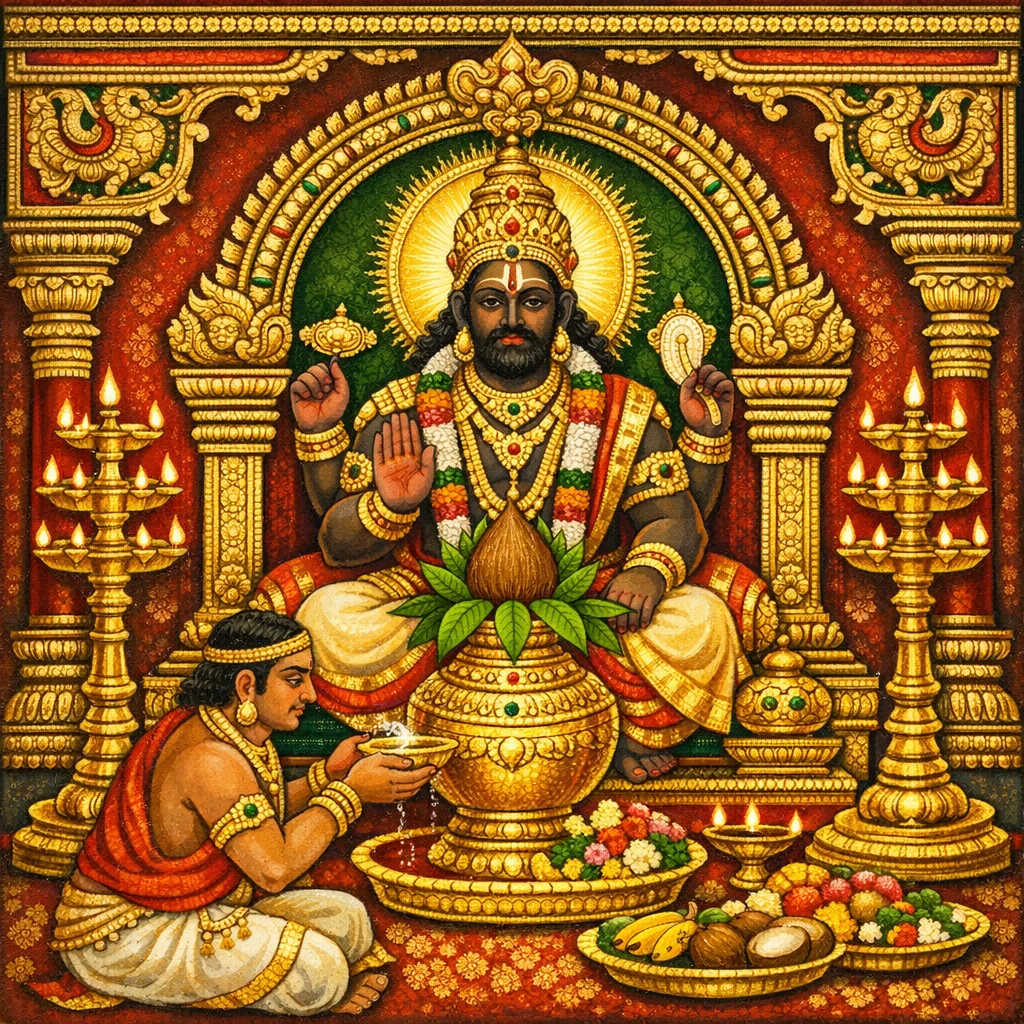
Fasting and worship precede the arghya; at pradoṣa a kāśa-flower image is placed in a ghaṭa/kumbha, followed by night vigil; in the morning the arghya is offered near water, then tyāga (grain, fruit, libation) and charitable gifts/feeding of brāhmaṇas conclude the rite.
Sandalwood, garlands, incense, cloth, rice/grains, fruits, gold (and in an expanded description: five gems, gold and silver, seven grains, curd, sandalwood), plus a pot-gift to a brāhmaṇa and dakṣiṇā including cow, garments, and gold.
The rite explicitly aims at attaining Hari through Agastya-worship (mukti-oriented devotion) while also promising dharma-anchored prosperity—health, fortune, desired boons, lineage, and marital success—thus integrating dharma, artha, kāma, and mokṣa.
It states that for women and Śūdras the rite is ‘non-Vedic,’ i.e., performed without Vedic mantras, indicating an inclusive procedural adaptation while preserving the devotional and charitable structure.
By giving the arghya for seven years, ‘all obtain everything’: a childless woman gains sons and good fortune, and a maiden gains a husband of royal birth; the arghya is also described in some readings as imperishable and mind-fulfilling.