Adhyaya 201
Worship of the Nine Vyūhas (Nava-vyūha-arcana)
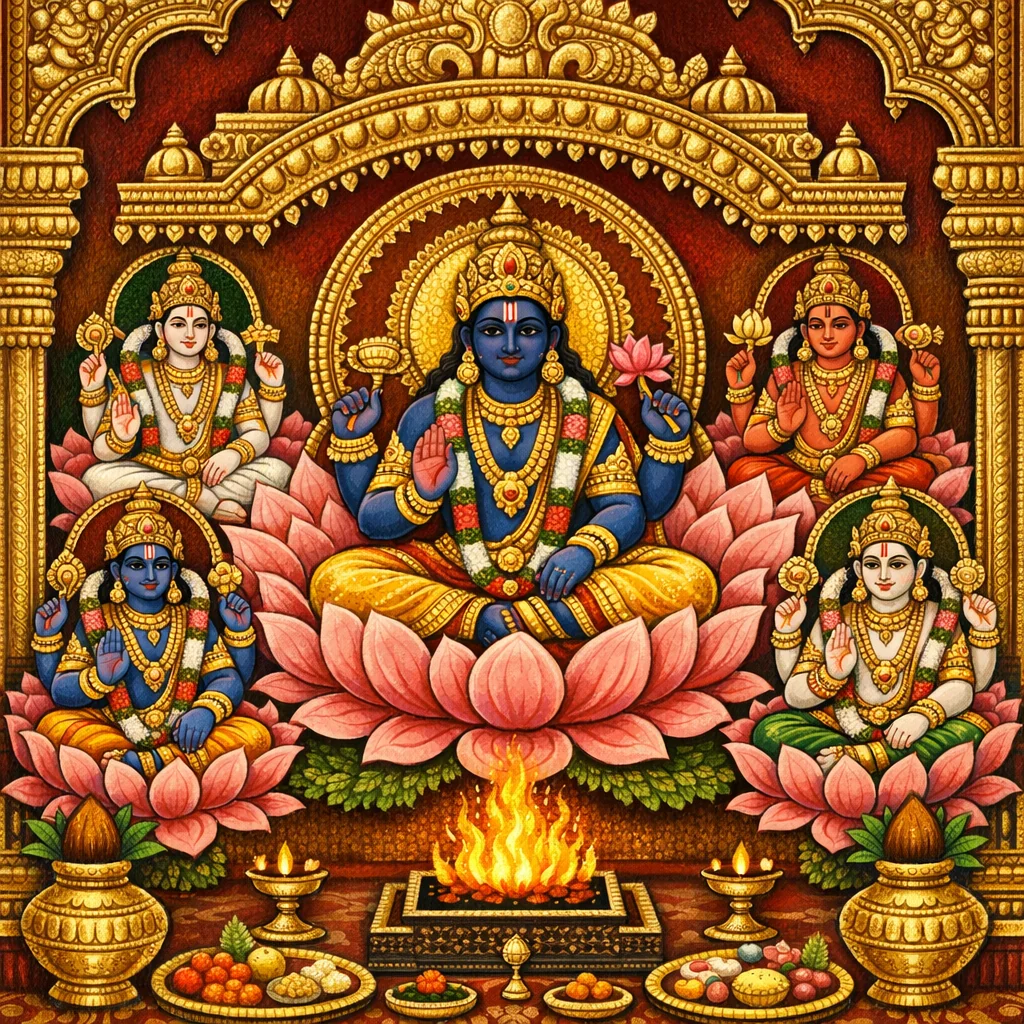
ဤအধ্যာယသည် မီးလှူဒါန (Dīpadāna) ဝရတကို အဆုံးသတ်ကြောင်း ဖော်ပြပြီး၊ ဟရိက ပို့ချသည့် နဝဗျူဟာ (Navavyūha-arcana) ကို နည်းပညာဆန်သော လိတူဂျီအဖြစ် ဆက်လက်တင်ပြသည်။ အဂ္နိသည် ကြာပန်းမဏ္ဍလကို သင်ကြားကာ အလယ်တွင် Vāsudeva ကိုထားပြီး၊ Saṅkarṣaṇa, Pradyumna, Aniruddha နှင့် Nārāyaṇa ကို ဦးတည်ရာအလိုက် တည်နေရာချကာ ဘီဇအက္ခရာများနှင့် သဘာဝဓာတ်/ပူဇော်ရာနေရာများ (ရေတင်ရာအပါအဝင်) နှင့် ချိတ်ဆက်ပေးသည်။ ထို့နောက် Sadbrahmā, Viṣṇu, Nṛsiṃha, Bhūr-Varāha စသည့် ပုံသဏ္ဍာန်များအတွက် မန္တရ-ဘီဇ မြေပုံချခြင်း၊ တံခါးဝနှင့် အနောက်ဘက်တွင် အထောက်အကူတည်နေရာချခြင်း၊ Garuḍa နှင့် gadā (မေ့စ်) မန္တရများပါဝင်သည့် အထူးလုပ်ထုံးလုပ်နည်းများကို ဖော်ပြသည်။ အပြင်မဏ္ဍလတည်ဆောက်ခြင်းမှ အတွင်းသို့ ပြောင်းကာ daśāṅga-krama ပူဇော်မှု၊ ဦးတည်ရာကာကွယ်သူများအတွက် ghaṭa များတင်ခြင်း၊ toraṇa နှင့် vitāna ကို မြင်ယောင်ခြင်း၊ လနက်တာအမృతတွင် သုက္ခမကိုယ် စိတ်ဓာတ်တရားကို ဆောင်ရွက်ခြင်းတို့ကို ဆက်လက်ဆိုသည်။ နောက်ဆုံးတွင် ဘီဇ ၁၂ လုံးဖြင့် nyāsa ပြုကာ “ဒေဝကိုယ်” ဖွဲ့စည်းခြင်း၊ ပန်းပစ်၍ သင်တန်းသားခွဲခြားခြင်း၊ သန့်စင်ရန် homa အရေအတွက်နှင့် dīkṣā အခကြေးငွေတို့ကို သတ်မှတ်ကာ၊ အစပြုခြင်းကို ပူဇော်နည်းပညာ၏ လူမှုနှင့် ဝိညာဉ်ရေး တံဆိပ်အဖြစ် ချုပ်ဆိုထားသည်။
Shlokas
No shlokas available for this adhyaya yet.
Frequently Asked Questions
A lotus-maṇḍala Navavyūha worship beginning with Vāsudeva at the center, followed by directional deity placements with specific bīja-syllables, then internalization through visualization, daśāṅga-krama, and nyāsa culminating in dīkṣā.
After mandala and mantra placements, it shifts to subtle-body contemplation (lunar nectar), self-identification with Viṣṇu, and nyāsa that produces a “divine body,” explicitly valuing heart-worship of Hari (anirmālyā) as the inner completion of the rite.
Disciples are seated to the left, identify a chosen form by blind flower-casting, perform homa with 108 and then 1000 oblations for purification, and receive dīkṣā after payment of prescribed fees honoring the guru.