Adhyaya 196
Chapter 196 — Nakṣatra-vratāni (Observances of the Lunar Mansions)
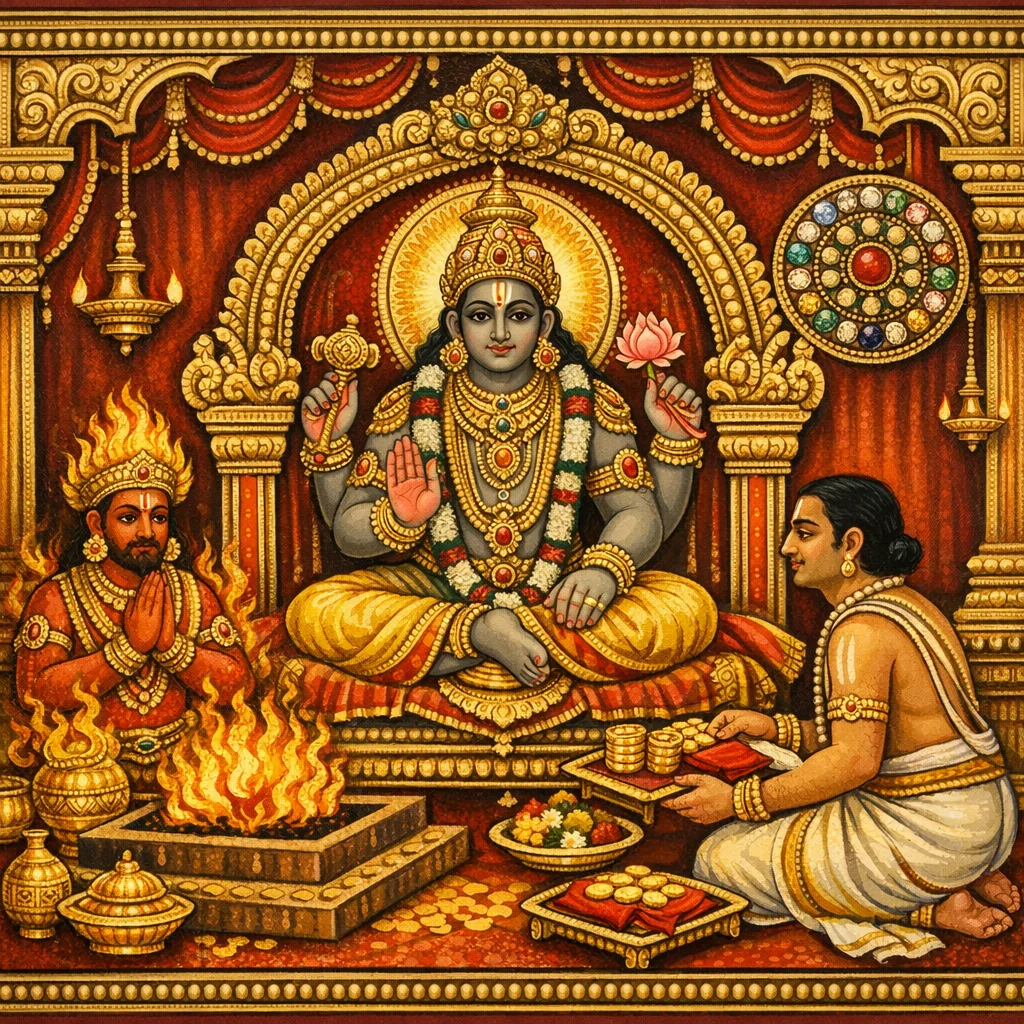
အဂ္နိဘုရားသည် ဝသိဋ္ဌမုနိအား နက္ခတ်-ဝရတ (Nakṣatra-vratāni) စနစ်ကို သင်ကြားကာ နက္ခတ်-ပုရုရှကို အာဝါဟနပြုခြင်းနှင့် ချိုင်တြ (Caitra) လမှ စတင်သည်။ ဟရီ (ဗိဿနု) ကို နက္ခတ်များကို ကောသမိက ကိုယ်ခန္ဓာအင်္ဂါအစိတ်အပိုင်းများ—ခြေ၊ ခြေတံ၊ ဒူး၊ ပေါင်၊ လိင်အင်္ဂါ၊ တင်ပါး၊ ဘေးဖက်၊ ဝမ်းဗိုက်၊ ရင်သား၊ ကျော၊ လက်၊ လက်ချောင်း၊ လက်သည်း၊ လည်ချောင်း၊ နား၊ ပါးစပ်၊ သွား၊ နှာခေါင်း၊ မျက်စိ၊ နဖူး—နှင့် တစ်စိတ်တစ်ပိုင်းစီ ချိတ်ဆက်၍ ကောင်းကင်ကာလကို ကိုယ်ခန္ဓာပူဇော်စဉ်အဖြစ် စီစဉ်ပေးသည်။ Citrā/Ārdrā နှင့် နှစ်ကုန်တွင် အထူးပူဇော်ကာ jaggery ဖြည့်ထားသော အိုးထဲ၌ ရွှေဟရီကို တင်သွင်းပြီး dakṣiṇā ပစ္စည်းများသည် မူရင်းစာမူအမျိုးအစားအလိုက် ကွာခြားသည်။ ထို့နောက် Kārttika လနှင့် Kṛttikā နက္ခတ်ကို အခြေခံသည့် Śāmbhavāyanīya ဝရတကို ဖော်ပြပြီး Keśava နာမများ သို့မဟုတ် Acyuta မန္တရဖြင့် လစဉ်အစားအစာနိဝေဒယ၊ pañcagavya ဖြင့် သန့်စင်ခြင်းနှင့် visarjana ပြီးနောက် naivedya နှင့် nirmālya ခွဲခြားသတ်မှတ်ချက်ကို ရှင်းလင်းသည်။ နိဂုံးဆုတောင်းများတွင် အပြစ်ပျက်စီးခြင်း၊ ကုသိုလ်တိုးပွားခြင်း၊ မလျော့သော စည်းစိမ်နှင့် မျိုးဆက်တည်တံ့ခြင်းကို တောင်းဆိုကာ ၇ နှစ်ကျင့်လျှင် bhukti နှင့် mukti ရသည်ဟု ဆိုသည်။ နောက်ဆုံးတွင် Ananta-vrata (Mārgaśīrṣa/Mṛgaśīrṣa) ကို မိတ်ဆက်၍ ဆီမသုံးဘဲ ညစာစားခြင်း၊ ၄ လတိုင် homa အစီအစဉ်၊ အဆုံးမဲ့ကုသိုလ်နှင့် မာန္ဓာတာ မွေးဖွားမှု ဥပမာကို ဖော်ပြသည်။
Shlokas
No shlokas available for this adhyaya yet.
Frequently Asked Questions
It is Viṣṇu envisioned as the cosmic person constituted by the lunar mansions; worship is performed by assigning specific nakṣatras to specific limbs, making the body a ritual map of the nakṣatra cycle.
A substance is termed naivedya only until the moment of visarjana (ritual dismissal); once Jagannātha is dismissed, it immediately becomes nirmālya (the remnant of the offering).
On the Kārttika day when Kṛttikā prevails, the practitioner invokes Acyuta (via Keśava-names or a simple Acyuta salutation), offers prescribed foods across months, maintains purity via pañcagavya, and seeks both enjoyment and liberation.
It is said to generate an endless accumulation of merit, to recur as the ‘gift Ananta’ even in another birth, and to yield imperishable (akṣaya) attainment of desired aims.