Adhyaya 186
Daśamī-vrata (Observance for the Tenth Lunar Day)
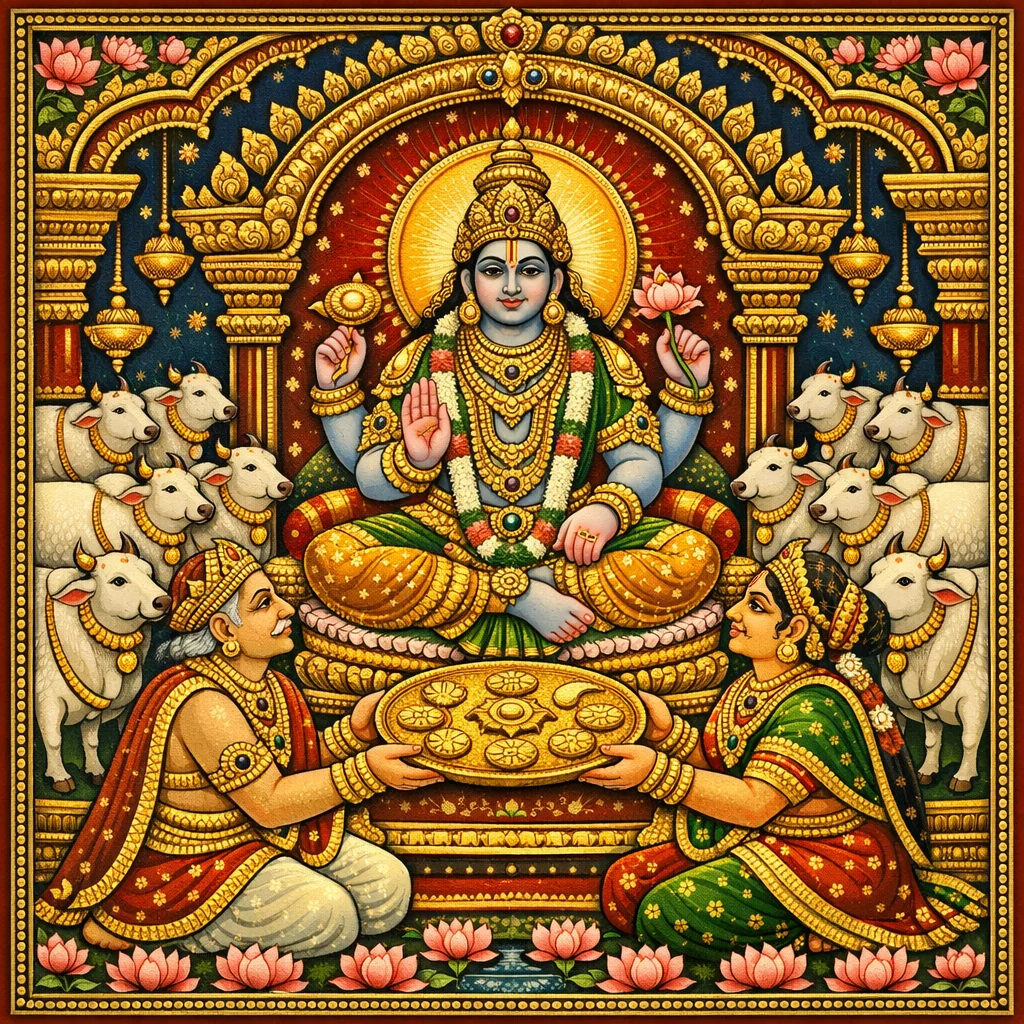
နဝမီဝရတများပြီးနောက် အဂ္နိဘုရားက ဒသမီဝရတကို ဆက်လက်ညွှန်ကြားသည်။ အကျိုးရလဒ်ကို ပုရုသာရထ္ထဘာသာဖြင့်—ဓမ္မ၊ ကာမ နှင့် ဆက်စပ်ရည်မှန်းချက်များ—ဟု ဖော်ပြကာ ဝရတစည်းကမ်းကို သီလ-ဝိညာဉ်ပညာအကျိုးနှင့် လောကီအောင်မြင်မှုတို့အတွက် ကိရိယာတစ်ရပ်အဖြစ် တင်ပြသည်။ ဒသမီနေ့တွင် ဧကဘက္တ (တစ်ကြိမ်သာစား) ကို ကျင့်၍ စားသုံးမှုကို ထိန်းချုပ်ခြင်းဖြင့် သန့်စင်စေသည်။ နောက်ဆုံးတွင် ဒါနအဖြစ် နွား ၁၀ ကောင် လှူဒါန်းရ며၊ ထပ်မံက ဂုဏ်သိက္ခာမြင့်သော လှူဒါန်းမှုအဖြစ် ရွှေဖြင့် ပြုလုပ်ထားသော ဒိက်(အရပ်) ၈ မျက်နှာကို ပူဇော်လှူဒါန်းလျှင် ဗြာဟ္မဏများအကြား အရှင်သဘောသို့ မြှင့်တင်သည်ဟု ဆိုသည်။ ထို့ကြောင့် အတွင်းစည်းကမ်း၊ တိသီအချိန်သန့်ရှင်းမှုနှင့် အပြင်ဘက်ဒါနကို ဓမ္မအစီအစဉ်တစ်ခုအဖြစ် ချိတ်ဆက်ထားသည်။
Shlokas
No shlokas available for this adhyaya yet.
Frequently Asked Questions
The practitioner observes ekabhakta on Daśamī—taking a single meal—establishing dietary restraint as the vow’s primary discipline.
Upon completion of the vow, one should gift ten cows (daśa-dhenu-dāna), making dana the culminating act that externalizes the merit of the observance.
The text states that gifting the directions (dik) fashioned in gold results in becoming a lord among Brāhmaṇas, indicating social-spiritual elevation linked to high-value symbolic dana.
By combining tithi-discipline (Daśamī), bodily restraint (ekabhakta), and compassionate redistribution (dana), the vrata trains self-control and generosity—core dharmic virtues that support both worldly order and inner purification.