Adhyaya 185
Chapter 185 — नवमीव्रतानि (The Observances for Navamī)
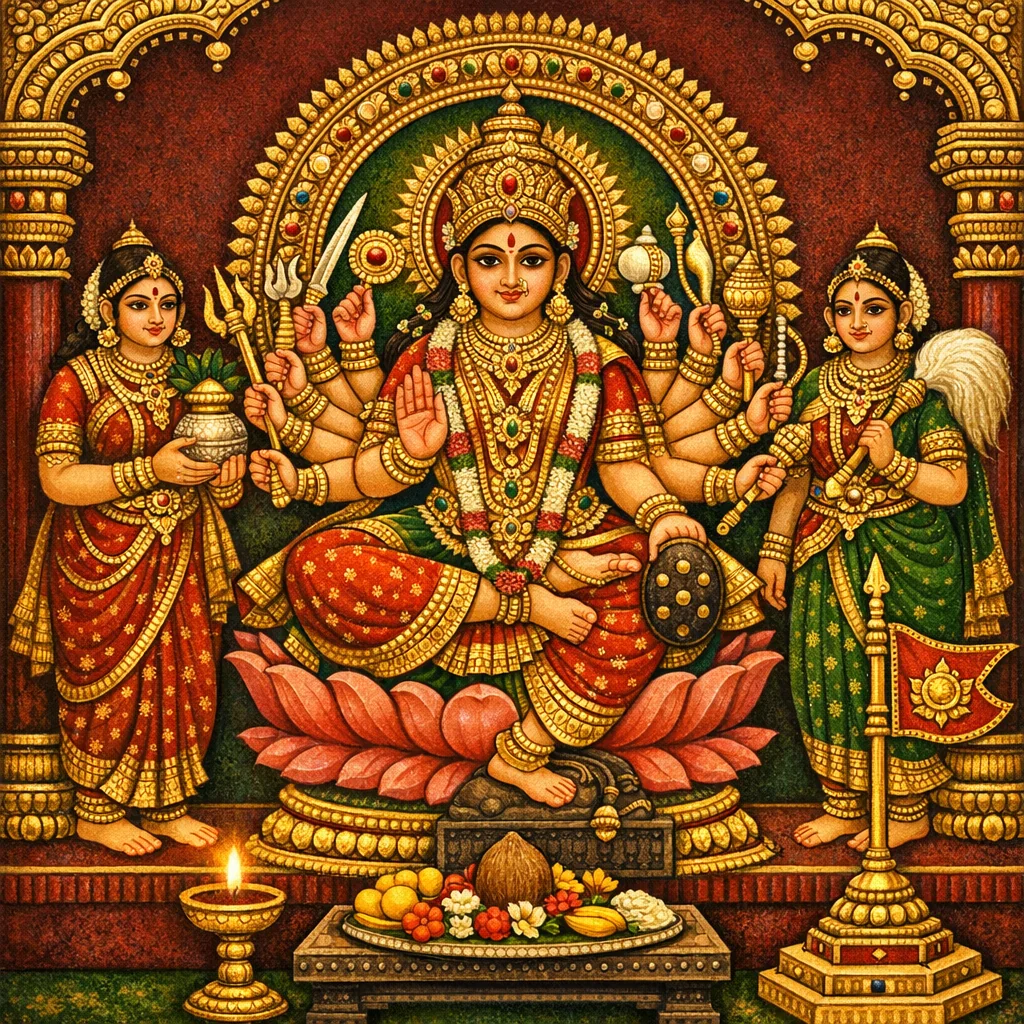
အဂ္နိဘုရားက ဝသိဋ္ဌအား ဂေါရီ/ဒုရ္ဂါနှင့် ဆက်စပ်သော နဝမီဝြတ (Navamī-vrata) ကို သင်ကြားပြီး ဘုက္တိ (bhukti) နှင့် မုက္တိ (mukti) နှစ်မျိုးလုံးကို ပေးစွမ်းမည့် စိဒ္ဓိကို ထင်ရှားစွာ ကတိပြုသည်။ အခန်းသည် ပြက္ခဒိန်တိကျမှုကို အခြေခံကာ နဝမီကို Piṣṭakā ဟု ခေါ်ပြီး အာရှွိန သုက္လကာလနှင့် နက္ခတ်ရာ အခြေအနေများကို စိစစ်ကာ ဒေဝီပူဇာပြီးနောက် မုန့်/မုန့်ဖုတ်ကဲ့သို့ မုန့်မှုန့်အခြေပြု အစားအစာကို စားသုံးရန် ပါဝင်သည်။ ထို့နောက် ဒုရ္ဂါကို မဟိဿမရ္ဒိနီ (Mahīṣamardinī) အဖြစ် အလယ်ထားသည့် ရာဇကာကွယ်ရေး လီတူဂျီကို ဖော်ပြပြီး ဒေဝီသည် နေရာ ၉ ခုတွင် သို့မဟုတ် တစ်ခုတည်းသော သရဏာဂတ မန္ဒိရ၌ တည်ရှိနိုင်ကြောင်း၊ လက်များစွာနှင့် သတ်မှတ်ထားသော လက်နက်/ကိရိယာများကို ကိုင်ဆောင်သည့် ရုပ်ပုံစိတ်ကူး (dhyāna) ကို ညွှန်ပြသည်။ မန္တရပညာတွင် အက္ခရာ ၁၀ လုံးပါ ဒုရ္ဂါကာကွယ်ရေး မန္တရနှင့် အခြား ဖော်မြူလာများ၊ လက်မမှ လက်ချောင်းငယ်အထိ ကိုယ်အင်္ဂါနျာသ (nyāsa) ကို အသေးစိတ် ပြောပြီး လျှို့ဝှက်ထားရန်နှင့် အနှောင့်အယှက်မရှိစေရန် အလေးပေးသည်။ ထို့ပြင် လက်နက်ပူဇာ၊ ကြမ်းတမ်းသော ဒေဝီနာမများ၊ ဦးတည်ရာအလိုက် ပူဇာအနုသင် (အချို့ပုဒ်တွင် သွေး/အသား ပါနိုင်) တို့ပါဝင်ကာ မုန့်မှုန့်ဖြင့် ပြုလုပ်သော ရန်သူရုပ်တုကို နိဂုံးချုပ်ဖျက်ဆီးခြင်း၊ ညဘက် မာတೃများနှင့် ကြမ်းတမ်းရုပ်များကို ပူဇာခြင်း၊ ပဉ္စာမృတ स्नာန၊ ဘလိ၊ ထို့အပြင် ဓွဇ (dhvaja) နှင့် ရထယာထရာ (ratha-yātrā) ကဲ့သို့ ပွဲတော်အမှတ်အသားများဖြင့် ဘက္တိ၊ ရုပ်ပုံဗေဒနှင့် ရာဇဓမ္မအခြေပြု ကာကွယ်ရေးကို ပေါင်းစည်းထားသည်။
Shlokas
No shlokas available for this adhyaya yet.
Frequently Asked Questions
It is presented as siddhi-giving—supporting worldly accomplishment and protection (bhukti) while also generating merit conducive to liberation (mukti) through disciplined Durgā worship.
The chapter gives a ten-syllabled protective mantra: “Oṃ, O Durgā, O Durgā, protect (me)! Svāhā,” used as a rakṣā (protection) formula within the Navamī observance.
It includes a royal-protective procedure: in front of the invoked fire, the king bathes and ritually removes/neutralizes an enemy represented by a dough effigy, aligning goddess worship with victory and protection of the realm.
Durgā is visualized in multi-armed forms (notably eighteen-armed and sixteen-handed variants) and associated with a defined set of implements and weapons, which are themselves to be worshipped as part of the observance.