Adhyaya 176
Pratipadā-vratāni (Vows Observed on the Lunar First Day)
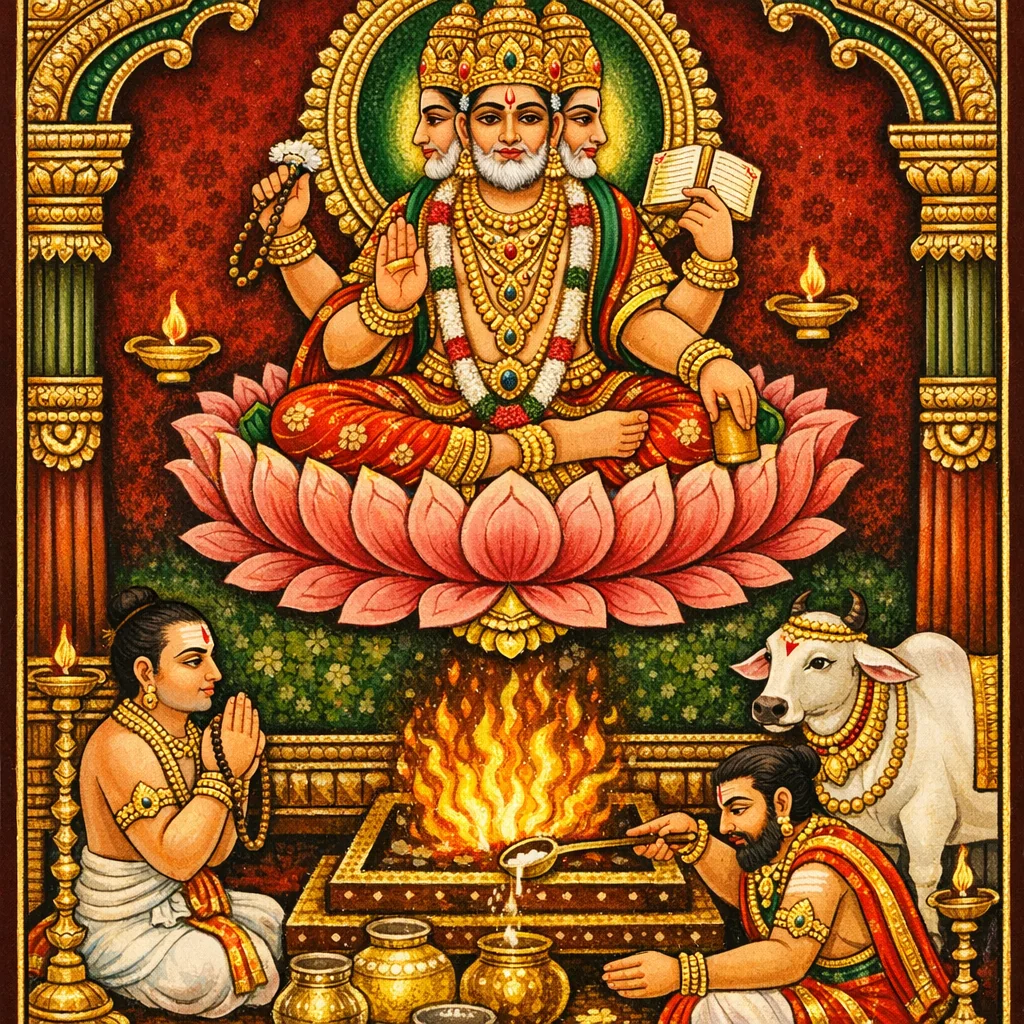
အဂ္နိဘုရားသည် ပထမတိထိ (Pratipadā) အခြေပြု ဝရတများကို စနစ်တကျ ဖော်ပြကာ လစဉ်ပထမနေ့ကို တစ်နှစ်တာ စည်းကမ်းကျင့်သုံးမှုများသို့ ဝင်ပေါက်အဖြစ် အလွန်အရေးကြီးသည့် ရိတုအချိန်ဟု သတ်မှတ်သည်။ ကာတ္တိက၊ အာရှဝယုဇ၊ ချိုင်တြ လများ၏ ပထမတိထိကို ဗြဟ္မာ၏ တိထိဟု ခေါ်ဆို၍ ပြက္ခဒိန်အချိန်ကို သက်ဆိုင်ရာ ဒေဝတာအာရုံစိုက်မှုနှင့် ချိတ်ဆက်ပေးသည်။ ထို့နောက် ဝရတနည်းပညာကို ရှင်းလင်းသည်—အစာရှောင်စည်းကမ်းများ (အစာမစားဘဲ ကြာရှည်ရှောင်ခြင်းနှင့် ထိန်းချုပ်စားသောက်ပုံ), မန္တရဇပ «Oṃ tat sat brahmaṇe namaḥ» ကို ဂါယတြီနှင့်အတူ ရွတ်ဆိုခြင်း၊ ဗြဟ္မာ၏ ရုပ်ပုံကို သဘောတရားဖြင့် မြင်ယောင်ခြင်း (ရွှေရောင်၊ ဇဉ်ဆံထုံး၊ အက္ခမလာနှင့် ဟောမလှော်တံများကို ကိုင်၍ ကမဏ္ဍလုပါရှိ)။ ဒါနကို တိုင်းတာနိုင်သော သီလရလဒ်အဖြစ် ထည့်သွင်းကာ စွမ်းအားအလိုက် နို့ဒါန ပေးရန်ဆိုပြီး သန့်စင်မှု၊ ကောင်းကင်ဘုံအပျော်အပါးနှင့် ဗြာဟ္မဏအတွက် လောကီစည်းစိမ်ကို ဖော်ပြသည်။ ဒုတိယပိုင်းတွင် မာရ္ဂရှီရ္ษ လ၌ ဓညာဝရတကို နက္တ (ညအချိန်သာ စား) စည်းကမ်းနှင့် ဟောမဖြင့် စတင်ကာ တစ်နှစ်ပတ်လုံး အဂ္နိကို ပူဇော်ပြီး နောက်ဆုံးတွင် အညိုရောင်နွားကို ဒါနပေးခြင်းဖြင့် ပြီးစီးသည်။ အဆုံးတွင် ရှိခီဝရတနှင့် ၎င်း၏ အကျိုး—ဝိုင်ရှ္ဝာနရ အနေအထား/အဝါသို့ ရောက်ခြင်း—ကို ဖော်ပြ၍ ဝရတကျင့်စဉ်သည် ဘုက္ခတိ (စည်းစိမ်) နှင့် မြင့်မြတ်သော ဓမ္မလမ်းဆုံးတိုင်ရာကို နှစ်မျိုးလုံး ချိတ်ဆက်ကြောင်း ပြသသည်။
Shlokas
No shlokas available for this adhyaya yet.
Frequently Asked Questions
Kārttika, Āśvayuja, and Caitra are identified as months where Pratipadā is regarded as Brahmā’s tithi.
The chapter prescribes the mantra “Oṃ tat sat brahmaṇe namaḥ” together with Gāyatrī, maintained as a year-long observance.
Brahmā is described as golden and matted-haired, with akṣamālā and a ladle (śruva) in the right hand, and a sacrificial ladle (śruc) and kamaṇḍalu in the left, with a long tuft/brush-like emblem (lambakūrca).
Milk is to be donated according to capacity with the resolve “May Brahmā be pleased,” yielding purification, heavenly enjoyment, and wealth on earth (for a brāhmaṇa). The Dhanya/Agni-oriented year observance culminates in gifting a kapilā (tawny) cow.
By mapping time-discipline (tithi), mantra, and dāna into repeatable observances culminating in destinations like Vaiśvānara pada, it frames vrata as a sādhana that integrates ethical action and higher spiritual attainment (bhukti-mukti samanvaya).