Adhyaya 248
Chapter 248: धनुर्वेदः (Dhanurveda — Science of War and Archery Discipline)
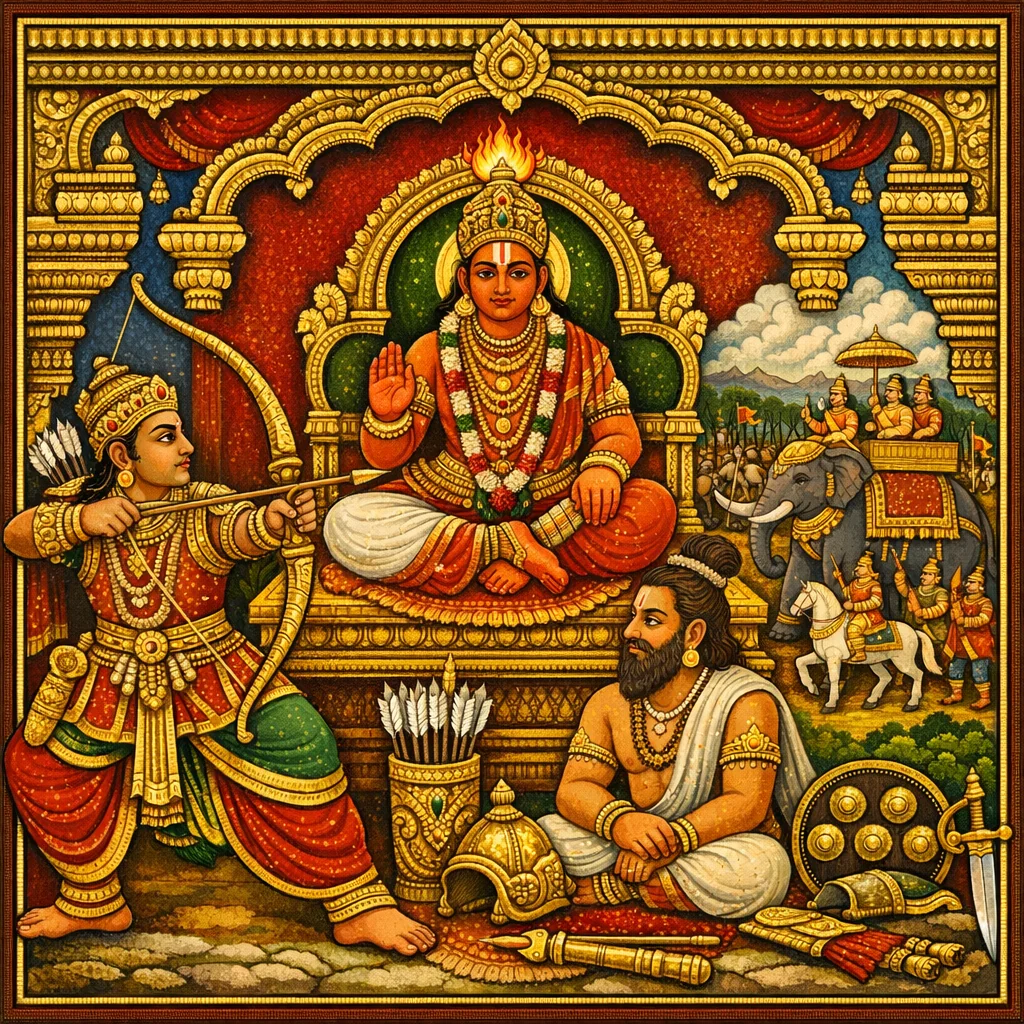
အဂ္နိဘုရားသည် ဓနုರ್ವေဒကို စတင်ဖွင့်လှစ်၍ စစ်ပညာကို တပ်အင်အား ၄ မျိုး—ရထားတပ်၊ ဆင်တပ်၊ မြင်းတပ်၊ ခြေလျင်တပ်—အပေါ် အခြေခံသော “ခြေ ၄ ချောင်း” စနစ်ဟု သတ်မှတ်ပြီး၊ ဝေဒသင်ကြားပုံစံအရ လက်နက်အသုံးပြုနည်း ၅ မျိုး—ပစ်လွှတ်လက်နက်၊ လက်ဖြင့်ပစ်ပေါက်လက်နက်၊ တပ်ဆင်ပြီးလွှတ်သည့်ကိရိယာ၊ မပစ်လွှတ်လက်နက်၊ လက်ချင်းတိုက်ခိုက်မှု—ဟု ခွဲခြားသည်။ ထို့နောက် śastra/astra (လက်နက်/မစ်ဆိုင်) နှင့် တိုက်ရိုက်/လှည့်ကွက်(māyā) ဟူသော အတွဲလိုက်ခွဲခြားမှုများကို ဖော်ပြကာ yantra-mukta (ကိရိယာဖြင့်လွှတ်) နှင့် pāṇi-mukta (လက်ဖြင့်လွှတ်) ကို ဥပမာပြသည်။ အခန်းသည် စည်းကမ်းသို့ ရွေ့လျား၍ ကာကွယ်ရေးပစ္စည်းဖြင့် အဆင်သင့်ဖြစ်ခြင်း၊ အဆင့်လိုက်တိုက်ပွဲ (ဓနုအခြေပြု၊ လှံအခြေပြု) နှင့် သင်ကြားရေးလူမှုစနစ်—ဗြာဟ္မဏသည် က္ṣတ္ရိယ/ဝိုင်ရှျကို သင်ကြား၊ śūdra သည် လေ့ကျင့်မှုနှင့် မင်းအတွက် အကူအညီဝန်ထမ်းခြင်းဖြင့် ပါဝင်နိုင်—ကို ရှင်းလင်းသည်။ အဓိကနည်းပညာပိုင်းတွင် ရပ်တည်ပုံနှင့် အတိုင်းအတာ (samapada, vaiśākha, maṇḍala, ālīḍha, pratyālīḍha, vikaṭa, sampuṭa) ကို ဖော်ပြပြီး၊ ဓနုပစ်နည်း—နမസ്കာရ၊ ကြိုးတင်ရာတွင် လုံခြုံရေး၊ ဗိုက်ခေါင်း/တင်ပါးတင်ပုံ၊ မျက်စိ–နား တန်းညှိ၍ ချိန်ရွယ်ခြင်း၊ မြားကို လက်ချောင်းဖြင့်ကိုင်ပုံ၊ ဆွဲ–လွှတ် စက်ကိရိယာနှင့် လွှတ်ပြီးနောက် လိုက်နာမှု၊ အရည်အချင်းအဆင့်သတ်မှတ်ခြင်း—ကို တိတိကျကျ ပြောသည်။ မြားနှင့် ဓနု၏ စံအတိုင်းအတာများကို သတ်မှတ်ကာ မြင်း၊ ရထား၊ ဆင်ပေါ် တိုက်ခိုက်မှုသို့ တိုးချဲ့၍ စစ်ပညာကို ဓမ္မအုပ်ချုပ်သည့် စည်းကမ်းတရားအဖြစ် တင်ပြသည်။
Shlokas
No shlokas available for this adhyaya yet.
Frequently Asked Questions
Precise operational metrics and biomechanics: stance geometry and spacing (vitasti/aṅgula-based), bow brace/clearance set to twelve aṅgulas, standardized bow and arrow lengths (3–4 hasta bows; 10–12 muṣṭi arrows), and a procedural aiming line maintained between the eye and the ear.
It frames martial skill as dharma-sādhana: disciplined posture, restraint, correct measure, and role-based duty (service to the king and protection of order) convert warfare-knowledge into a regulated vidyā aligned with righteous conduct rather than mere violence.