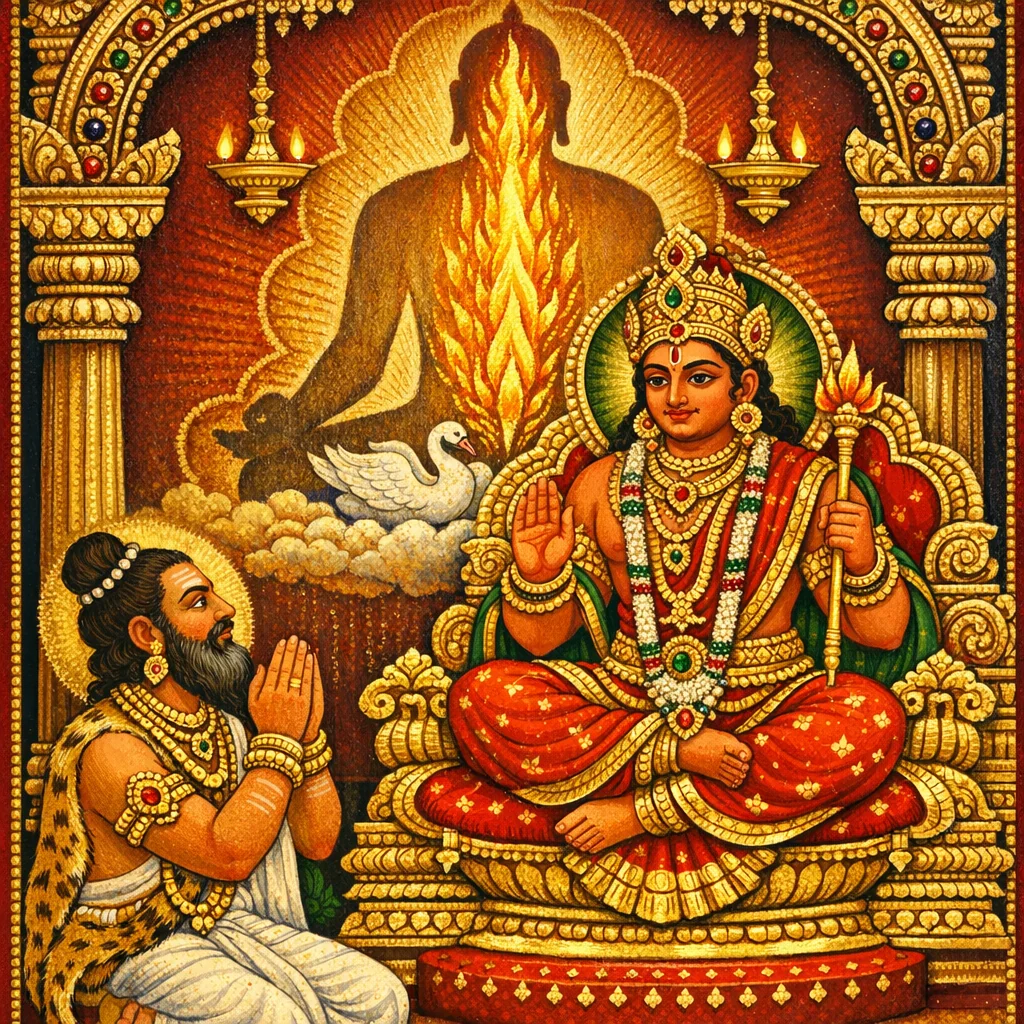
Adhyaya 214
मन्त्रमाहात्म्यकथनम् (Account of the Greatness of Mantras)
မြေဒါနအကြောင်းကိုပြီးဆုံးပြီးနောက် အဂ္နိဘုရားသည် ယောဂ-နည်းပညာဆန်သော သင်ကြားချက်ကိုစတင်ကာ ဒါန၏ပြင်ပကုသိုလ်ကို မန္တရနှင့် ပရာဏ (အသက်ရှူစွမ်းအား) အတွင်းရေးသင်တန်းသို့ ပြန်လည်တည်စေသည်။ ဗိုက်ခေါင်းအောက်ရှိ ကဏ္ဍမှ နာဍီ-စက်ကရ ပေါ်ထွန်းပုံကိုဖော်ပြ၍ လမ်းကြောင်း ၇၂,၀၀၀ နှင့် အဓိကနာဍီ ၁၀ (အီဍာ၊ ပင်္ဂလာ၊ သုရှုမဏာ စသည်) ကိုရေတွက်သည်။ ထို့နောက် အသက်လေ ၁၀ မျိုး—အဓိက ၅ (ပရာဏ၊ အပာန၊ သမာန၊ ဥဒါန၊ ဗျာန) နှင့် အထောက်အကူ ၅ (နာဂ၊ ကူရ္မ၊ ကೃကရ၊ ဒေဝဒတ္တ၊ ဓနဉ္ဇယ) ကို သတ်မှတ်ကာ ကိုယ်ခန္ဓာလုပ်ဆောင်ချက်များနှင့် ပရာဏ/အပာန၏ နေ့-ည ဆန့်ကျင်မှုတို့နှင့်ချိတ်ဆက်သည်။ စင်္ကရန္တိ၊ ဝိသုဝ၊ အယန၊ အဓိမာသ၊ ဣဏ၊ ဥနရာတရ၊ ဓန စသည့် ပြက္ခဒိန်-သင်္ကေတဆိုင်ရာ ကိုက်ညီမှုများကို ကိုယ်လက္ခဏာများနှင့်ပေါင်းစည်း၍ အသက်ရှူနှင့် လက္ခဏာများမှ ကောသမစ်အချိန်ကိုဖတ်ရှုသည့် အဓိပ္ပာယ်ဖွင့်ဆိုမှုကိုညွှန်ပြသည်။ ပရာဏာယာမကို ပူရက (ဖြည့်သွင်း)၊ ကုမ္ဘက (ထိန်းထား) နှင့် အပေါ်သို့ ဦးတည်ထုတ်လွှတ်ခြင်းဖြင့် ရှင်းလင်းကာ အဇပာ-ဇပာ (ဂါယတရီကို သဘာဝမန်တရအဖြစ်) နှင့် ဟံသ အလေ့အကျင့်သို့ ရောက်စေသည်။ ထို့နောက် ကုဏ္ဍလိနီကို နှလုံးဒေသတွင်ထား၍ အမృత စဉ်းစားခြင်းနှင့် ကိုယ်အတွင်းရှိ ဒေဝတားတည်နေရာများ (ဗြဟ္မာ—နှလုံး၊ ဝိષ્ણု—လည်ချောင်း၊ ရုဒ္ရ—ပါးစပ်အမိုး၊ မဟေရှဝရ—နဖူး) ကိုဖော်ပြသော သုက္ခမကိုယ် သီအိုလောဂျီသို့ တိုးချဲ့သည်။ နောက်ဆုံးတွင် မန္တရကို အသံမတ်ရာ (တို/ရှည်/ပလူတ) ဖြင့် တည်ဆောက်သည့် “ပရာသာဒ” မန္တရနန်းတော်အဖြစ် သတ်မှတ်ကာ phaṭ ကို မာရဏအတွက်၊ နှလုံးမန္တရကို အာကೃဋ္ဋိအတွက် အသုံးချခြင်း၊ ဇပ-ဟိုးမ အရေအတွက်များ၊ တရီ-ရှုည သဘောတရားနှင့် အောံ၊ ဂါယတရီ၊ ရုဒ္ရဗေဒကို ကျွမ်းကျင်သော ဂုရု/အာစာရျ၏ အရည်အချင်းများကို ဖော်ထုတ်သည်။
Shlokas
No shlokas available for this adhyaya yet.
Frequently Asked Questions
A structured subtle-physiology: 72,000 nāḍīs from the kanda below the navel; ten principal nāḍīs (including iḍā, piṅgalā, suṣumṇā); and ten vāyus with precise functional definitions, integrated with prāṇāyāma steps (pūraka–kumbhaka–release).
It internalizes dharma through disciplined breath and mantra: ajapā-japa and haṃsa contemplation purify the practitioner, establish deity-awareness within the body via nyāsa, and present mantra as a ‘prāsāda’ whose correct phonetics and method lead to siddhi and, through tri-śūnya insight, liberation.
Gāyatrī is called Ajapā (spontaneous, unforced repetition), identified as embodying Brahmā, Viṣṇu, and Maheśvara; repeating it is said to end rebirth.
An ācārya must be endowed with the thirty-eight kalās; a true guru is described as one who knows Oṁkāra, Gāyatrī, and the Rudra-deities and their principles.