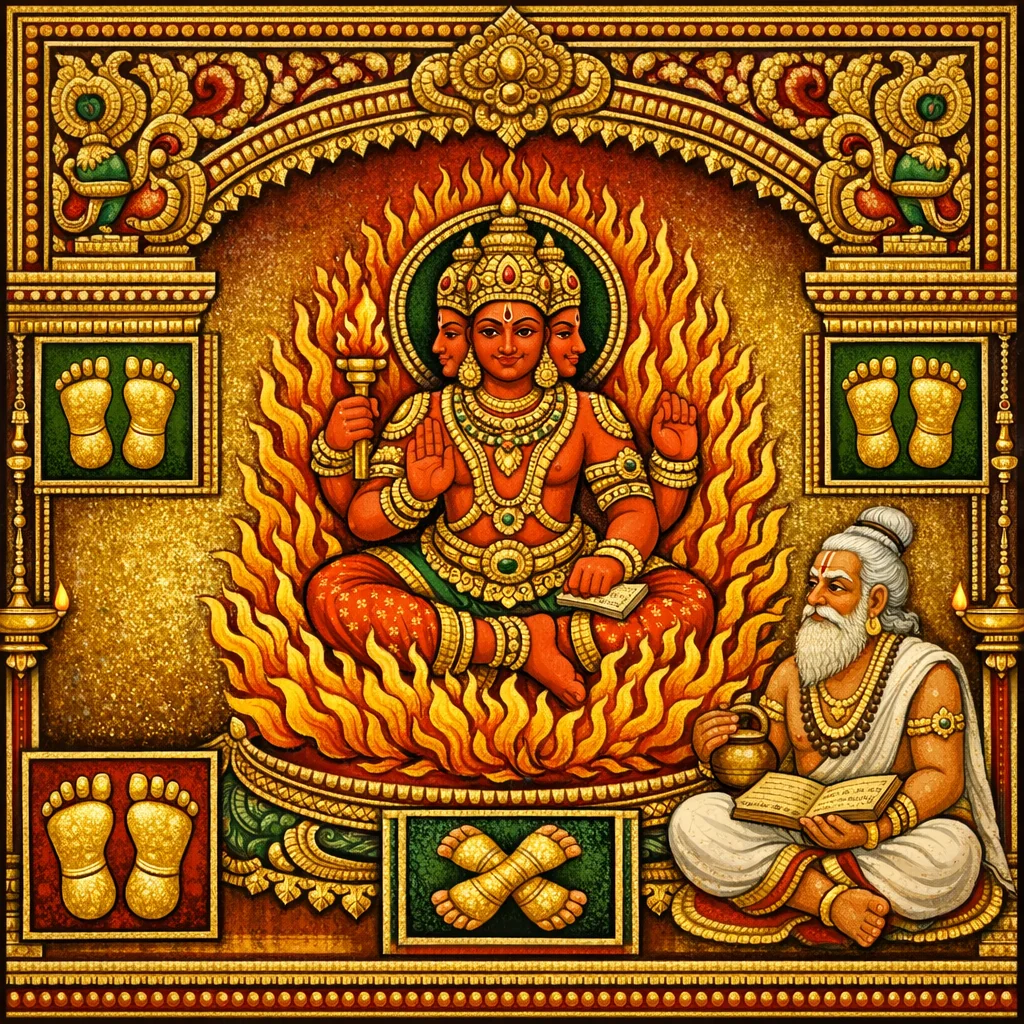
Adhyaya 332
Definition of Ardha-sama (Half-equal) Metres (अर्धसमनिरूपणम्)
အဂ္နိဘုရားသည် ဝသိဋ္ဌ ရှိသီအား ချန္ဒသ-ရှာစတြာကို ဆက်လက်သင်ကြား၍ ဗိသမ (မညီ) မီတာများမှ အර්ဓ-စမ (တစ်ဝက်ညီ) မီတာများ၏ ခွဲခြားသတ်မှတ်ချက်သို့ ကူးပြောင်းသည်။ အစတွင် Upacitraka, Sa-samānā, Bhojabhagā, Drūtamadhyā, Bhagāgathā, Unanā, Jayā စသည့် မီတာများကို စာရင်းပြုစုကာ ထို့နောက် gaṇa အစီအစဉ်များနှင့် အမည်ပေးထားသော လှုပ်ရှားသံလွင်ပုံစံများကို ဖော်ပြ၍ မီတာကို ခွဲခြားသိရှိရန် သို့မဟုတ် တည်ဆောက်ရန် နည်းလမ်းပေးသည်။ ထို့ပြင် ākhyānikā (ပုံပြင်ဆန်သော မီတာမုဒ်) နှင့် ၎င်း၏ viparīta (ပြန်လှန်) ပုံစံများကို ခွဲကာ Rajasā, Gogatha, Droṇa, Ketumatī, Jagāgatha, Tatajagāgatha စသည့် ဥပမာများနှင့် Dhariṇavallabhā, Aparākrama, Puṣpitā တို့ကဲ့သို့ အခြားအမည်များကိုလည်း ထည့်သွင်းသည်။ နိဂုံးတွင် samavṛtta (အက္ခရာညီ) တည်ဆောက်ပုံကို gaṇa အစီအစဉ်နှင့် mātrā ရေတွက်ခြင်း (nāga ယူနစ်) ဖြင့် တိတိကျကျ ပြသပြီး ပြန်လှန်ပုံစံ Khañjā ကိုပါ ဖော်ပြကာ ချန္ဒသဗေဒသည် စည်းကမ်းရှိသော စကားနှင့် ဓမ္မယဉ်ကျေးမှုနှင့် ကိုက်ညီသည့် ပြန်လည်လုပ်ဆောင်နိုင်သော ရှာစတြာဖြစ်ကြောင်း ထင်ရှားစေသည်။
Shlokas
No shlokas available for this adhyaya yet.
Frequently Asked Questions
The chapter emphasizes identification and construction of ardha-sama metres through explicit gaṇa-sequences (e.g., Vegavatī’s bha-bha-bha-ga-go-ga-tha), named pattern-sets (including Rudra-vistāra), and mātrā/nāga-based counting culminating in a samavṛtta demonstration with a defined reverse-form (Khañjā).
By disciplining speech through exact metrical knowledge, it supports dhārmic communication, accurate preservation of sacred and literary utterance, and cultivated aesthetic order—treating linguistic precision as a form of sādhana that complements ritual life and ethical culture on the path toward puruṣārtha.