Adhyaya 30
Chapter 30: मण्डलविधिः (Maṇḍala-vidhi) — Procedure for the Maṇḍala
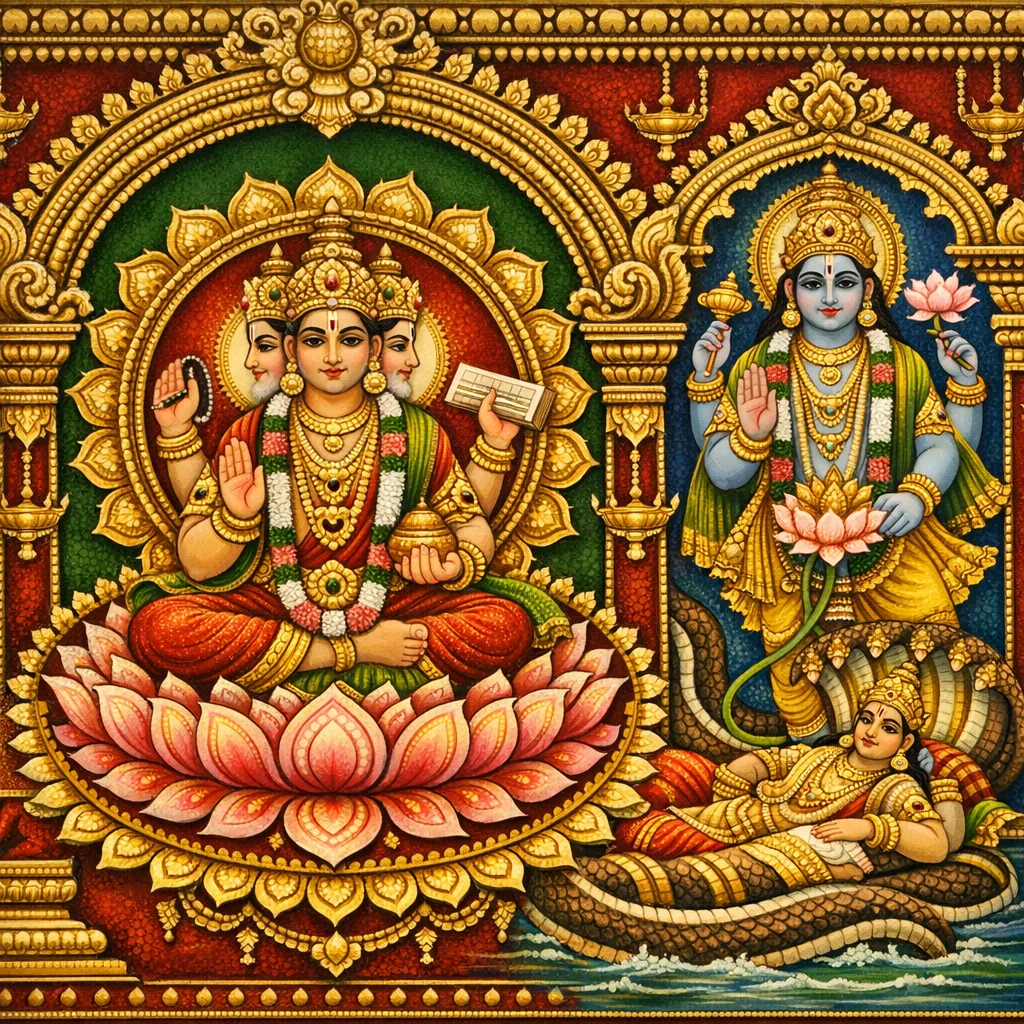
ဤအধ্যာယသည် မဏ္ဍလ၏ လက္ခဏာများအကြောင်း ယခင်ဆွေးနွေးချက်ကို ပိတ်သိမ်းပြီး၊ လိုက်နာရမည့် ရိတုအနုပညာသဘောတရားသို့ ချက်ချင်းကူးပြောင်းသည်။ နာရဒသည် ကြာပန်းပုံ မဏ္ဍလအတွင်း ပူဇော်အစဉ်ကို မိတ်ဆက်ကာ၊ အလေ့အကျင့်ပြုသူသည် ကြာပန်းအလယ် (madhye padme) တွင် ဘြဟ္မာကို အင်္ဂများ (အကူအညီ/အဖော်အပါ) နှင့်အတူ တင်သွင်းပူဇော်ရမည်ဟု ဆိုသည်။ ထိုသို့ဖြင့် မဏ္ဍလသည် ရိုးရိုးပုံကြမ်းမဟုတ်ဘဲ သက်ရှိတရားသတ္တဝါကဲ့သို့ သာသနာတော်၏ နတ်ဘုရားကွင်းပြင်ဖြစ်လာသည်။ ထို့နောက် အရှေ့ဘက် ကြာပန်းခွဲခန်းကို Padmanābha ဗိဿနုအတွက် သတ်မှတ်ကာ၊ နတ်ဘုရားများကို ဦးတည်ရာ/ပွင့်ခွဲများနှင့် ချိတ်ဆက်ထားသော upāsanā စနစ်ကို ပြသသည်။ ဤသည်မှာ Agneya-vidyā ၏ သဘောတရားဖြစ်ပြီး၊ သန့်ရှင်းသော ဂျီဩမေတြီ (မဏ္ဍလ) သည် ရုပ်ပုံတင်သွင်းမှု၊ မန္တရဖြင့် စီစဉ်ထားသော ပူဇော်မှုနှင့် ဓမ္မစည်းကမ်းကို ပေါင်းစည်းသည့် လုပ်ထုံးလုပ်နည်း အင်တာဖေ့စ်ဖြစ်ကြောင်း ဖော်ပြသည်။
Shlokas
Frequently Asked Questions
It prescribes worship within a lotus-maṇḍala: Brahmā is worshiped at the center together with his aṅgas, and Viṣṇu (Padmanābha) is worshiped in the eastern lotus-sector/petal, establishing a directional and hierarchical placement of deities.
By turning spatial design into disciplined upāsanā: the maṇḍala organizes attention, mantra, and deity-placement into a repeatable procedure, so technical correctness becomes a form of dharma that supports inner purification and devotional concentration.